Walleye at Conchas Lake
The thought of chasing elusive walleye across the vast, shimmering waters of Conchas Lake can be both exciting and a little daunting. Many anglers arrive eager to fill their cooler with these delicious fish, only to find themselves scratching their heads when the bites aren't coming. It's easy to feel frustrated when you know the fish are there, but you just can't seem to crack the code. This comprehensive guide is here to demystify walleye fishing at Conchas Lake, providing you with the knowledge, techniques, and local insights to turn those head-scratching moments into triumphant catches.
Understanding Conchas Lake's Walleye Fishery
Conchas Lake, nestled in northeastern New Mexico, isn't just another pretty body of water; it's a known haven for walleye. This artificial reservoir, fed by the Conchas River, offers a unique environment that allows these finicky predators to thrive. Knowing why it's so good for walleye, and what makes the lake tick, is your first step toward consistent success.
The Walleye Population at Conchas
The walleye population at Conchas Lake is robust and actively managed, making it one of the premier walleye fisheries in the state. These fish are renowned for their keen eyesight, especially in low light, and their preference for cool, clear water with ample structure. Conchas provides a perfect blend of these conditions, with its varied depths, rocky points, submerged timber, and deep channels. What makes Conchas particularly special is the consistent stocking efforts by the New Mexico Department of Game and Fish, supplementing natural reproduction to maintain a healthy and catchable population. This means there's a good chance of encountering fish of various sizes, from tasty "eaters" to impressive wall-hangers if you know where and when to look.
Unlike some other species that might only appear in certain lake sections, walleye at Conchas are widely distributed, though they do gravitate towards specific types of habitat depending on the season. They're often found associating with the bottom, relating to contours and changes in depth, rather than suspended in open water for long periods. Their eyes, adapted for low-light conditions, mean they are often most active during dawn, dusk, and even after dark, offering exciting night fishing opportunities for those willing to brave the dark.
Why Conchas is a Walleye Hotspot
Conchas Lake's reputation as a walleye hotspot isn't just hearsay; it's built on a foundation of ecological factors that perfectly suit this species. Firstly, the lake boasts an excellent forage base, primarily composed of shad and various panfish. A plentiful supply of food means walleye grow quickly and stay healthy, leading to better fishing. The deep, often stained waters of Conchas also play to the walleye's natural strengths, giving them a distinct advantage over prey and even other predatory fish that rely more on sight in brighter conditions. This allows them to ambush unsuspecting baitfish effectively.
Furthermore, the lake's extensive and complex underwater structure provides ideal ambush points and sanctuary for walleye. You'll find everything from submerged creek beds and rocky ledges to steep drop-offs and scattered brush piles. These features are critical for walleye, offering protection from bright sunlight, currents, and larger predators, as well as prime locations to hunt. The sheer size of Conchas Lake also means there's plenty of room for the fish to spread out, and for anglers to explore without feeling overly crowded, even on busy weekends. This combination of abundant food, suitable water conditions, and diverse structure creates a veritable walleye paradise.
Unique Characteristics of Conchas Lake
Conchas Lake has several unique characteristics that set it apart and influence how walleye behave and where anglers can find them. One key feature is its fluctuating water levels. Depending on snowmelt and rainfall, the lake level can change significantly throughout the year, altering the shoreline, submerging new cover, or exposing old structure. Experienced anglers learn to adapt to these changes, understanding that what was a prime spot last month might be dry or too shallow today. This dynamic environment means flexibility and constant observation are crucial.
Another notable characteristic is the lake's dual personality, with two distinct sections—the main lake and the Conchas River arm. The river arm often presents different conditions, sometimes with more current or muddier water, especially after heavy rains, which can affect walleye distribution. The primary lake, being larger and deeper, tends to be more stable. Understanding these nuances helps you decide which areas to focus on during different times of the year. Additionally, Conchas Lake is known for its sometimes strong winds, which can create choppy conditions, especially on the main lake. While challenging for boating, these winds can also concentrate baitfish and activate walleye, making certain wind-blown points or flats highly productive. Conchas Lake Fishing Guide is an excellent resource for deeper exploration into the lake's layout.
Seasonal Walleye Strategies for Conchas Lake
Walleye behavior, and consequently the most effective fishing strategies, change dramatically with the seasons. Understanding the annual cycle of walleye at Conchas Lake is paramount to consistent success. From the chilly pre-spawn to the summer depths and the autumn feast, adapting your approach is key.
Spring Spawning and Pre-Spawn Tactics
Spring is arguably the most exciting time for walleye fishing at Conchas Lake, as these fish begin to shake off winter's lethargy and prepare for their annual spawn. As water temperatures slowly climb into the 40s and 50s (Fahrenheit), walleye, especially the larger females, will move from deeper wintering holes towards shallower, rocky areas where they intend to lay their eggs. This pre-spawn period is characterized by aggressive feeding as they pack on energy reserves. Look for these fish congregating around main lake points, rocky shorelines, and submerged humps and reefs that offer quick access to deeper water nearby. These areas warm up faster in the sun, attracting baitfish and, in turn, hungry walleye.
During the actual spawn, which typically occurs when water temperatures are in the mid-40s to low 50s, walleye become very focused on reproduction. They often move onto shallow, rocky flats or rip-rap areas, especially at night. While they may still bite, their primary focus isn't feeding, so a more subtle approach might be necessary. After the spawn, often referred to as the post-spawn period, the females will retreat to deeper water to recover, while the males may linger a bit longer in shallower areas. This is when they start feeding heavily again to regain lost weight. Target transition areas between shallow spawning grounds and deeper holding patterns. Jigs tipped with soft plastics or live bait, crankbaits, and even slow-trolled bottom bouncers are excellent choices during these spring phases.
Summer Deep Water and Night Fishing
When the scorching New Mexico summer heat sets in and surface water temperatures climb, walleye at Conchas Lake shift their patterns dramatically. They typically move to deeper, cooler waters to escape the warmth and seek out stable thermal layers. This means focusing your efforts on deeper structure such as main lake points that drop off sharply, submerged creek channels, deep humps, and the dam face. Best Time of Year to Fish in New Mexico provides a good overview of seasonal shifts. During the day, these fish will often hug the bottom in 20 to 40 feet of water, making vertical jigging or slow trolling deep-diving crankbaits and bottom bouncers crucial. A good fish finder is invaluable here to locate schools of baitfish and the walleye lurking beneath them.
However, summer also brings one of the most productive times for walleye: night fishing. As the sun dips below the horizon, walleye's superior low-light vision gives them an edge, and they often move shallower to feed. Target lighted areas from docks or marinas, or simply cast crankbaits, stickbaits, or jigs along shallow points and flats that were unproductive during the day. Trolling shallow-running crankbaits in areas adjacent to deep water can also be incredibly effective after dark. Always remember to use appropriate lighting for safety if you're out after sunset.
Fall Feeding Frenzy and Migration Patterns
As summer transitions into fall, and water temperatures begin to cool down, Conchas Lake walleye enter another prime feeding period—the fall feeding frenzy. This is when they become incredibly active and aggressive, trying to gorge themselves in preparation for the upcoming winter. They often move back into shallower to mid-depth ranges, particularly during the day, following schools of shad that are also migrating. Look for them on flats adjacent to deep channels, main lake points, and secondary points inside coves. The fall patterns can be less predictable than spring, as fish may be spread out, actively chasing bait.
Trolling crankbaits, particularly those that mimic shad, is a highly effective method during the fall. Covering a lot of water at varying depths until you locate active schools is a smart strategy. Jigging spoons or blade baits vertically over structure can also produce excellent results once you've identified a concentration of fish. As fall progresses and water temperatures continue to drop, walleye will eventually migrate back towards their deep wintering grounds, so continually adjusting your depth and location is key. This period offers fantastic opportunities for both numbers of fish and larger trophy walleye.
Winter Slow Downs and Ice Fishing Potential
Winter fishing for walleye at Conchas Lake presents a different set of challenges and rewards. As water temperatures fall into the 30s and 40s, walleye metabolism slows down significantly, and they become much less active. They typically retreat to the deepest parts of the lake, often congregating in large schools in deep channels, over submerged humps, or near the dam. The key to winter success is patience and a much slower presentation. Vertical jigging small spoons, blade baits, or jigs tipped with live bait (like minnows) directly over the fish is often the most effective method. Finding them with electronics is crucial, as they won't chase baits over long distances.
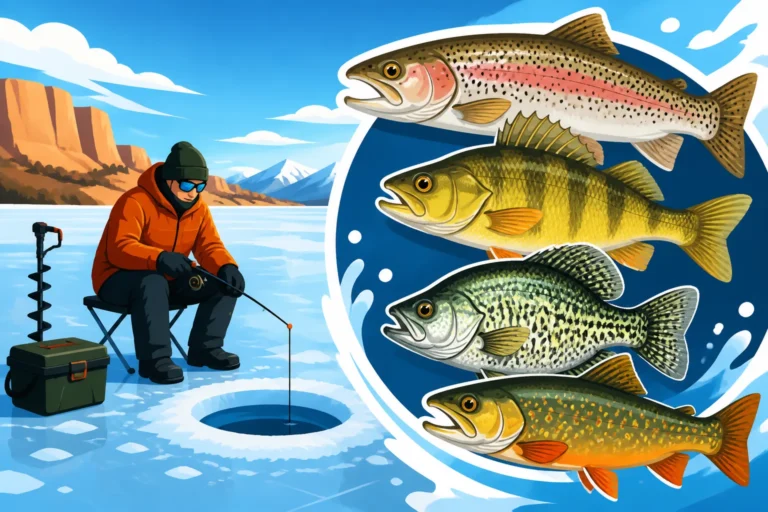
While New Mexico isn't traditionally known for extensive ice fishing opportunities compared to northern states, there can be periods during colder winters when parts of Conchas Lake develop safe ice, particularly in shallower, protected coves or arms. If conditions allow, ice fishing for walleye at Conchas can be very productive. Anglers would typically target the same deep structures they would in open water winter fishing, using ice fishing jigs, small spoons, and tip-ups rigged with live minnows. Always prioritize safety and verify ice thickness before venturing out. The New Mexico Department of Game and Fish often issues advisories regarding ice conditions, so always check local reports. New Mexico Fishing Season Calendar provides useful context for year-round planning.
Essential Gear and Tackle for Conchas Walleye
Successfully targeting walleye at Conchas Lake requires specific gear and tackle that can stand up to the challenge of these hard-fighting fish and the varied conditions of the lake. Having the right tools for the job can make all the difference between a frustrating day and a memorable one.
Rods, Reels, and Line Selection
For walleye fishing at Conchas, versatility is key, but generally, medium-light to medium power spinning rods are the go-to choice for most techniques, especially if you're jigging or casting lighter baits. A rod length of 6'6" to 7'2" offers a good balance of casting distance and sensitivity for detecting those subtle walleye bites. A fast or extra-fast action rod will give you the sensitivity to feel light taps and the backbone to set the hook effectively, as walleye mouths can be tough. Pairing these rods with a good quality spinning reel in the 2000-3000 size range provides smooth drag and sufficient line capacity.
When it comes to line, a braided main line of 8-15 lb test is highly recommended for its sensitivity and strength, particularly when fishing deeper water or in windy conditions. The no-stretch property of braid allows you to feel even the faintest bite. However, because walleye can be line-shy in clearer waters, it's crucial to tie on a fluorocarbon leader of 6-10 lb test, typically 3 to 6 feet long, using a strong knot like a double uni-knot or FG knot. Fluorocarbon is nearly invisible underwater and abrasion-resistant, which is perfect for rocky structures. For trolling applications, some anglers prefer monofilament for its stretch, which can act as a shock absorber when a fish hits a trolled bait at speed. Best Rods and Reels for New Mexico Trout Fishing has some crossover advice, but walleye demand slightly different considerations.
Best Lures and Baits for Conchas Walleye
Walleye can be particular about their diet, but they generally respond well to presentations that mimic their primary forage: shad and other small baitfish. Having a diverse selection of lures and baits is essential for adapting to changing conditions at Conchas Lake.
- Jigs and Soft Plastics: These are arguably the most versatile walleye lures. Jig heads in sizes from 1/8 to 1/2 ounce, depending on depth and wind, can be tipped with a variety of soft plastics like grub tails, paddle tails, or minnow imitations. Colors like white, chartreuse, green pumpkin, and pearl are often effective. A common technique is to slowly jig them along the bottom or near structure.
- Crankbaits: Deep-diving crankbaits are fantastic for trolling in summer or covering water in fall. Look for models that dive to the depths where walleye are holding. Shad imitations, perch patterns, and firetiger colors are perennial favorites. Shallow-running crankbaits are excellent for night fishing or targeting shallower, pre-spawn fish.
- Bottom Bouncers and Crawler Harnesses: This classic walleye setup is extremely effective for slow trolling or drifting over flats and along breaks. A bottom bouncer keeps your bait near the bottom, while a spinner rig (crawler harness) trailing behind with a live nightcrawler or plastic imitation provides flash and scent.
- Blade Baits and Spoons: These are excellent for vertical jigging, especially in colder water or when fish are concentrated on deep structure. Their vibrating action can trigger strikes from sluggish walleye. Silver, gold, and firetiger patterns work well.
- Live Bait: Don't underestimate the power of live bait, especially when fish are finicky. Live minnows, shiners, or nightcrawlers fished on a plain hook, jig, or under a bobber can be irresistible. Many anglers purchase their live bait from local tackle shops around Conchas Lake. You can also find a great selection of these lures and other tackle on platforms like Amazon if you're stocking up before your trip.
Electronics and Boat Setup for Walleye Success
For serious walleye anglers at Conchas Lake, modern electronics are almost as important as the rod in your hand. A quality fish finder, preferably one with Down Imaging, Side Imaging, and GPS capabilities, is a game-changer. These units allow you to not only see fish directly beneath your boat but also scan broad areas to the sides for structure, baitfish schools, and walleye hiding spots. GPS is invaluable for marking productive waypoints (like humps, points, or brush piles) and navigating the lake safely, especially in low light or foggy conditions. Best Fish Finders for New Mexico Reservoirs offers more detailed advice.
A well-equipped boat is also crucial for covering the extensive waters of Conchas and accessing prime walleye territory. A reliable outboard motor is necessary for navigating the main lake. Additionally, a strong bow-mounted trolling motor with GPS-controlled spot-lock features can hold your boat precisely over a productive spot, even in windy conditions, freeing you up to fish. Rod holders are essential for trolling multiple lines, allowing you to present a spread of baits effectively. Having a large livewell to keep any legal-sized walleye fresh, and an anchor system for holding position in specific areas, rounds out the essential boat setup for targeting walleye on Conchas.
Mastering Walleye Techniques at Conchas
Catching walleye is often about presentation and understanding how they react to different stimuli. At Conchas Lake, a variety of techniques prove effective, but mastering a few key approaches will significantly increase your chances of success.
Trolling for Deep Water Walleye
Trolling is one of the most productive methods for locating and catching walleye in the expansive waters of Conchas Lake, especially during the summer and fall months when fish are often scattered or relating to deeper structure. The basic premise is simple: you use your boat's motor or a trolling motor to slowly pull lures through the water at various depths and speeds, covering a lot of ground until you find active fish. The speed is crucial, usually between 1.0 and 2.5 miles per hour, but it can vary based on lure type and fish activity. Experiment with different speeds until you find what triggers bites.
When trolling, pay close attention to your electronics. Watch for changes in bottom contour, schools of baitfish, and signs of walleye. Deep-diving crankbaits, bottom bouncers with crawler harnesses, or even snap weights to get your lures deeper are all excellent options. Many anglers will run multiple lines with different lures or at different depths to figure out the day's pattern. Using planer boards can help spread your lines out, preventing tangles and covering an even wider swath of water. Remember to keep notes on what depths, speeds, and colors are working. Trolling Techniques for New Mexico Lakes provides even more detailed instruction.
Jigging Structure and Drop-Offs
Jigging is a highly effective, hands-on technique for targeting walleye, particularly when they are concentrated on specific underwater structures like humps, points, or sharp drop-offs. This method involves using a jig (a weighted hook, often dressed with soft plastic, hair, or tipped with live bait) and imparting a vertical, "jigging" motion to entice strikes. The key is to keep your bait in the strike zone, which is usually right on or very near the bottom where walleye typically ambush their prey.
There are several variations of jigging, each suited for different conditions. "Vertical jigging" is done directly over the top of fish you've located on your fish finder, dropping your jig straight down and lifting and dropping it with your rod tip. "Pitching jigs" involves casting them to structure, letting them sink, and then slowly hopping or dragging them back. For Conchas Lake, focus on deep rocky ledges, submerged timber, and the edges of old creek channels. The retrieve is often very subtle; sometimes just a slight lift and fall is all it takes. Remember that walleye often "mouth" the bait gently before committing, so a sensitive rod and braided line are essential for feeling those light bites. Jigging for Walleye in New Mexico offers further tactics.
Bank Fishing and Shoreline Approaches
While boat fishing certainly offers the most access to Conchas Lake's walleye, don't discount the possibility of successful bank fishing, especially during certain times of the year. Spring and fall can be particularly productive from shore when walleye move into shallower areas to spawn or feed aggressively. Look for easily accessible points, rocky shorelines, or areas near culverts and inflows that might concentrate baitfish. The Conchas Lake State Park often provides excellent shoreline access points.
For bank fishing, casting crankbaits, spoons, or jigs can be very effective. Fan-casting to cover different depths and retrieve speeds is a good strategy. If you're using live bait, a simple slip-bobber rig or a bottom rig with a weight and a live minnow or nightcrawler can be deadly, especially during low light hours. Night fishing from shore during the summer, particularly in areas with some ambient light, can also yield surprising results as walleye venture closer to the banks. Patience is key, and it helps to scout out potential locations during the day to understand the underwater structure you'll be casting to. Even without a boat, a dedicated bank angler can absolutely find success with Conchas walleye. Conchas Lake State Park Fishing Access is a great place to start looking for bank fishing spots.
Finding Walleye Hotspots in Conchas Lake
Conchas Lake is a big place, and simply driving around hoping to stumble upon walleye isn't the most efficient strategy. Understanding where walleye prefer to live, and how to identify those areas, will put you leaps and bounds ahead of other anglers.
Primary Lake Structure and Features
Walleye are masters of relating to structure, and Conchas Lake offers an abundance of it. The primary structures to focus on are main lake points, especially those that extend far out and drop off sharply into deeper water. These act as natural highways and ambush points for walleye intercepting baitfish. Submerged humps, often referred to as "fishing mounds" or "underwater islands," are also prime targets. Walleye will congregate on the tops or sides of these humps, particularly if they are covered in rock or scattered brush.
Another critical feature is the old Conchas River channel that snakes its way through the lakebed. The edges of this channel, with their distinct depth changes, are natural travel routes and holding areas for walleye. Tributary creek channels leading into the main river channel also act as similar magnets. Rocky reefs, ledges, and steep bluff walls are also high-percentage spots, offering vertical cover and cooler water. Don't overlook scattered timber or brush piles, especially during warmer months, as these provide excellent cover and shade for walleye. Identifying these features on your electronic maps and then thoroughly fishing them is the foundation of success.
Identifying Walleye Holding Areas
Identifying specific walleye holding areas within these broader structures requires a keen eye and effective use of your electronics. Walleye are often found in tight schools or small groups, particularly during winter and summer. They tend to position themselves in specific ways relative to the structure:
- On the Ledges: Walleye will often sit right on the edge of a drop-off, looking out over deeper water, waiting for baitfish to pass.
- On Top of Humps: During certain feeding windows, they may move to the very top of a submerged hump, especially if baitfish are schooling there.
- Inside Bends of Channels: The inside turns of submerged creek channels can create current breaks or eddies, concentrating both baitfish and walleye.
- Transition Zones: Areas where hard bottom (rock, gravel) meets soft bottom (mud, silt) can be highly productive, as these transition zones often hold invertebrates and baitfish.
- Wind-Blown Points: Wind can push baitfish against a point, and walleye will often follow, ambushing them in the turbulent water.
Your fish finder is your best friend here. Look for arcs or distinct marks near the bottom, often in groups. Also, observe baitfish schools; if you find bait, walleye are usually not far behind. Experiment with different depths and casting angles until you pinpoint their exact location. Often, a pattern will emerge – for instance, walleye might be consistently holding on the northeast side of humps at a specific depth.
Navigating Conchas Lake's Terrain
Navigating Conchas Lake, especially when trying to pinpoint specific walleye hotspots, requires a combination of good mapping, careful observation, and awareness of the lake's ever-changing conditions. Rely heavily on detailed lake maps, either on your fish finder unit or a separate GPS device. These maps will show you the contours, channels, humps, and points that are crucial for walleye. Mark potential hot spots on your GPS before you even launch.
Always be mindful of water levels. Submerged hazards like rock piles or timber that are well below the surface at high water can become major obstacles or even boat damage threats when the lake level drops. Pay attention to buoys and navigation markers, but also keep a keen eye out for visual cues on the surface. Sometimes, a slight ripple or a line where the water changes color can indicate a submerged structure. Furthermore, Conchas can get windy, and choppy water can make navigation and boat control challenging. Always wear your life jacket, especially when running at speed or in rough conditions, and be prepared to adjust your fishing plans if the weather turns. Safety first ensures you can return to chase those walleye another day. Conchas Lake Boat Ramps and Marinas will give you an idea of access points and launching options.
Conchas Lake Specific Walleye Considerations
Beyond the general techniques and locations, there are specific factors unique to Conchas Lake that can significantly influence your walleye fishing success. Paying attention to these details can give you an edge.
Water Levels and Their Impact
Conchas Lake is a reservoir, and like many reservoirs in New Mexico, its water levels can fluctuate dramatically throughout the year and from one year to the next. These changes have a profound impact on walleye behavior and accessibility. When water levels are high, new shoreline cover (like flooded bushes or grass) becomes available, providing excellent shallow water ambush points for walleye, especially during spring and fall. High water can also inundate previously exposed humps and points, making them prime targets. However, higher water can also spread fish out across more habitat, making them harder to find.
Conversely, low water levels can concentrate fish into remaining deep areas, but they also expose hazards and reduce access to certain boat ramps or shallow structures. During periods of low water, walleye will often pull off shallow flats and retreat to the deeper main lake channels or larger humps that remain submerged. Anglers must constantly monitor the lake level and adjust their strategies accordingly. A spot that was hot last year at a certain depth might be high and dry, or too shallow, this season. This dynamic requires flexibility and a willingness to explore new, temporarily formed patterns.
Wind and Weather Effects
New Mexico is known for its wind, and Conchas Lake is no exception. Wind can be both a blessing and a curse for walleye anglers. Strong winds can create very choppy conditions, making boat control and casting difficult, even dangerous. However, moderate wind can be your friend. Wind creates current, which can concentrate baitfish against wind-blown points, shorelines, or submerged humps. This in turn attracts hungry walleye that are looking for an easy meal. Walleye also seem to use the chop and reduced light penetration from wind-generated waves as cover, making them more active and less spooky.
On windy days, focus on the "windward" side of structures. Use your trolling motor's spot-lock feature to hold your position, or drift with the wind, presenting baits on the downwind side of the boat. Pay attention to barometric pressure changes as well. Stable periods of high pressure often lead to tougher fishing, while falling pressure before a storm can trigger a strong bite. Overcast days, even without much wind, can also be excellent for walleye, as the reduced light encourages them to feed more actively throughout the day. Always check the weather forecast before heading out to Conchas Lake, and be prepared for rapidly changing conditions.
Regulations Specific to Conchas Lake
While the New Mexico Department of Game and Fish sets statewide fishing regulations, specific bodies of water, including Conchas Lake, can sometimes have special rules or exceptions. It's absolutely crucial to consult the most current New Mexico Fishing Regulations before your trip. These regulations cover everything from bag limits and possession limits to length restrictions and legal methods of take. For walleye, there are often specific size limits (e.g., minimum length) and daily bag limits designed to protect the population and ensure sustainable fishing.
For example, there might be a slot limit, where fish within a certain size range must be immediately released, while smaller or larger fish can be kept. This is a common management tool for walleye to protect the spawning population. Always double-check if there are any specific regulations regarding live bait use, specific lure restrictions, or season closures that might apply only to Conchas Lake or certain areas within it. Ignorance of the law is no excuse, and violations can lead to hefty fines and even loss of fishing privileges. Familiarize yourself with the New Mexico Fishing Regulations Overview and the New Mexico Fishing Season Dates and Limits to ensure you're fishing legally and responsibly.
| Season | Typical Walleye Behavior | Recommended Techniques | Key Areas to Target |
|---|---|---|---|
| Spring | Pre-spawn staging, moving shallow to spawn, post-spawn recovery | Jigging (live bait/plastics), shallow crankbaits, slow trolling bottom bouncers | Rocky points, rip-rap, shallow flats, creek channel edges |
| Summer | Retreat to deep, cool water; active at night | Deep trolling crankbaits/bottom bouncers, vertical jigging, night casting shallow lures | Deep humps, main lake points, dam face, creek channels, lighted areas at night |
| Fall | Aggressive feeding frenzy, following baitfish migrations | Trolling crankbaits, jigging spoons/blade baits, casting jigs | Flats adjacent to channels, main lake points, secondary points in coves |
| Winter | Metabolism slows, concentrated in deep holes | Slow vertical jigging (small lures/live bait), deadsticking | Deep channels, major humps, basin areas, dam vicinity |
Disclaimer
This article is for general informational purposes only and does not constitute professional advice. Laws, prices and regulations vary by location and change over time. Consult a qualified professional for guidance on your specific situation.