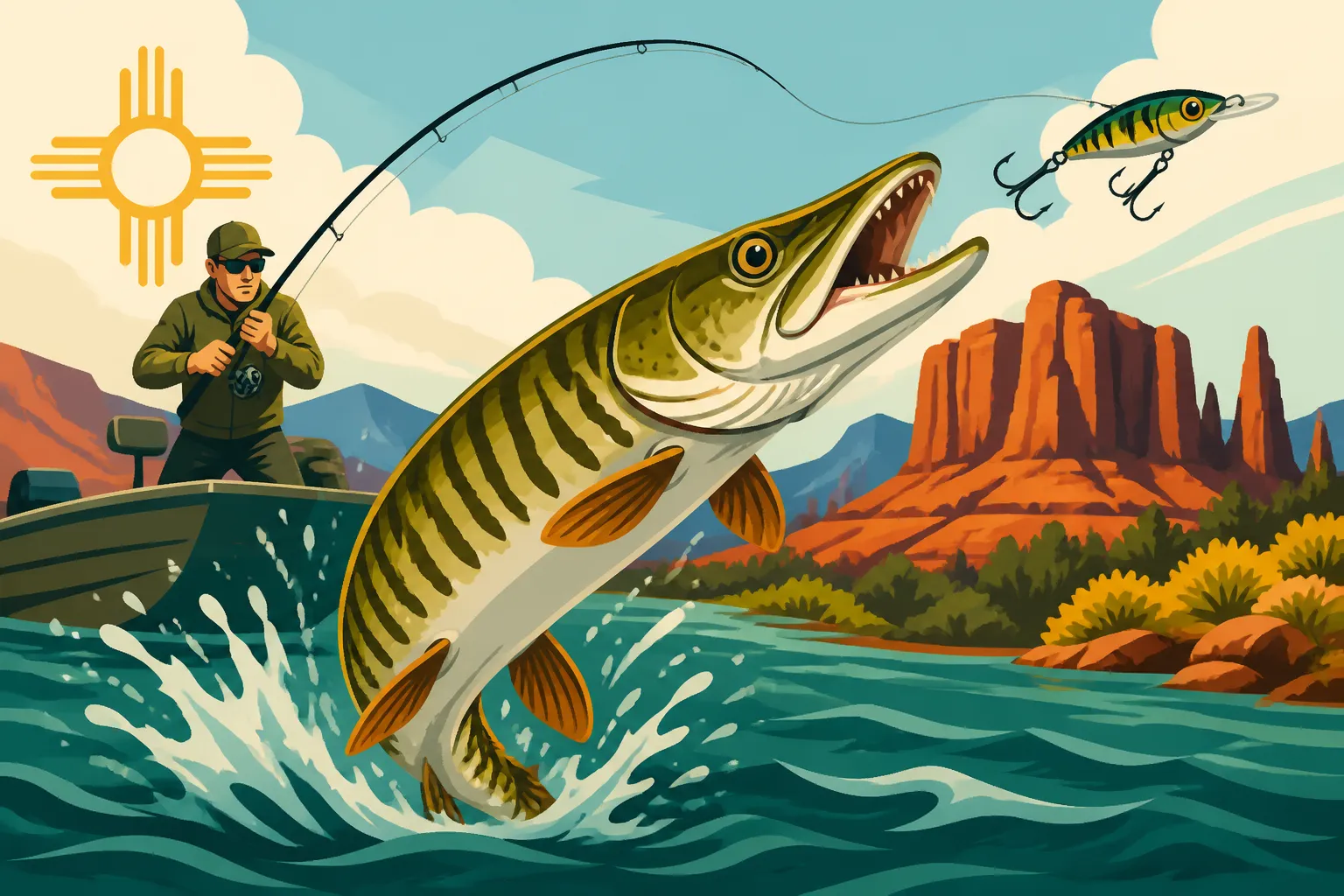
Best Technique for Catching Tiger Muskie in New Mexico
Okay, let's talk about chasing one of New Mexico's most elusive and exciting predatory fish: the mighty Tiger Muskie. Many anglers, myself included, have spent countless hours on the water, throwing massive lures and wondering if they'll ever connect with one of these striped giants. This comprehensive guide is here to cut through the mystery, offering practical, in-depth techniques and strategies to significantly improve your chances of catching a New Mexico Tiger Muskie.
Understanding the New Mexico Tiger Muskie: A Hybrid Hunter
Before we dive into the nitty-gritty of techniques, it's crucial to understand what makes the Tiger Muskie tick, especially in New Mexico's unique aquatic environments. Unlike their purebred cousins, Tiger Muskies are a sterile hybrid of Northern Pike and Muskie, typically stocked in specific lakes to control baitfish populations and offer a thrilling sport fishery. In New Mexico, the crown jewel for these striped predators is Bluewater Lake Fishing. They're ambush predators, possessing an incredible burst of speed and a mouthful of formidable teeth. Knowing their habits and preferred habitats is the first step to putting one in the net.
Where and When to Find Them
Tiger Muskies are cold-water fish, but they can adapt to a broader range of temperatures than purebred muskies. In New Mexico, especially at Bluewater Lake, they'll gravitate towards specific structures throughout the year.
Seasonal Movements and Preferred Habitats
- Spring: As the ice melts and water temperatures begin to rise, Tiger Muskies become more active, moving into shallower bays, submerged weed beds, and along rocky points. They're looking for warmer water and baitfish that are doing the same. This is a prime time for casting large jerkbaits and glide baits over these emerging structures. Focus on areas where there's a good transition from deep to shallow water, or where old weed growth might still provide cover.
- Summer: During the heat of summer, especially as surface water temperatures soar, Tiger Muskies will generally retreat to deeper, cooler waters. Look for them holding near submerged timber, deep rock piles, humps, and thermoclines. They'll still make forays into shallower water, particularly during low-light conditions like dawn, dusk, or overcast days, to ambush schooling baitfish. Trolling can be highly effective during summer, allowing you to cover vast amounts of water at specific depths.
- Fall: This is often considered the absolute prime time for trophy Tiger Muskies in New Mexico. As water temperatures cool, these fish enter a "feeding frenzy" phase, bulking up for the winter ahead. They'll be found in shallower to mid-depth ranges, often aggressively patrolling weed lines, rocky points, and creek channels. Large bucktails, deep-diving crankbaits, and even topwater lures (early fall) can be incredibly effective during this period.
- Winter (Ice Fishing): Yes, you can even target Tiger Muskies through the ice in New Mexico, particularly at Bluewater Lake. They’ll be much less active, hugging the bottom or suspended near deep structure. Large dead baits (like suckers or ciscoes) fished under tip-ups are often the most productive method, as they prefer an easy meal when metabolism slows. Patience is key, and be prepared for a fight even in cold water. Ice Fishing in New Mexico provides more details on general ice fishing safety and methods.
Structure is Key
Wherever you fish for Tiger Muskies, structure is paramount. These fish love to hide and ambush. Think about:
- Weed Beds: Healthy, green weed beds (submerged vegetation) are muskie magnets. They provide cover for ambush and hold baitfish. Fish the edges, pockets, and openings within the weeds.
- Rock Piles and Humps: Submerged rock piles, especially those that rise from deeper water, offer excellent ambush points and often attract baitfish seeking cover or foraging opportunities.
- Standing Timber/Laydowns: Submerged trees, stumps, and fallen logs provide ideal cover. Casting right up to and along these structures can be highly effective, but be prepared for snags!
- Transition Areas: Points, creek channels, and areas where shallow water drops off sharply into deeper water are always worth exploring. Muskies use these highways to move between feeding and resting areas.
Essential Gear for New Mexico Tiger Muskie Anglers
Chasing Tiger Muskies isn't for the faint of heart, or for light tackle. These fish are powerful, have razor-sharp teeth, and will test your gear to its limits. Investing in robust, specialized equipment is non-negotiable if you want to land one successfully.
Rods, Reels, and Line: Heavy-Duty is the Only Way
You absolutely cannot skimp on your setup when targeting Tiger Muskies. Think strength, durability, and enough backbone to muscle a large, thrashing fish.
Rod Selection: Power and Length
- Power: You'll need a heavy to extra-heavy power rod. This isn't about sensitivity; it's about having the muscle to cast large, heavy lures and control a powerful fish.
- Action: A fast or moderate-fast action is generally preferred. This gives you a sensitive tip for detecting subtle bites (yes, even muskie bites can be subtle sometimes!) and a strong backbone to set the hook firmly and fight the fish.
- Length: Muskie rods typically range from 7'6" to 9'6". Longer rods (8'6" to 9'6") are fantastic for casting huge lures long distances, controlling your line, and performing powerful figure-eights at the boat. Shorter rods (7'6" to 8'0") might be more manageable for beginners or those fishing from smaller boats or kayaks. Many anglers find a good selection of specialized muskie rods on Amazon.
Reel Selection: Durability and Drag
- Baitcasting Reels: This is the standard for muskie fishing. Look for heavy-duty baitcasting reels with a high line capacity, robust gears, and a smooth, powerful drag system. Brands known for their muskie reels offer models specifically designed for the abuse these fish dish out.
- Gear Ratio: A mid-range gear ratio (around 5.1:1 to 6.4:1) is versatile, allowing you to work a variety of lures effectively. Some anglers prefer higher ratios for burning bucktails, while others like lower ratios for working large crankbaits with more power.
Line and Leader: Unyielding Strength
- Braided Line: Braided line is king for muskie fishing. Opt for a heavy-test braid, typically 80-100 lb test. The zero-stretch properties of braid provide incredible sensitivity, allow for solid hook sets, and give you the strength needed to pull big fish out of cover.
- Fluorocarbon or Wire Leader: This is perhaps the most critical component. Tiger Muskies have incredibly sharp teeth that will easily cut through mono or fluorocarbon mainlines. You need a bite-proof leader.
- Fluorocarbon Leaders: Heavy fluorocarbon (100-150 lb test) leaders are often preferred for their low visibility and stiffness, which helps prevent fouling with larger lures. Make sure they are specifically designed for muskie and are long enough (12-18 inches minimum).
- Wire Leaders: Stainless steel wire leaders are completely bite-proof. While more visible, they offer ultimate protection. Some anglers prefer a short wire leader (6-12 inches) with a heavy fluorocarbon shock leader for a balance of protection and stealth. Always use strong, high-quality snaps and swivels rated for muskie. Best Fishing Gear for New Mexico Anglers offers a broader look at essential fishing equipment.
Lure Selection: Big Baits for Big Fish
Muskies are known as the "fish of 10,000 casts," and a lot of that comes down to selecting the right presentation. You need lures that imitate their preferred prey and can withstand their powerful strikes.
Top Lure Categories for Tiger Muskie
- Bucktails: These are often considered the bread and butter of muskie fishing. They feature a spinning blade (or two) and a skirt of deer hair or synthetic material. They're excellent for covering water quickly and eliciting reaction strikes. Sizes typically range from 8 to 12 inches or more. Different blade types (Colorado, Willow, Indiana) offer varying flash and vibration.
- Jerkbaits and Glide Baits: These hard-bodied lures are designed to be worked with a rod twitching retrieve, mimicking a wounded baitfish. Jerkbaits have a diving lip, while glide baits are lipless and "glide" from side to side with each twitch. They're excellent for targeting fish holding tight to structure.
- Crankbaits: Deep-diving crankbaits are essential for targeting muskies holding in deeper water, especially during summer and fall. They can be cast or trolled to reach specific depths. Look for large models (6-12 inches) with strong hooks and hardware.
- Soft Plastics and Swimbaits: Large soft plastics, often rigged with heavy jig heads or internal harnesses, can be incredibly effective. They offer a more subtle, natural presentation. Huge paddle-tail swimbaits are also popular, mimicking large trout or other forage fish.
- Topwater Lures: While less common than other categories, topwater lures (like prop baits, walk-the-dog baits, or large poppers) can provide explosive strikes, especially during low-light conditions or early fall. The sheer visual thrill of a muskie blowing up on a topwater is unforgettable.
| Lure Type | Best Conditions / Retrieve | Advantages | Considerations |
|---|---|---|---|
| Bucktails | Steady retrieve, covering water, shallow to mid-depth | High flash/vibration, reaction strikes | Can be tiring to retrieve, need strong retrieve |
| Jerkbaits/Glides | Erratic twitch-pause retrieve, targeting structure | Mimics wounded prey, subtle presentation | Requires specific retrieve technique, can snag |
| Crankbaits | Cast and retrieve, or trolling, targeting deeper water | Covers depth, consistent action | Dive curve must match target depth, can snag |
| Soft Plastics | Slow retrieve, jigging, targeting suspended fish | Natural look/feel, subtle presentation | Hook sets can be tricky, might need special rigging |
| Topwater | Low light, calm water, over submerged weeds | Explosive strikes, visual excitement | Limited effectiveness in rough/deep water |
Advanced Techniques and Strategies for Tiger Muskie
Catching a Tiger Muskie isn't just about throwing big lures; it's about precision, persistence, and understanding the nuances of their behavior. Here, we'll delve into specific tactics that can turn a good day into a legendary one.
Casting and Retrieve Strategies
The way you cast and retrieve your lure is often as important as the lure itself. Tiger Muskies are notoriously finicky, and a slight change in presentation can make all the difference.
The "Figure Eight" and "Lure in the Face" Approach
One of the most talked-about muskie techniques is the "figure eight" at the boat. This isn't just a fancy trick; it's a critical strategy.
- The Concept: Many muskies will follow a lure right up to the boat, either out of curiosity or hesitant to strike in open water. The figure eight (or L-turn, or C-turn) is designed to keep the lure in the water, mimicking a fleeing baitfish, and often triggers a strike from a following fish.
- Execution: As your lure approaches the boat (about a rod length away), don't lift it out of the water. Instead, plunge your rod tip into the water and begin drawing large, smooth figure-eight or circular patterns with your lure right beside the boat. Keep the lure moving, avoiding sudden stops. Watch for followers! If a muskie appears, continue the pattern, sometimes speeding it up or making it erratic to provoke a strike.
- Why it Works: This move capitalizes on the muskie's predatory instinct, often converting a follow into a strike by making the "prey" appear to try and escape just as it's about to get away.
Varying Your Retrieve
Don't be a robot. Varying your retrieve speed, adding pauses, twitches, and jerks can be crucial for enticing a strike.
- Speed Changes: A steady retrieve is a good starting point for bucktails, but try speeding up or slowing down occasionally. Sometimes a sudden burst of speed is what it takes.
- Twitch and Pause: For jerkbaits, this is the primary retrieve. Twitch your rod tip to make the lure dart, then pause, letting it suspend or slowly rise/fall. Most strikes occur on the pause.
- Rip and Stop: With soft plastics or larger swimbaits, a "rip" (a sharp pull of the rod) followed by a short pause can mimic a struggling baitfish perfectly.
- Burn and Kill: For bucktails, try a rapid "burn" retrieve, then suddenly stop the lure. The sudden cessation of movement can be an irresistible trigger.
Targeting Specific Depths and Structure
Knowing where the fish should be isn't enough; you need to present your lure effectively in that zone.
Trolling for Deep-Water Muskies
When muskies are holding deep, especially in the summer at places like Bluewater Lake, trolling is a highly effective way to cover vast amounts of water and present lures at precise depths.
- Lure Selection: Use large crankbaits, swimbaits, or even specialized muskie trolling rigs designed to run deep. Pay attention to the lure's dive curve information.
- Speed and Depth: Experiment with trolling speeds (typically 2-5 mph) and use line counters on your reels to accurately replicate successful depths. Downriggers or lead core line can also be used to get lures deeper and hold them there consistently. Trolling Techniques for New Mexico Lakes can provide general insights into this method.
- Electronics: A good fish finder is invaluable for identifying submerged structure, baitfish schools, and even individual muskie suspended in the water column. Knowing the bottom contours and depth changes is crucial.
Fan Casting and Precision Placement
When targeting shallower or more visible structure, fan casting ensures you cover the area thoroughly.
- Method: Cast your lure in a fan-like pattern, starting with a cast parallel to the shoreline or structure, then gradually moving your casts further out, perpendicular to the structure, until you've covered the entire area.
- Accuracy: Precision casting right up against submerged timber, weed lines, or rocky outcrops is often key. Remember, muskies are ambush predators; they'll often be tucked tight to cover.
- Multiple Casts: Don't just make one cast to a promising spot and move on. Muskies can be territorial, and it sometimes takes multiple casts, varying angles, or retrieve speeds to elicit a strike.
Safety, Handling, and Best Practices
Landing a Tiger Muskie is just the beginning. These fish are incredibly powerful, and their well-being, as well as your own safety, should be paramount. Most New Mexico Tiger Muskie fisheries are catch-and-release, making proper handling essential. Catch and Release Best Practices in New Mexico is a great resource for general fish handling.
Personal Safety: Watch Those Teeth!
Tiger Muskies have formidable jaws packed with sharp, needle-like teeth. A bite can cause serious injury.
Tools for Safe Handling
- Long-Nosed Pliers: Essential for removing hooks deep inside a muskie's mouth. The longer, the better.
- Bolt Cutters (Heavy Duty): In case a hook is deeply embedded and cannot be removed without causing excessive harm, you might need to cut the hook to save the fish.
- Release Gloves (Optional but Recommended): Heavy-duty gloves can protect your hands from teeth and gill rakers if you need to handle the fish directly.
- Large Landing Net: This is perhaps the most critical piece of equipment for safe muskie handling. A large, rubberized landing net (at least 30-40 inches across the hoop) will safely contain the fish, preventing it from thrashing, and protecting its slime coat and fins. Avoid knotted nylon nets, which can strip slime and damage fins. You can find excellent landing nets on platforms like Amazon.
Handling the Fish in the Net
Once a muskie is in the net, it’s a good time to calm it down before attempting hook removal.
- Keep it in the water: If possible, keep the net and the fish submerged in the water while you prepare for hook removal. This reduces stress on the fish.
- Control the head: Gently pin the fish's head against the bottom of the net or the side of the boat to minimize thrashing.
Catch and Release Best Practices
New Mexico's Tiger Muskie population is sustained through stocking, and their survival after release is vital for the fishery's future.
Minimizing Stress and Injury
- Speed is Key: The less time a muskie spends out of the water, the better its chances of survival. Have your camera and measuring board ready before you even bring the fish in.
- Horizontal Hold: If you must lift the fish for a quick photo, support its entire body horizontally with two hands – one under the gill plate (not in the gills themselves!) and one under the belly near the tail. Never hang a muskie vertically by its jaw or gills; this can cause severe internal damage.
- No "Gill Plate" Grips: While some anglers use a special tool to grip the gill plate, inexperienced use can easily damage the fish's gills. It's often safer to avoid this method if you're not fully confident.
- Revival: After a fight, especially a long one, a muskie might be exhausted. Hold it gently in the water, facing into any current, until it regains its strength and swims away on its own. It might take a few minutes.
Respecting the Fishery
Remember, catching a Tiger Muskie is a privilege, not a guarantee. These fish are a valuable resource, and treating them with respect ensures that future generations of anglers can also experience the thrill. Always check New Mexico Fishing Regulations Overview and specific local rules for any updates on bag limits, possession limits, or special handling requirements for Tiger Muskies, as these can change. Conservation is a collective effort, and your actions on the water contribute directly to the health of our fisheries.
Equipping for Success: Beyond the Basics
Beyond the core rod, reel, and line setup, a few additional items can significantly enhance your Tiger Muskie fishing experience in New Mexico. Many of these items can be found readily on sites like Amazon, making it easy to gear up.
Electronic Aids and Navigation
In larger reservoirs like Bluewater Lake, electronics are not just a luxury; they're often a necessity for consistent success.
Fish Finders and GPS
- High-Definition Sonar: A quality fish finder with side-imaging or down-imaging capabilities can reveal submerged structure, weed lines, and even baitfish schools that are invisible from the surface. This allows you to pinpoint potential muskie holding areas.
- GPS Mapping: Integrated GPS with detailed lake maps helps you navigate, mark productive spots, and return to them later. Knowing precise depth contours and identifying humps or channels can save hours of searching.
- Lake Maps: Physical or digital contour maps of Bluewater Lake are invaluable. They show depth changes, potential weed bed locations, and rock structures. Study these before you even launch your boat.
Specialized Boat Equipment
If you're fishing from a boat, certain modifications or additions can make muskie fishing more efficient and safer.
Trolling Motors and Anchor Systems
- Electric Trolling Motor: A powerful electric trolling motor (bow-mounted is ideal) with GPS Spot-Lock capabilities allows you to hold your boat precisely over structure, even in windy conditions, freeing your hands for casting.
- Shallow Water Anchors: For fishing shallower bays or points, a shallow water anchor system (like a Power-Pole or Minn Kota Talon) can silently hold your boat in position without spooking fish.
- Drift Socks/Brakes: If you're drifting large areas, drift socks can slow your boat's movement, allowing you to present your lures more effectively and cover productive zones thoroughly.
Clothing and Personal Comfort
New Mexico's weather can be unpredictable, especially at higher elevations. Being prepared ensures you can focus on fishing, not discomfort.
Weather-Appropriate Gear
- Layered Clothing: Dress in layers, as temperatures can fluctuate dramatically throughout the day. Moisture-wicking base layers, insulating mid-layers, and a waterproof/windproof outer shell are essential.
- Sun Protection: New Mexico's sun is intense. Wear a wide-brimmed hat, polarized sunglasses (crucial for spotting followers and structure), and use high-SPF sunscreen. Long-sleeved shirts and neck gaiters offer additional protection.
- Rain Gear: Monsoon season or sudden afternoon storms can catch you off guard. Always have reliable rain gear on hand, especially during summer months. Best Rain Gear for New Mexico Monsoon Fishing is a useful guide.
The Mental Game: Patience and Persistence
Ultimately, catching a New Mexico Tiger Muskie isn't just about gear or technique; it's about your mindset. These are often called "the fish of 10,000 casts" for a reason.
Maintaining Focus and Optimism
Tiger Muskie fishing can be a grind. You might cast for hours without a single follow or strike. It's easy to get discouraged, but the key is to stay focused and believe that the next cast could be the one.
- Break Down the Day: Don't just cast aimlessly. Plan your attack. Focus on specific spots, work them thoroughly, and then move on. This structured approach helps maintain focus.
- Observe and Learn: Pay attention to every detail. Did you see a baitfish school? A subtle change in water temperature? Did a follow occur on a specific retrieve? Every observation is a piece of the puzzle.
- Celebrate the Small Wins: A follow, even without a strike, is a victory. It tells you you're in the right area and your presentation is enticing. It fuels the drive to keep casting.
The Thrill of the Chase
There’s an undeniable addiction to muskie fishing. It’s the challenge, the anticipation, and the sheer power of the fish that keep anglers coming back. When that elusive strike finally comes, it’s an explosion of energy that will leave your heart pounding. The battle that ensues is nothing short of epic, and landing one of these striped marvels in New Mexico's beautiful high desert lakes is a memory you'll cherish forever. So, gear up, stay patient, and embrace the challenge. The next cast could be the cast for your New Mexico Tiger Muskie.
Disclaimer
This article is for general informational purposes only and does not constitute professional advice. Laws, prices and regulations vary by location and change over time. Consult a qualified professional for guidance on your specific situation.