How to Fish a Bobber and Worm Setup for Beginners
So, you've decided to dip your toes into the wonderful world of New Mexico fishing, but maybe you're feeling a little overwhelmed by all the fancy rods, reels, and complicated techniques out there. Trust me, I've been there! It’s easy to get caught up in the complex world of fly patterns or specific jigging retrieves. This guide is all about breaking down the absolute simplest, most effective way to start catching fish and truly enjoy our beautiful waters: the classic bobber and worm setup, perfect for beginners of all ages.
Why the Bobber and Worm is a Beginner's Best Friend in New Mexico
When you're just starting out, or even when you just want a relaxed day by the water, the bobber and worm setup is a true champion. It cuts through all the noise and gets you straight to the fun part: feeling that tug on your line. In a state like New Mexico, with its diverse range of stocked ponds, serene lakes, and gentle river stretches, this method is surprisingly versatile and effective for many common species. It's truly an accessible entry point into the angling community.
Simplicity and Effectiveness
One of the biggest hurdles for new anglers is learning intricate casting techniques or understanding complex lure presentations. The bobber and worm method bypasses a lot of that initial learning curve. You’ve got a hook, a bit of weight, a worm, and a bobber that tells you exactly what's happening underwater. There's no need to interpret subtle line twitches or feel for faint taps. The bobber does all the work of indicating a bite, making it incredibly straightforward.
This simplicity doesn't mean it's ineffective, though. Far from it! A live worm is an irresistible natural bait for a huge variety of fish, especially the hungry stocked rainbow trout that frequent many of our public waters, and the various panfish like bluegill and crappie. The bobber keeps your bait suspended at a desired depth, often away from snags on the bottom, allowing fish to easily spot and grab it. It’s a tried-and-true method that has been bringing smiles to anglers for generations.
Visual Feedback and Instant Gratification
Let’s be honest, part of the thrill of fishing is seeing that excitement. With a bobber, you get immediate visual feedback. That bright little float sitting serenely on the water’s surface is your direct connection to what’s happening beneath. When it twitches, dances, or, best of all, disappears under the water, there’s no guesswork involved – a fish is interested, or better yet, has taken your bait!
This clear visual cue makes it incredibly exciting, especially for kids or anyone new to fishing. It transforms the waiting game into an active observation game. When that bobber goes down, the adrenaline kicks in, and the instruction to "set the hook" becomes instinctual. This instant gratification is a powerful motivator and can quickly hook new anglers on the sport. It builds confidence faster than almost any other technique out there.
Versatility for New Mexico Species
While often associated with trout, the bobber and worm setup is far more versatile than you might think in New Mexico. Many of our urban ponds and state park lakes are regularly stocked with rainbow trout, and a worm under a bobber is often their favorite snack. But don't stop there! This simple method is fantastic for targeting easy-to-catch species in many of the Best Lakes for Family Fishing Trips in New Mexico or even the local Fishing Ponds Near Albuquerque for Kids.
Beyond trout, you'll find that bluegill, crappie, and even smaller bass can’t resist a juicy worm presented this way. These panfish are abundant in many of New Mexico's warmer waters and are known for their willingness to bite, making them perfect targets for a beginner with a bobber rig. This broad appeal means you can use the same basic setup in various New Mexico locations and have a good chance of success, which is a huge bonus for someone just starting out.
Gathering Your Essential Bobber and Worm Gear
Before you head out to your favorite New Mexico fishing spot, you'll need to gather a few basic items. The beauty of the bobber and worm setup is that it doesn't require a huge investment in specialized equipment. You likely already have some of these things around the house, or they are readily available at any tackle shop, outdoor store, or online retailer. Remember, the goal is simplicity and function.
The Right Rod, Reel, and Line
For a bobber and worm setup, you don't need anything fancy. A basic spinning rod and reel combo is perfect. Look for a lightweight rod, somewhere in the 5 to 6.5-foot range, with a light to medium action. This means it will bend easily, which helps when casting lighter rigs and makes even small fish feel exciting. You can often find entire beginner rod and reel combos on Amazon or at local sporting goods stores that are perfectly suited for this.
Pair that with a small spinning reel, pre-spooled with 4 to 8-pound test monofilament line. Monofilament is a great choice for beginners because it's affordable, easy to tie knots with, and has a bit of stretch, which can be forgiving when a fish strikes unexpectedly. This setup is robust enough to handle the general trout species you'll find in New Mexico and the smaller panfish without being overly bulky or difficult to manage. For a comprehensive overview, check out our guide on What Gear Beginners Need to Start Fishing in New Mexico.
Choosing Your Bobber and Weight
Now for the stars of the show! Bobbers come in many shapes and sizes, but for beginners, stick to the classic red and white round bobbers or slip bobbers. The round, clip-on style is super easy to attach and adjust. For deeper water, a slip bobber, which slides freely on your line and is stopped by a small knot, can be very effective, though it adds a tiny bit more complexity to the rig. Stocking up on a variety of bobbers on Amazon is a smart move so you have options.
As for weight, you’ll need a few small split-shot sinkers. These are tiny lead or steel weights that you pinch onto your line. Their purpose is twofold: to help cast your light worm rig a bit further and to help your bobber stand upright in the water, indicating a bite more clearly. You don't need much weight – just enough to get your bait down and balance the bobber. A small assortment of different sized split shots will serve you well, and they usually come in a little tackle box dispenser.
Baiting Up with Worms
Ah, the humble worm – nature's perfect fishing bait. For beginners, live worms are unbeatable. They're natural, they move, and almost every freshwater fish will at least investigate them. You can dig up your own earthworms in the garden after a rain, which is a fun pre-fishing activity, or you can buy them at bait shops, gas stations, or even some grocery stores here in New Mexico. For those who prefer not to dig, places like Amazon also sell containers of live worms (though you'll want to check local availability for live bait).
When it comes to the type of worm, nightcrawlers (the big ones) are excellent for larger trout or catfish, while smaller red wigglers are perfect for panfish or smaller stocked trout. Keep your worms cool and moist in a container with some dirt or bedding material, and they’ll stay lively all day. Having lively bait is key to attracting fish!
| Item | Description | Why it's important for beginners |
|---|---|---|
| Rod | 5-6.5 foot spinning rod, light to medium action | Easy to cast, sensitive to bites, fun with small fish |
| Reel | Small spinning reel, pre-spooled (4-8lb mono) | Simple operation, durable, easy to manage line |
| Fishing Line | 4-8 lb monofilament | Affordable, easy knots, forgiving stretch |
| Hooks | Size 6-10 bait holder hooks (Aberdeen or Kahle style) | Holds worms securely, good for various species |
| Bobbers | Clip-on round bobbers (various sizes) or slip bobbers | Visual bite indicator, easy to adjust depth |
| Sinkers | Small split-shot weights (assorted sizes) | Aids casting, helps bobber stand upright, sinks bait |
| Worms | Live nightcrawlers or red wigglers | Natural bait, irresistible to many fish, readily available |
| Pliers/Forceps | Small pair for hook removal | Safety for you and the fish |
| Small Cooler | To keep worms lively and any fish you plan to keep fresh | Essential for bait and harvest |
Setting Up Your Bobber and Worm Rig, Step-by-Step
Alright, you've got your gear. Now comes the exciting part: putting it all together! Don't worry, it's really quite simple, and we'll walk through it step-by-step. The goal is a functional rig that presents your bait naturally and clearly tells you when a fish is biting. This basic setup is what you'll use whether you're fishing for Trout Species in New Mexico or a common panfish.
Attaching Your Hook, Sinker, and Bobber
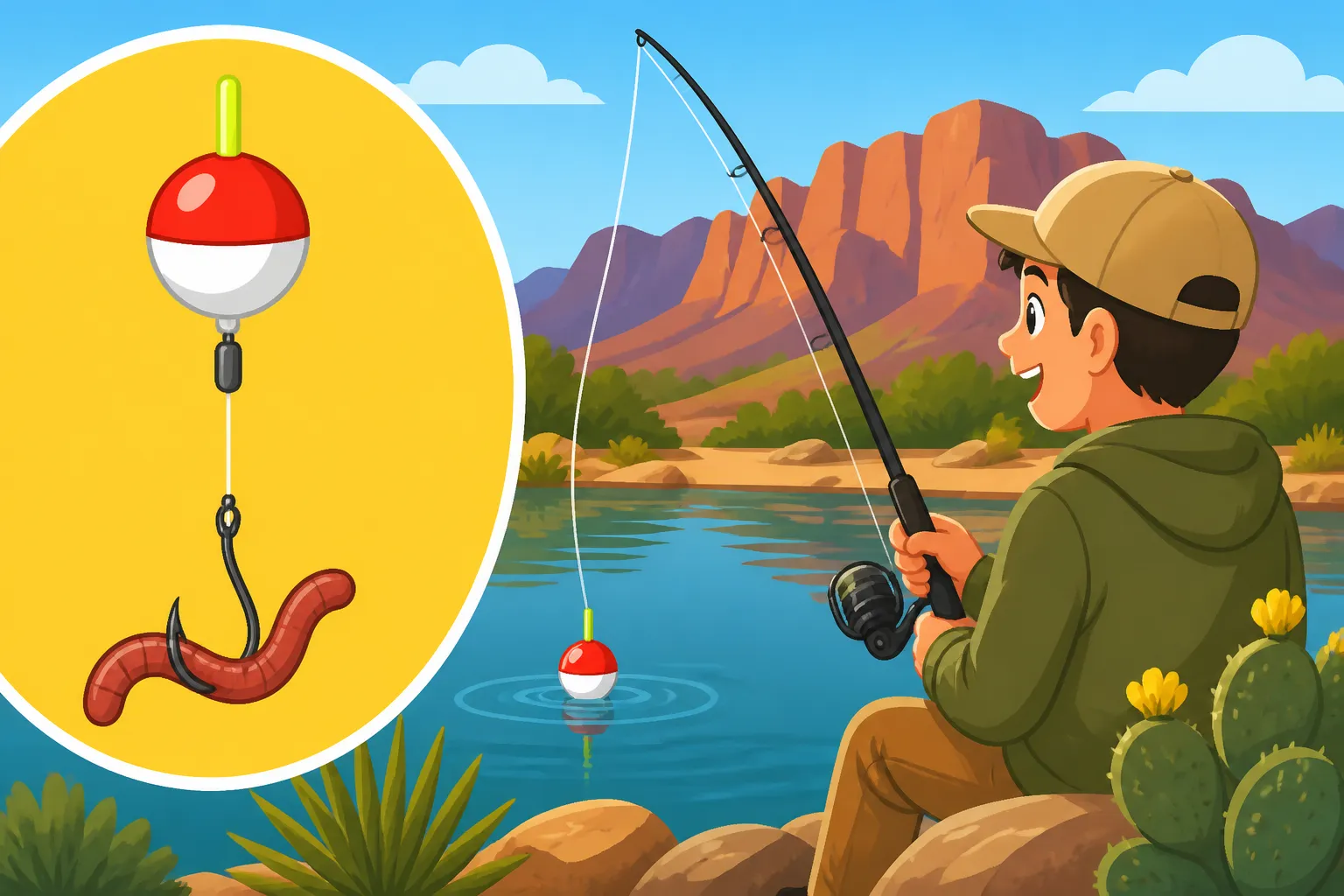
First, let's get your hook on. Take your fishing line and tie a size 6 or 8 bait holder hook onto the end. A simple improved clinch knot is strong and easy to learn – it's a go-to for many anglers. If you're using a smaller hook for panfish, a size 10 might be better. After the hook, you’ll add your sinker. About 6 to 12 inches above your hook, pinch one or two small split-shot sinkers onto your line. You want just enough weight to help cast and keep your bait down, but not so much that it pulls your bobber under without a fish.
Finally, attach your bobber. If it's a clip-on bobber, you'll clip it onto your line above the sinker. The distance between the bobber and the sinker (and thus your hook) will determine how deep your bait sits. For a slip bobber, you’ll thread your line through the bobber, then tie a special bobber stop knot (or use a small rubber bobber stop) onto the line above the bobber. This knot acts as a stopper, letting your bobber slide up and down freely until it hits the knot, setting your bait depth. This method is often preferred when fishing deeper waters in New Mexico lakes.
Finding the Right Depth
Setting the correct depth for your bait is crucial, and it’s one of the most common questions beginners have. A good starting point is to set your bobber so your bait is about 2 to 4 feet deep. Most fish, especially stocked trout and panfish, often cruise at these depths in shallower areas or near structure. If you’re fishing in a very shallow pond, you might set it even shallower, perhaps 1 foot off the bottom. Conversely, in deeper parts of lakes like those where you'd find Walleye Fishing in New Mexico or even larger trout, you might need to go deeper, which is where a slip bobber really shines.
Experimentation is key! If you’re not getting bites after 15-20 minutes, try adjusting your bobber up or down by a foot or two. You might find fish are holding higher in the water column on a warm day, or deeper if it’s cold or bright. Watch for other anglers – if someone nearby is catching fish, observe their setup from a respectful distance to see how deep they’re fishing. This dynamic adjustment is part of the fun and learning process of fishing.
Baiting Your Hook Properly
Baiting a worm isn't just about sticking it on the hook; it's about making it look appetizing and natural. For a whole nightcrawler, thread the hook through the worm a few times, leaving both ends dangling freely. Those wiggling ends are what really attract fish! Don’t try to completely cover the hook, as some of the hook point needs to be exposed for a good hookset. If your nightcrawler is really large, you can break it in half – two smaller baits are often better than one giant one.
For smaller red wigglers, you can often thread the entire worm onto the hook once or twice. The main goal is to keep the worm alive and wiggling in the water. A lively, natural presentation is far more enticing than a static, dead-looking bait. Properly hooked, a worm will continue to undulate, sending out those irresistible vibrations and scents that tell fish, "dinner is served!" This is also a perfect method when you’re teaching someone How to Catch Trout in New Mexico for the very first time.
Fishing with Your Bobber and Worm Setup in New Mexico
Now that your rig is ready and your bait is squirming, it's time to cast your line and experience the thrill of fishing in New Mexico. This simple approach is incredibly relaxing and effective, whether you’re casting from the bank of a small pond or gently drifting along a lake shore. Remember, patience is a virtue in fishing, but proper technique helps too!
Casting and Presenting Your Bait
With your bobber and worm rig, casting is pretty straightforward. Hold your rod with one hand, open the bail on your spinning reel with the other, and gently sweep the rod forward, releasing the line as you do. Aim for an area where you think fish might be, such as near submerged logs, weed beds, or where there’s a noticeable drop-off in depth. You don’t need to cast a mile; often, fish are closer to the shore than you think.
Once your rig lands, let it sit for a few minutes. Allow the natural currents or a gentle breeze to drift your bobber a bit. This natural movement can make your bait appear more lifelike. Keep a loose grip on your rod, or place it in a rod holder, and keep an eye on that bobber. Avoid constantly reeling in and recasting; sometimes the best strategy is simply to wait and let the fish come to you. This passive presentation is what makes a bobber and worm so effective for relaxed fishing.
Reading the Bobber and Setting the Hook
This is where the magic happens! Your bobber is your window to the underwater world. Pay close attention to its movements. A slight twitch or wobble usually means a fish is investigating your bait. A slow, steady pull sideways often means a fish has taken the bait and is swimming off with it. The most exciting movement is when the bobber completely submerges and disappears under the water – that's your cue!
When the bobber goes down, count to one or two (to give the fish a chance to fully take the bait), then firmly but smoothly lift your rod tip straight up. This is called "setting the hook." Don't yank it too hard, or you might pull the hook right out of the fish's mouth. Just a nice, consistent upward sweep of the rod. Once you feel the weight of the fish, start reeling in steadily. Keep your rod tip up to maintain tension on the line, and enjoy the fight! Learning to read the bobber effectively will boost your success rate considerably.
Where to Start in New Mexico
New Mexico offers an abundance of great places for beginners to try their hand at fishing with a bobber and worm. Our numerous urban and community fishing ponds, often found in cities like Albuquerque, Santa Fe, and Las Cruces, are regularly stocked with trout and are perfect for this simple technique. These ponds are easily accessible and offer a high chance of success, which is really encouraging for new anglers.
Beyond the urban ponds, smaller state park lakes or quieter coves on larger reservoirs are also excellent choices. Places like Tingley Beach in Albuquerque or even some of the smaller lakes within national forests can be fantastic. Before you go, remember to secure your New Mexico Fishing License Guide – almost everyone needs one, though there are exemptions for very young children (you can learn more about Do Kids Need a Fishing License in New Mexico). The New Mexico Fishing Season Calendar can also give you an idea of when certain fish are most active. Just pick a calm spot, set up your rig, and enjoy the beautiful New Mexico outdoors.
Disclaimer
This article is for general informational purposes only and does not constitute professional advice. Laws, prices and regulations vary by location and change over time. Consult a qualified professional for guidance on your specific situation.