How to Spot Trout Holding Water in Clear Streams
There's nothing quite as frustrating as standing by a crystal-clear New Mexico stream, seeing every rock and pebble on the bottom, yet having no idea where the trout are hiding. It can feel like the fish have simply vanished into thin air, leaving you wondering if you're even in the right spot. This guide is here to unravel that mystery, helping you develop a keen eye for those elusive trout holding spots in even the clearest of waters.
Understanding Trout Behavior in Clear Water
When the water runs clear, it's a double-edged sword for us anglers. On one hand, you can literally see the bottom, which feels like a superpower! But on the other, the trout can see you just as easily, and they become incredibly wary. Understanding why trout behave differently in clear conditions is the first step to finding them.
Why Clear Water Changes Things
Think of it from a trout's perspective: if the water is gin-clear, they are exposed. They become easy targets for predators like ospreys, eagles, and even larger fish. This heightened vulnerability makes them incredibly cautious. In murky water, they might be bolder, moving more freely. But in clear streams, their survival instincts kick into overdrive. They're constantly on the lookout for danger, and they'll prioritize safety over almost everything else. This means they'll seek out spots where they feel secure, hidden from above and from the side. They're looking for that perfect blend of protection and access to food, often sacrificing easy access to food if the cover isn't sufficient. This is especially true in smaller, shallower streams where cover is naturally less abundant.
The Importance of Cover and Camouflage
Because trout are so exposed in clear water, they become masters of using their environment for cover. This isn't just about hiding from predators; it's also about ambushing prey. A trout tucked beneath an undercut bank, or nestled behind a large boulder, can dart out quickly to snatch a passing insect or baitfish, then retreat just as fast. Their natural camouflage, whether it's the spotted pattern of a brown trout or the subtle iridescence of a rainbow, works best when they have something to blend into. Without sufficient cover, their patterns might as well be neon signs. So, when you're looking for trout, you're really looking for places where a trout feels like it can disappear at a moment's notice. Think about how a soldier uses terrain for cover; trout do the same thing, instinctively.
Feeding Lanes and Current Breaks
Trout are smart – they don't want to expend more energy than they need to. In a river or stream, fighting a strong current all day is exhausting. That's why they often position themselves in "feeding lanes" or "current breaks." These are spots where they can hold relatively still, letting the current bring food directly to them, without having to work too hard.
A feeding lane is essentially a conveyor belt of food. It’s where the current naturally funnels insects, nymphs, and other edibles. A trout will sit just outside the main force of this current, or in a pocket within it, ready to dart out and grab a meal. Current breaks, on the other hand, are spots where the force of the water is significantly reduced by an obstruction – a large rock, a submerged log, or a change in depth. Behind these obstacles, the water slows down, creating a comfortable "waiting room" for trout. This allows them to conserve energy while keeping an eye on the faster water for incoming food. These areas are crucial when thinking about Trout Fishing Techniques for New Mexico, as energy conservation is key to a fish's survival.
Key Indicators of Trout Holding Water
Once you understand why trout seek certain areas, it becomes much easier to identify where those areas are. It's like learning the secret language of the river.
Structure is King: Rocks, Logs, and Undercuts
If there's one golden rule for finding trout, especially in clear water, it's this: fish love structure. Anything that breaks up the current, provides overhead cover, or creates shadows can be a prime holding spot.
- Rocks and Boulders: These are classic trout magnets. A large boulder creates a cushion of slower water directly upstream, and a significant current break downstream. Trout will often lie directly behind the rock, out of the main current, waiting for food to drift past. They might also tuck in just to the side of the rock where the current is slightly slower, but still carries food. Don't overlook the turbulent water around large rocks either; the churning water can provide visual camouflage.
- Logs and Woody Debris: Submerged logs, fallen trees, and root wads are fantastic cover. They provide both overhead protection and a break from the current. Trout will often position themselves in front, behind, or directly within the tangle of branches. Be prepared to lose some gear, but the rewards can be great. These spots also harbor a lot of insects and other small creatures, making them natural larders for hungry trout.
- Undercut Banks: These are absolutely prime locations. An undercut bank is exactly what it sounds like: the river current has eroded the soil beneath the bank, creating a cave-like overhang. Trout can sit deep within these dark recesses, completely hidden from above and the side, yet still able to dart out into the current to feed. They feel incredibly secure here. Look for darker water under the bank, or a visible void where the bank should meet the water. This is where some of the biggest trout often reside, especially in smaller streams.
Depth and Current Variation
Trout are constantly seeking that perfect balance of comfort, safety, and food availability. This often means finding areas where the water depth or current speed changes significantly.
- Deeper Pools: These are obvious spots. Deeper water offers more protection from aerial predators and can provide cooler temperatures during warmer months. Trout will congregate in the deepest parts of pools, especially if there's also structure like boulders or logs. However, don't just cast into the middle; look for the transition zones where the current slows down as it enters the pool, or where it speeds up as it exits. These are often the actual feeding lies.
- Seams and Edges: Trout love the "seams" where fast water meets slow water. Think of a conveyor belt of food moving along the faster current, and a comfortable resting area right next to it. Trout will sit in the slower water, nose pointed upstream, waiting for food to drift out of the faster current into their feeding zone. These seams can be found along the edges of the main current, behind large rocks, or where a riffle transitions into a deeper run.
- Pocket Water: In many New Mexico streams, particularly in mountainous regions, you'll find "pocket water." This is a stretch of river characterized by numerous rocks and boulders, creating small pockets of calmer water interspersed with fast, turbulent flows. Each pocket is a potential trout hideout. The broken, frothy surface of pocket water offers excellent camouflage from above, allowing trout to feel secure while still being close to fast-moving food. You'll often find one, or even several, trout in each pocket, so don't move on too quickly after one catch.
Shade and Overhanging Vegetation
Never underestimate the power of shade and overhead cover, especially in the bright New Mexico sun.
- Shaded Areas: Trout prefer cooler water, and shade helps keep water temperatures down. On a sunny day, the shaded side of the stream or a section under a thick canopy of trees will often hold more fish. The shade also reduces glare, making trout feel less exposed. During the hottest parts of the day, trout will actively seek out these cooler, darker areas.
- Overhanging Trees and Bushes: Just like undercut banks, overhanging vegetation provides excellent overhead cover, shielding trout from predators and direct sunlight. It also drops insects and other food items directly into the water, creating a natural feeding station. Look for branches that dip close to or even touch the water's surface. These are prime ambush points. When you're fishing these spots, you might want to use a lighter line for a more stealthy approach, and consider checking out some options on Amazon for high-quality fluorocarbon leaders. This type of presentation is crucial for success in clear water.
Reading the Water Like a Pro
Learning to "read the water" is an art form, but it's one that every successful angler masters. It's about looking beyond the surface and understanding the hidden currents and structures that attract trout.
Seams and Eddies
We touched on seams, but let's dive a little deeper. A seam is essentially a visible line where two currents of different speeds meet. The most productive seams are often found:
- Behind large boulders or obstructions: The water directly behind the obstruction is slower, creating a "bubble" of calm water. The seams are on either side of this bubble, where the calm water meets the faster main current.
- Along the main current: Where the fast current runs parallel to a slower bankside current.
- At the head or tail of a pool: As water slows entering a pool, or speeds up exiting it, seams are formed.
An eddy is a swirl of water that flows upstream or in a circular motion, often found behind a large obstruction or in a deep pocket. Eddies are fantastic resting spots, and trout will often sit on the edge of the eddy, facing the main current, waiting for food to enter the swirling water. They're also great for insect hatches, as bugs can get trapped in the eddy, creating a buffet for the fish.
Riffles, Runs, and Pools
These are the fundamental building blocks of any trout stream, and understanding each one's potential is key.
- Riffles: These are shallow, turbulent sections of stream where the water flows quickly over rocks and gravel. While trout rarely hold directly in the fastest part of a riffle, they are incredibly important for generating food. Aquatic insects thrive in riffles, and trout will often position themselves just below a riffle, in the slightly deeper, calmer water, waiting for dislodged nymphs and other food items to drift down. The transition from a riffle to a deeper run or pool is often a prime feeding zone.
- Runs: Runs are typically deeper, smoother-flowing sections of water between riffles and pools. The current is steady but not as turbulent as a riffle. Runs often have good depth and can hold significant numbers of trout, especially if there's structure like scattered rocks or woody debris. Look for subtle changes in depth or current speed within a run – a slight depression, a submerged log, or a current seam. Trout will often line up in these areas, facing upstream, intercepting food as it drifts by.
- Pools: Pools are the deeper, slower-moving sections of a stream. They provide excellent refuge for larger trout, especially during low water or hot weather. As mentioned earlier, don't just cast blindly into the middle. Focus your efforts on the "head" of the pool (where the faster water enters and creates seams), the "tail" of the pool (where the water exits and often funnels fish), and any structure within the deeper sections. This is where you might find those larger, more elusive fish. For more specific guidance on different water types, check out our guide on New Mexico Fishing Regulations Overview.
Here's a quick summary table for common stream features and their trout-holding potential in clear streams:
| Stream Feature | Description | Trout Potential in Clear Water | Key Indicators to Look For |
|---|---|---|---|
| Undercut Banks | Eroded bank creating a "cave" beneath the surface. | High: Excellent overhead and lateral cover, strong sense of security. Often holds larger, wary fish. | Dark shadows under the bank, visible void, bank erosion. |
| Large Boulders/Rocks | Significant rocks breaking current flow. | High: Creates current breaks (upstream cushion, downstream eddy) and visual obstruction. | Slower water directly behind or in front, foam lines, eddies. |
| Submerged Logs/Roots | Fallen timber or root systems in the water. | High: Provides excellent cover, current breaks, and often holds concentrations of aquatic insects. | Dark shapes beneath the surface, current deflections, debris accumulation. |
| Deep Pools | Sections of significantly deeper, slower water. | Moderate to High: Refuge, cooler water. Focus on head, tail, and structure within the pool. | Visible depth changes, slower surface current, often clearer water within. |
| Current Seams | Line where fast water meets slow water. | High: Trout can rest in slow water and feed from fast current. | Visible line on the surface, foam lines, transition zones. |
| Pocket Water | Small, calm pockets between rocks in fast, turbulent water. | High: Excellent camouflage, constant food delivery. Each pocket is a potential individual fish lie. | Turbulent surface, distinct calmer pockets, often in shallower, rocky areas. |
| Shaded Areas | Sections of stream covered by trees or cliffs. | High (especially on sunny days): Cooler water, reduced glare, increased security. | Noticeable difference in light on the water surface. |
| Riffle/Run Transition | Where fast, shallow riffle flows into deeper, smoother run. | High: Food supply from riffle, resting/feeding lie in the deeper water. | Visible change in water character, often a slight drop-off. |
| Tailouts of Pools | Where water exits a pool and speeds up again. | Moderate to High: Natural funnel for fish moving out of the pool or feeding on exiting food. | Water accelerating and often shallowing out, sometimes a slight drop-off. |
Observing the Subtle Clues
Sometimes, the best clues aren't obvious structures but subtle environmental indicators.
- Bubbles and Foam Lines: Persistent foam lines on the surface often indicate a current seam or an eddy where organic matter and insect carcasses collect. Trout know these are prime feeding zones. A continuous stream of bubbles coming from one spot can also indicate an underwater obstruction or a spring, which might be a holding spot.
- Insect Activity: "Matching the hatch" isn't just for fly fishermen. Even if you're spin fishing, observing what insects are flying, hatching, or struggling on the water's surface tells you what trout are likely feeding on. If you see fish rising consistently in a certain area, that's a huge clue! Look for adult insects hovering over the water, or nymphs crawling on rocks near the water's edge. This indicates a healthy ecosystem and potential feeding activity.
- Water Color Changes: Sometimes, even in a generally clear stream, subtle changes in water color can indicate a deeper hole or a spring input. Darker patches often mean deeper water, which is a good place to start. Lighter patches might indicate shallower gravel beds.
- Subtle Disturbances: Be incredibly stealthy. If you see a subtle flash, a slight ripple, or a disturbance near a piece of structure, it might be a trout moving. In clear water, they're often more active and visible, but also more easily spooked.
Practical Tips for Anglers
Finding the water is one thing, but fishing it effectively in clear conditions requires a different approach.
Approach and Presentation in Clear Water
Stealth is paramount. If you walk up to a clear stream stomping your feet and casting a long shadow, you might as well wave a flag at the trout. They'll be gone before your lure hits the water.
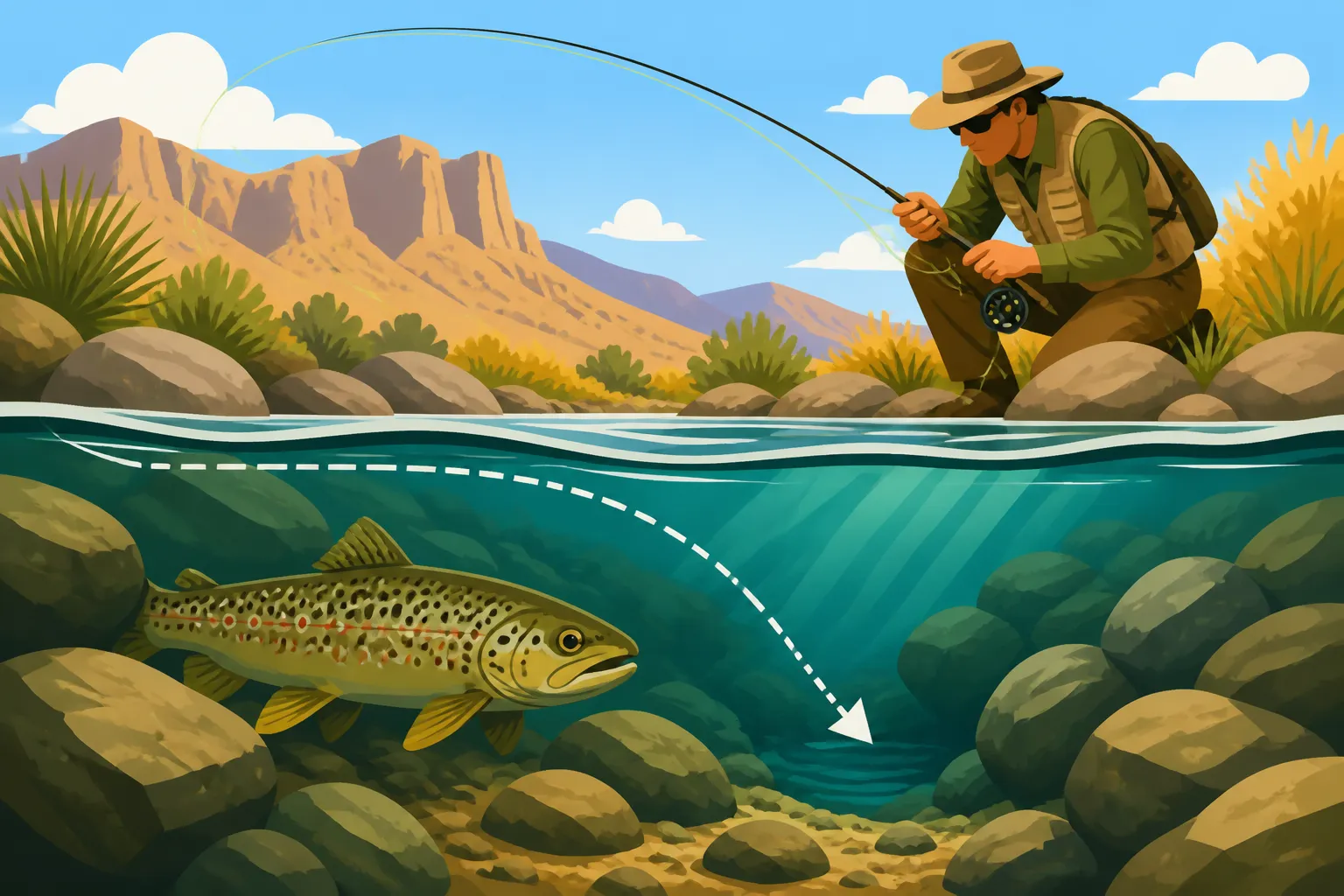
- Low Profile: Stay low to the ground. Crouch, kneel, or even crawl if necessary, especially when approaching potential holding water. Use bankside vegetation or terrain to your advantage to break up your silhouette.
- Move Slowly: Sudden movements will spook fish. Take your time, observe the water from a distance, and plan your approach and first cast.
- Shadow Management: Always be aware of your shadow. Keep the sun in front of you or directly overhead if possible. Your shadow falling on the water is a dead giveaway to trout.
- First Cast Counts: In clear water, you often only get one good shot at a specific holding spot before the fish knows you're there. Make that first cast count. Aim for a soft, accurate presentation that doesn't splash loudly or spook the fish. This is particularly relevant when considering techniques like Nymph Fishing on the San Juan River or Dry Fly Fishing in New Mexico, where delicate presentations are key.
Gear Considerations for Clear Streams
Your gear choices can significantly impact your success in clear water.
- Lighter Line and Longer Leaders: Opt for lighter test lines (e.g., 2-4 lb test for spinning, or lighter tippet for fly fishing). Fluorocarbon leader material is excellent because it's virtually invisible underwater. A longer leader (7-9 feet for spin fishing, even longer for fly fishing) helps keep your main line further from the fish's view. You can find a great selection of these on Amazon.
- Natural Lures and Baits: In clear water, trout can scrutinize your offering. Realistic lures that mimic natural prey (small minnow imitations, natural-colored spinners, or smaller jigs) tend to work best. If using bait, go with natural options like worms, crickets, or salmon eggs. Avoid overly flashy or brightly colored lures unless you're specifically trying to get an aggressive reaction in highly turbulent water. Our guide on Best Lures for New Mexico Trout provides more ideas.
- Appropriate Rod Setup: A sensitive rod allows you to feel subtle bites, which can be common in clear water when fish are more cautious. For a good all-around setup, consider something discussed in Best Rod Setup for New Mexico Trout Fishing.
- Polarized Sunglasses: These are not a luxury, they're a necessity. Polarized lenses cut through the glare on the water's surface, allowing you to see into the water, identify structure, and even spot fish directly. They're an invaluable tool for reading clear streams.
Learning from Others and Experience
No amount of reading can replace time on the water. Every stream is different, and conditions change constantly.
- Observe Other Anglers: Discreetly watch how experienced anglers approach a stream, where they cast, and what techniques they use. Don't be afraid to politely ask for advice; most anglers are happy to share knowledge, especially about local conditions.
- Keep a Fishing Log: Note down where you caught fish (or saw them), what the water conditions were like (clear, stained, high, low), the weather, and what gear you were using. Over time, this log will reveal patterns and help you predict where trout will be.
- Walk the Banks (Without Fishing): Sometimes, the best way to learn a stream is to simply walk its banks without a rod. Observe, identify potential holding water, and note how the current flows around different features. You'll be amazed at what you see when you're not focused on casting. This also helps you understand the New Mexico Fishing Regulations Overview by getting a firsthand look at the environment.
- Practice Catch and Release: Practicing Catch and Release Best Practices in New Mexico is crucial, especially when you're targeting those larger, wary trout. These fish are valuable breeders and contribute to the health of the fishery. Minimizing stress and injury ensures they survive to be caught again and pass on their strong genes.
By combining an understanding of trout behavior with keen observation and strategic angling techniques, you'll soon be spotting trout holding water like a seasoned pro, turning those frustratingly clear streams into your favorite fishing grounds.
Disclaimer
This article is for general informational purposes only and does not constitute professional advice. Laws, prices and regulations vary by location and change over time. Consult a qualified professional for guidance on your specific situation.