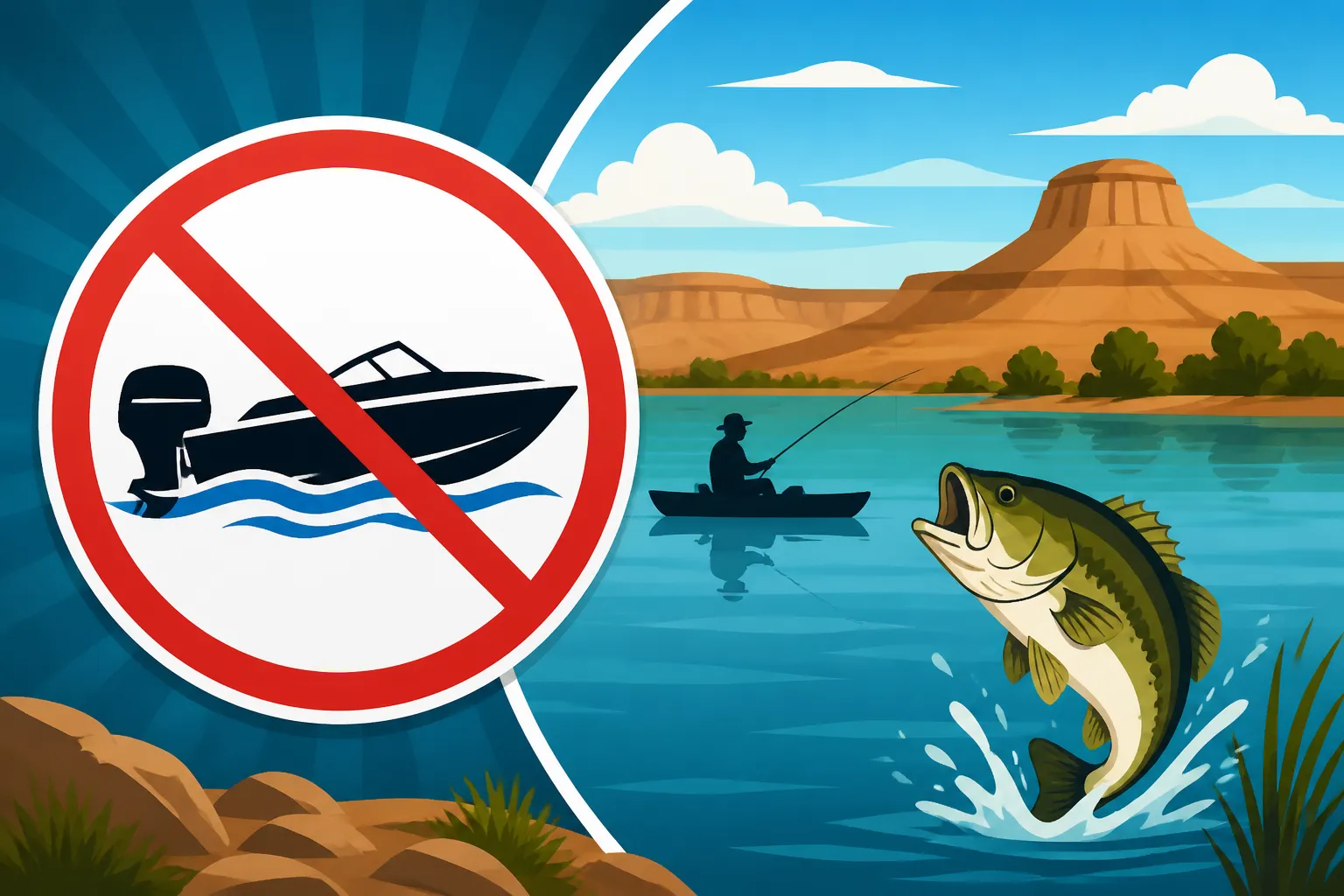
Cochiti Lake Rules on Motorized Boats
There’s nothing quite like the excitement of planning a fishing trip to a new lake, dreaming of those big catches. But then you start looking into the rules, especially for places like Cochiti Lake, and a wave of confusion can hit you. Will your motorized boat be allowed? What exactly does "no-wake" mean for your fishing plans? It’s frustrating when you just want to get out on the water, but navigating obscure regulations feels like trying to untangle a bird's nest of fishing line. This guide is here to untangle all that for you, explaining everything you need to know about motorized boat rules at Cochiti Lake so you can plan your trip with confidence.
Understanding Cochiti Lake's Unique Boating Regulations
Cochiti Lake isn't just any body of water; it's a place with a distinct personality, and its rules reflect that. Nestled in the heart of New Mexico, this lake offers some fantastic fishing opportunities, but it does so under a specific set of guidelines, primarily influenced by its management and purpose.
Why Cochiti Lake Has Specific Restrictions
The primary reason for Cochiti Lake's unique boating rules stems from its core purpose. Unlike some lakes built solely for recreation, Cochiti Lake was initially constructed and is managed by the U.S. Army Corps of Engineers (USACE) primarily for flood control on the Rio Grande. This crucial role means that recreation, while highly valued, operates within parameters designed to protect the dam, shorelines, and the environment.
Because of this, the lake is designated as a "no-wake" lake. This isn't just a suggestion; it's a fundamental operating principle. The USACE aims to minimize erosion along the lake's banks, protect delicate ecosystems, and ensure a peaceful, safe environment for all types of recreation – from fishing to kayaking and paddleboarding. If you've ever been to a lake where speedboats zoom by, creating huge waves that rock every other vessel and crash loudly onto the shore, you can appreciate why Cochiti Lake strives for a different experience. It's about preserving the tranquility and the natural beauty, preventing damage, and making sure everyone can enjoy the water without undue disturbance.
What "No-Wake" Really Means for Anglers
For anglers, the "no-wake" rule is perhaps the most significant regulation to understand. It means precisely what it says: your boat must operate at the slowest possible speed necessary to maintain steerage and produce absolutely no perceptible wake. Imagine gliding across the water, barely disturbing the surface – that's the goal. You shouldn't see any substantial V-shaped wave forming behind your boat.
The practical implications for fishing are profound. Firstly, forget about zooming from one fishing spot to another. Travel times across the lake will be considerably longer than on unrestricted waters. This requires a shift in mindset, favoring patience and a more deliberate approach to exploring the lake. Secondly, it naturally creates a calmer environment. This is fantastic for sensitive fishing techniques like fly fishing or light tackle spinning, where a calm surface can make a huge difference in spotting fish or detecting subtle bites. It also means you won't have to contend with constant boat chop, making for a much more comfortable day on the water, especially if you're targeting species like trout or bass in calmer areas. It’s also a huge plus for those of us who appreciate the quiet solitude of nature, rather than the roar of engines.
General Rules for All Vessels
While the no-wake rule is Cochiti's signature, it's vital to remember that all standard New Mexico boating regulations still apply. This includes the mandatory requirement for all vessels to carry a sufficient number of U.S. Coast Guard-approved personal flotation devices (PFDs) for everyone on board. For younger passengers, specifically children 12 years of age and younger, wearing a PFD at all times while the vessel is underway is not just a good idea, it's the law. You can read more about the specifics in the Life Jacket Requirements for New Mexico Boaters guide.
Beyond PFDs, your boat, if it's motorized, must be properly registered with the New Mexico Motor Vehicle Division. This includes displaying your registration numbers and decal correctly. Not having your boat registered can lead to fines and a ruined fishing trip, so make sure all your paperwork is in order. A comprehensive resource for this can be found in the New Mexico Boat Registration and Titling Guide. Other essentials like a sound-producing device (whistle or horn), navigation lights if operating after sunset or before sunrise, and a fire extinguisher for certain sized vessels are also non-negotiable. Always consult the latest New Mexico Fishing Regulations Overview from the New Mexico Department of Game and Fish (NMDGF) to stay up-to-date on all applicable state and local laws.
Navigating Motorized Boat Use at Cochiti Lake
So, you've got a boat with a motor – maybe a small outboard or a beefy electric trolling motor. How does that fit into the no-wake reality of Cochiti Lake? This section will break down the practicalities and address some common questions.
Horsepower Limitations and Enforcement
Here’s where a lot of confusion often creeps in. Many people assume a "no-wake" lake implies a strict horsepower limit, but for Cochiti Lake, that's not explicitly the case. The rule is about the effect your motor has, not its absolute power. You could technically have a high-horsepower outboard on your boat, but you would still be required to operate it at an absolute minimum throttle, barely creeping along, to ensure no wake is created.
The reality, however, is that trying to operate a large, powerful gas outboard at such a low speed can be incredibly impractical, inefficient, and even difficult to control. These motors are designed for planing speeds, not for barely idling. Enforcement by Cochiti Lake rangers and the USACE focuses on the wake itself. If your boat is creating a wake, regardless of your motor size, you're in violation. They'll be looking for signs of speed – visible wake, boats pushing water, and certainly any vessel that appears to be "on plane." Repeated violations could lead to warnings, citations, or even being asked to leave the lake. It's far better to err on the side of caution and ensure your boat is truly operating at a no-wake speed.
Electric Motors vs. Gas Outboards
Given the no-wake rule, electric motors, particularly electric trolling motors, become the absolute heroes of Cochiti Lake. They are inherently designed for quiet, low-speed operation, making it incredibly easy to adhere to the no-wake requirement. An electric motor allows you to glide silently, approaching fishing spots without spooking fish, and to slowly cover water efficiently. Many anglers even equip their boats with multiple deep-cycle batteries to ensure a full day of quiet propulsion. You can explore some great options in a guide like Best Trolling Motors for New Mexico Lakes.
Gas outboards, while not banned, are generally less practical for the consistent no-wake operation required. If you bring a boat with a gas outboard, be prepared to use it sparingly and at its absolute lowest setting. Some anglers might use a small gas kicker motor for primary propulsion and then switch to an electric trolling motor for precise positioning and fishing. The main takeaway is this: if your primary goal is efficient and compliant fishing at Cochiti Lake, an electric motor setup will likely provide a much more enjoyable and hassle-free experience. If you’re visiting New Mexico and looking to try out new waters, a service like FishingBooker can help you find local guides who are already set up with appropriate boats for Cochiti Lake’s unique conditions.
Launching and Access Points for Motorized Boats
Cochiti Lake provides designated boat ramps for launching all vessels, including those with motorized capabilities. The primary launch points are typically located within the Cochiti Lake Recreation Area. Always check with the USACE Cochiti Lake Project Office or their website for the most current information on ramp availability, especially considering fluctuating water levels, which can impact access.
When water levels are low, some ramps might be closed, or only smaller, shallow-draft boats might be able to launch. It’s crucial to plan ahead. When launching, remember the no-wake rule applies even in the launch area. Be courteous to other boaters, load and unload quickly, and get your vessel situated at a no-wake speed as soon as it hits the water. Adequate parking for trailers is usually available, but on busy weekends, it can fill up quickly, so an early start is always recommended. Always ensure your trailer is in good condition, as navigating some of the ramps can be steep.
Practical Tips for Anglers with Motorized Boats at Cochiti Lake
Fishing Cochiti Lake from a motorized boat means adapting your techniques and gear slightly to maximize your success and enjoyment within the no-wake framework. It’s not about limitation, but about opportunity.
Adapting Fishing Strategies to No-Wake Conditions
The no-wake rule isn't a hindrance; it's an invitation to refine your fishing tactics. Slow, deliberate approaches often yield better results on any lake, and Cochiti forces this patient methodology.
- Silent Approach: With an electric trolling motor, you can sneak up on prime fishing spots without sending vibrations through the water that might alarm fish. This is especially effective when targeting wary species like trout or bass in clear water.
- Precision Positioning: Use your electric motor to hold your position against light winds or current, allowing you to thoroughly work a submerged structure, a drop-off, or a weed line. This "spot-lock" capability, found on many modern trolling motors, is invaluable.
- Slow Trolling: Even though you can't speed troll, very slow trolling with small crankbaits, spoons, or even live bait (where permitted by New Mexico Fishing Regulations Overview) can be highly effective. Match your speed to the lure's action and the fish's mood. This is particularly good for searching for crappie or walleye. For those new to this, learning specific Trolling Techniques for New Mexico Lakes can elevate your game.
- Anchoring: Don’t underestimate the power of a good anchor. If you find a productive area, anchor up and thoroughly fish it. This allows you to present your bait or lure naturally without boat movement disrupting the presentation.
Remember, Cochiti Lake offers a chance to really slow down and appreciate the fishing process. If you’re considering booking a guided trip, many guides listed on FishingBooker will already be well-versed in these techniques and have the ideal setup for navigating Cochiti’s specific rules, making your experience seamless.
Essential Gear and Safety Considerations
Equipping yourself properly for Cochiti Lake ensures both safety and a productive day of fishing.
- Powerful Electric Trolling Motor & Batteries: This is your primary propulsion. Invest in a motor with sufficient thrust for your boat size and plenty of battery capacity (two or three deep-cycle batteries are common) to last all day. A good onboard charger is also a smart investment.
- Strong Anchors: Given the no-wake rule, anchoring is frequent. Carry at least two anchors of appropriate weight for your boat and the lake bottom – a standard Danforth style and a mushroom or river anchor can be a good combination.
- GPS/Fish Finder: A quality unit will help you navigate slowly to your chosen spots, mark productive areas, and identify underwater structure that holds fish. Since you won't be covering ground quickly, making the most of each location is key.
- Layered Clothing: New Mexico weather can change quickly. Even on a no-wake lake, you’re exposed to the elements. Layered clothing ensures you stay comfortable from early morning chills to midday sun.
- Sun Protection: Hat, sunglasses, and sunscreen are non-negotiable. The New Mexico sun is intense, especially on the water.
- PFDs (Life Jackets): As mentioned, these are mandatory. Make sure they are easily accessible and properly fitted for everyone on board.
Always check the weather forecast before heading out. Even without speedboats, wind can whip up choppy conditions on Cochiti, making it feel less tranquil. Being prepared for varying weather will make your experience much safer and more enjoyable.
Respecting the Environment and Other Users
One of the great joys of Cochiti Lake's no-wake environment is the shared tranquility. To maintain this, courtesy and respect for fellow lake users are paramount.
- Give Space: Maintain a respectful distance from other boats, kayakers, paddleboarders, and especially bank anglers. Don't crowd someone's fishing spot.
- Minimize Noise: Even with electric motors, be mindful of loud conversations or music. The peace is part of Cochiti's charm.
- Pack It In, Pack It Out: Leave no trace. Take all your trash with you. This beautiful environment relies on everyone doing their part.
- Wildlife: Observe wildlife from a distance. The lake is home to various birds and other creatures; give them their space.
- Know Your Limits: Understand your boat's capabilities and your own. Don't venture out in conditions you're not comfortable with, especially since help might take longer to reach you on a larger, slower lake.
By adhering to these principles, you contribute to a positive experience for everyone and ensure Cochiti Lake remains a cherished fishing destination for years to come. Whether you're a seasoned angler or a beginner looking for a peaceful day, Cochiti Lake offers a wonderful opportunity to connect with nature and enjoy some excellent New Mexico fishing. If you're planning a full season of angling, remember to check the New Mexico Fishing Season Calendar to know the best times to target specific species, or consider the Best Time of Year to Fish in New Mexico for general advice. And of course, don't forget to secure your New Mexico Fishing License Guide before you cast your first line!
Here’s a quick overview of how different boat types fit in at Cochiti Lake:
| Boat Type | Suitability for Cochiti Lake (No-Wake) | Pros | Cons |
|---|---|---|---|
| Kayaks/Canoes | Excellent. Naturally no-wake, quiet, and offer direct access to many areas. | Silent, easy to maneuver, great for stealth fishing, no fuel costs. | Limited capacity, slower travel, susceptible to wind, can be tiring over long distances. |
| Paddleboards | Excellent. Perfect for a leisurely pace and unique vantage point. | Quiet, excellent for sight fishing, good exercise. | Limited fishing gear capacity, unstable for beginners, slow, highly susceptible to wind. |
| Small Fishing Boats (e.g., Jon Boats, Small V-Hull) | Very Good. Ideal when equipped with an electric trolling motor. Gas outboards can be used very sparingly at lowest throttle. | Good stability, more space for gear, can navigate shallow areas, often trailerable. | Can be cumbersome to operate gas motor at no-wake, still affected by wind. |
| Bass Boats / Larger Recreational Boats | Acceptable, but challenging. Gas outboards must run at idle, which is inefficient and can be difficult to control. Best used with a robust electric trolling motor as primary propulsion. | Stable, comfortable, ample storage, good for electronics. | Gas motor highly restricted, not designed for extended no-wake speeds, higher fuel cost (for short runs). |
| Sailboats | Excellent. Naturally no-wake when sailing, or can use a small kicker motor at idle speed. | Quiet, environmentally friendly, relaxing. | Dependent on wind conditions, can be bulky to launch. |
Disclaimer
The information provided in this guide is for general informational purposes only and is subject to change. While we strive to offer accurate and up-to-date content, fishing regulations, lake rules, and access points can be modified by governing authorities. It is the responsibility of each angler to consult the official New Mexico Department of Game and Fish regulations and the U.S. Army Corps of Engineers Cochiti Lake Project Office for the most current and authoritative information before planning any trip. Always prioritize safety and adherence to all posted rules and laws.