How to Identify a Rio Grande Cutthroat Trout
It can be incredibly frustrating to be out on a beautiful New Mexico stream, reeling in a gorgeous trout, only to wonder if you've just caught a common rainbow, a crafty brown, or the elusive, native Rio Grande cutthroat. The waters of our state are home to a diverse array of fish, but identifying the subtle differences between them, especially when it comes to our precious native species, can feel like a real challenge. This guide is here to walk you through the distinctive features that will help you confidently identify a Rio Grande cutthroat trout, ensuring you can appreciate its unique beauty and adhere to any specific regulations it might have.
The Allure of the Rio Grande Cutthroat Trout
There’s a special magic that comes with catching a native fish, a true original of the landscape. The Rio Grande cutthroat trout holds a significant place in New Mexico's angling heritage and conservation efforts, making its identification all the more rewarding and crucial.
Why Identification Matters
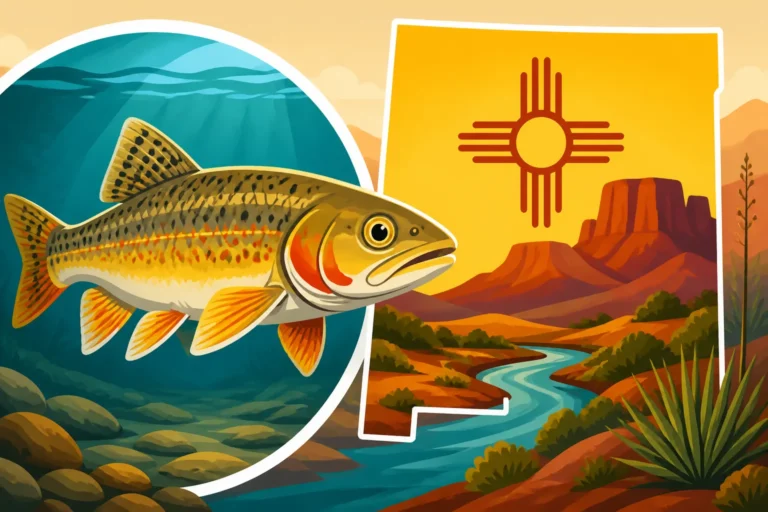
For many anglers, encountering a Rio Grande cutthroat trout isn't just about the catch; it's about connecting with a piece of New Mexico's natural history. This particular subspecies isn't just any fish; it's the official state fish of New Mexico, a designation that speaks volumes about its importance to our ecosystems and our angling culture. Identifying it correctly is vital for several reasons. Firstly, these fish are often found in fragile, high-elevation ecosystems, and they can have very specific catch and release guidelines or even special areas where fishing is highly regulated to protect their populations. Knowing what you’ve caught ensures you’re respecting these rules, which are detailed further in guides like New Mexico Trout Fishing Rules.
Beyond regulations, there’s immense satisfaction in knowing you’ve laid eyes on a truly indigenous species. It’s a moment that transcends typical fishing, offering a glimpse into the past and a hope for the future of our wild waters. Conservation groups and the New Mexico Department of Game and Fish work tirelessly to restore and maintain healthy populations of these native beauties, and accurate angler identification plays a small but significant role in reporting and understanding their distribution.
Where They Call Home
The Rio Grande cutthroat trout is a species perfectly adapted to the rugged, pristine mountain environments of New Mexico. You won't typically find them finning lazily in broad, warm rivers or large, open reservoirs. Instead, these beautiful fish prefer the colder, clearer waters of high-elevation streams, rivers, and sometimes even small alpine lakes within the Rio Grande watershed. Think of the headwaters of the Pecos River, the Chama River tributaries, or streams tucked away in the Sangre de Cristo Mountains.
Their native range historically covered much of the upper Rio Grande basin in northern New Mexico and southern Colorado. While their territory has shrunk due to various factors, dedicated conservation efforts mean you can still find strongholds in these remote, picturesque locations. When you’re hiking into a secluded canyon or casting into a pristine mountain stream, you’re already in the kind of habitat where a Rio Grande cutthroat is most likely to thrive, especially when compared to the more widespread Rainbow Trout Fishing in New Mexico or Brown Trout Fishing in New Mexico which often inhabit different, more accessible waters.
Key Physical Characteristics for Identification
Identifying a Rio Grande cutthroat trout involves paying close attention to several distinct physical markers. These aren't always glaringly obvious, especially in different lighting or water conditions, but with practice, you'll start to pick them out.
The Iconic "Cutthroat" Marks
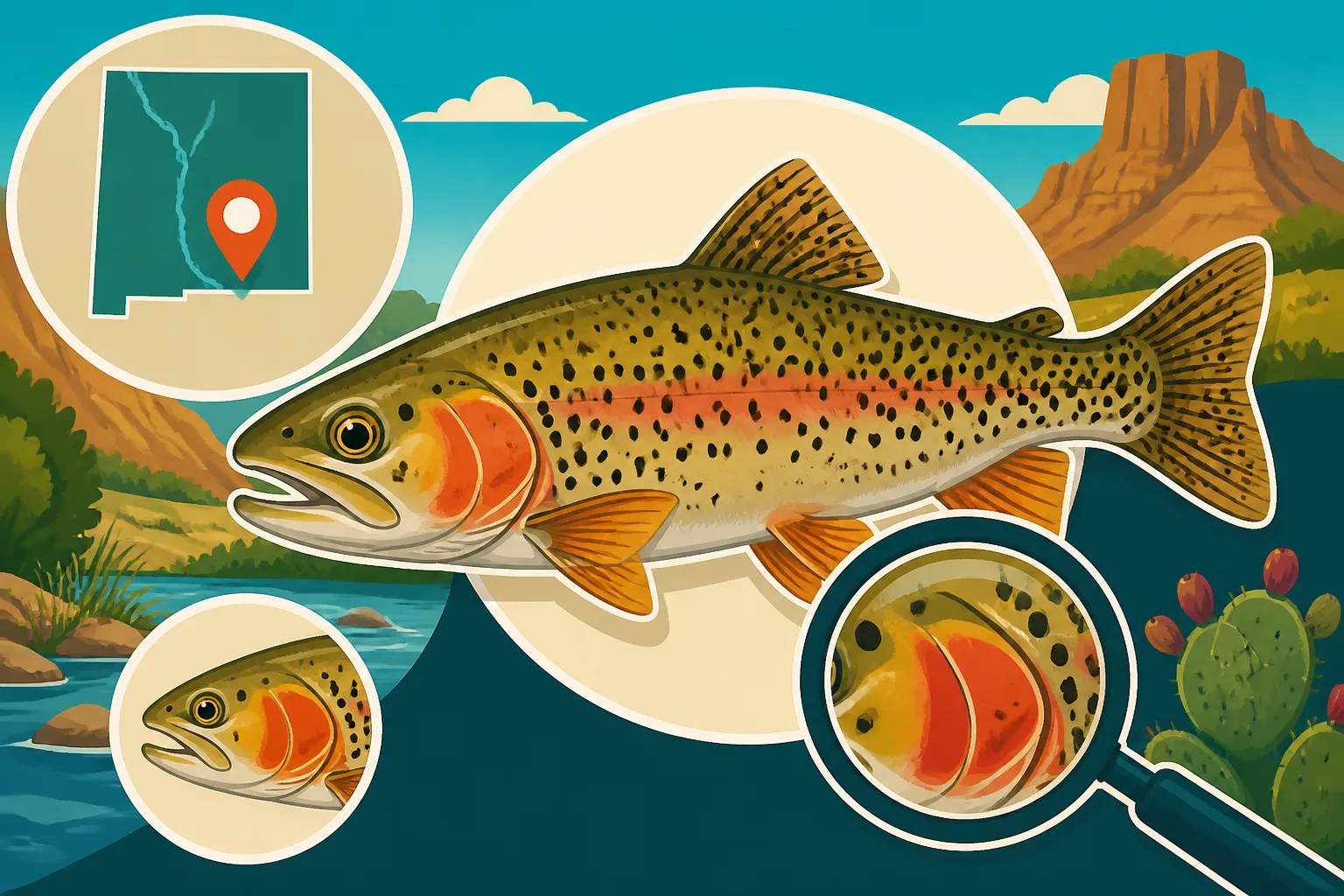
This is, by far, the most defining characteristic and the origin of their name. Look for the distinct, deep orange-red "slash" marks found in the folds under their lower jaw, on either side of the throat. These aren't just faint blush; they are usually vibrant and quite pronounced, appearing almost like an actual cut or a smear of lipstick. The intensity can vary, sometimes appearing more yellowish-orange, but they are almost always present and noticeable.
It's important to differentiate these from the fainter, often pinkish or yellowish hues that some rainbow trout might exhibit around their gill plates. A true cutthroat mark is typically much more vivid and concentrated directly under the jaw. Think of it as a painter's stroke rather than a subtle gradient. Sometimes, especially in very clear water or when a fish is fresh out of the water, these slashes practically glow. When you're comparing against a photo or a fish in hand, focus intently on that specific area. Remember, while the "cutthroat" name implies these slashes, their visibility can sometimes be masked by dirt, mucus, or even genetic variations, so don't rely solely on this one feature, but it's certainly the primary indicator.
Body Shape and Coloration
Rio Grande cutthroats typically exhibit a sleek, streamlined body shape, well-suited for navigating swift mountain currents. They're generally not as "stocky" as some lake-dwelling trout, but rather lithe and agile. Their coloration can be quite beautiful and varies depending on their specific environment, diet, and even individual genetics. You’ll often see a general body color ranging from an olive-green to a golden-tan or bronze on their sides, fading to a lighter, often yellowish or creamy white belly. The back might be a darker olive or brownish color, providing camouflage from aerial predators.
One of the most crucial elements of their coloration for identification is their spotting pattern. Rio Grande cutthroats tend to have relatively small, dark spots that are most concentrated towards the tail and less dense, or even absent, on the front half of their body, particularly above the lateral line. These spots are usually roundish and somewhat irregular. This posterior concentration of spots is a key differentiator from other trout, like rainbows, which typically have more uniform and widespread spotting across their entire body. Looking closely at the number and distribution of these spots, especially as you move from head to tail, can provide valuable clues.
Mouth and Head Features
Examining the head and mouth can also offer some helpful hints, although these are often more subtle than the cutthroat marks or spotting patterns. Rio Grande cutthroats generally have a moderately sized mouth. A good indicator, common to all cutthroat subspecies, is that the maxilla (the upper jawbone) typically extends to or slightly beyond the posterior margin of the eye. This isn't an absolute rule for every single fish, but it's a general characteristic to observe.
Their head shape is usually proportional to their streamlined body, not overly large or bulbous. The eyes are often clear and bright. While these features might not be as immediately distinctive as the vibrant throat slashes, observing the overall head profile in combination with other traits paints a more complete picture. Keep an eye out for any visual guides or laminated fish identification cards you might find on Amazon to help you in the field.
Distinguishing Rio Grande Cutthroats from Look-Alikes
The biggest challenge in identifying a Rio Grande cutthroat trout often comes from its resemblance to other trout species commonly found in New Mexico waters. Hybridization, especially with rainbow trout, also complicates matters, creating fish with mixed characteristics.
Rainbow Trout vs. Rio Grande Cutthroat
This is probably the most common confusion point for anglers. Rainbow trout are widely stocked across New Mexico and can interbreed with cutthroats, leading to hybrid offspring that share traits from both.
Here’s how to tell them apart:
- Lateral Band: Rainbow trout are famous for the vibrant, iridescent pink or red lateral band that runs along their side, from their gill plate to their tail. This band is usually quite pronounced, especially in spawning males. Rio Grande cutthroats typically lack this distinct pink lateral band. While they might have a subtle reddish or golden hue along their side, it won't be the distinct, broad stripe of a rainbow.
- Cutthroat Marks: As mentioned, the bright orange-red slashes under the jaw are the hallmark of the cutthroat. Rainbows generally do not have these slashes, or if there's any coloration, it's very faint and not as defined.
- Spotting: Rainbows usually have more numerous and evenly distributed black spots over their entire body, including the head, dorsal fin, and caudal fin. These spots are often smaller and denser than those on a cutthroat. Remember, cutthroats have spots concentrated towards the tail.
- Mouth: While subtle, some anglers note that rainbow trout tend to have a slightly smaller mouth where the maxilla doesn't extend quite as far back as it does on a cutthroat.
When you're fishing a stream that's known to hold both, like many of our mountain rivers, this comparison becomes crucial. Knowing the differences helps you uphold ethical Catch and Release Best Practices in New Mexico for native species.
Brown Trout vs. Rio Grande Cutthroat
Brown trout, another non-native species introduced to New Mexico, also present a distinct appearance that sets them apart from the Rio Grande cutthroat.
Key distinctions include:
- Spotting and Coloration: Brown trout are renowned for their unique spotting pattern: dark spots, but also vivid red or orange spots, often encircled by a pale "halo" or ring. These spots are usually larger and more irregularly shaped than the cutthroat's small dark spots. Their overall body color tends to be a darker brown or olive, with a yellowish or golden belly, often with a darker marbled pattern on their back. Cutthroats, while having dark spots, lack those distinctive red/orange spots with halos.
- Mouth and Jaw: Brown trout typically have a larger mouth, with the maxilla extending well beyond the eye, giving them a more predatory appearance. Their jaw often protrudes slightly. The cutthroat’s mouth is generally more proportionate to its head.
- Tail: Brown trout often have a relatively square-shaped tail, sometimes with a very slight fork, but generally less deeply forked than a rainbow or cutthroat. The tail of a cutthroat is typically moderately forked.
If you’re fishing a system where both browns and cutthroats are present, like some of the larger mountain streams, these identifying features become your best friends. It’s a great challenge to master Trout Species in New Mexico in hand, but incredibly rewarding.
Other Native Trout: The Gila Trout
While the Rio Grande cutthroat is New Mexico's state fish, it's not our only native trout. The Gila trout, another beautiful and federally listed native species, also calls New Mexico home, though in much more restricted drainages in the southwestern part of the state. While it's unlikely you'd confuse a Gila trout with a Rio Grande cutthroat if you're in the right region, it's worth noting some differences for a broader understanding of Native Fish Species of New Mexico.
- Coloration: Gila trout typically have a more brassy, golden-yellow coloration, often with prominent black spots that are less concentrated on the tail than a Rio Grande cutthroat. Their spots can be irregularly shaped and sometimes extend onto the fins.
- Cutthroat Marks: Gila trout also possess "cutthroat" marks, but they tend to be fainter, often a pale yellow or orange, and less vibrant than those of the Rio Grande cutthroat.
- Habitat: Gila trout are found in the Gila River basin, completely separate from the Rio Grande basin where Rio Grande cutthroats live. Knowing your location, therefore, is a primary identifier for these two native species. You can learn more about them in our guide on Gila Trout in New Mexico.
| Feature | Rio Grande Cutthroat Trout | Rainbow Trout | Brown Trout |
|---|---|---|---|
| Cutthroat Marks (Throat) | Prominent, deep orange-red slashes under jaw | Absent or very faint, subtle pink/yellow | Absent |
| Lateral Band | Absent or very subtle golden/reddish hue | Distinct, iridescent pink/red stripe along side | Absent |
| Body Spotting | Small, dark spots, most concentrated towards the tail | Numerous, evenly distributed small black spots | Dark spots and red/orange spots with pale halos |
| Overall Body Color | Olive-green, golden-tan, or bronze; lighter belly | Silvery sides, darker back, often vibrant | Brown/olive back, yellowish belly, often mottled |
| Mouth/Jaw | Maxilla extends to or slightly beyond eye | Maxilla usually does not extend beyond eye | Large mouth, maxilla extends well beyond eye |
| Tail | Moderately forked | Moderately forked | Relatively square or very slightly forked |
| Habitat Preference | Cold, clear, high-elevation mountain streams/lakes | Adaptable, widely stocked in rivers and lakes | Adaptable, prefers cooler rivers, often larger waters |
Habitat and Behavior Clues
Beyond physical appearance, understanding where and how these fish live can also significantly aid in their identification. When you head out fishing, knowing what to expect from the water itself can give you a heads-up on what fish you're likely to encounter.
Preferred Waters and Elevation
As we’ve touched upon, Rio Grande cutthroat trout are creatures of the high country. They thrive in pristine, cold-water environments, typically found at higher elevations in the northern and central mountain ranges of New Mexico. These are often the smaller, less-impacted tributaries and headwater streams where water temperatures remain consistently low, and oxygen levels are high. Think of the kind of place where you might have to hike a bit to reach, where the water runs crystal clear over rocky bottoms, and shaded by pines and aspens.
If you're casting your line into a large, warm-water reservoir like Elephant Butte Lake or even lower-elevation, slower-moving stretches of the Rio Grande, you're far less likely to encounter a pure Rio Grande cutthroat. These larger, warmer environments are more typically home to species like bass, catfish, or stocked rainbow trout. So, when you're planning your trip to Best Places to Fish in New Mexico, consider the elevation and water type as your first filter for potential cutthroat encounters.
Spawning and Feeding Habits
Observing the behavior and timing of fish can also provide subtle clues. Rio Grande cutthroats are typically spring spawners, usually in April, May, or early June, depending on water temperatures and snowmelt. During this time, their colors can become more vibrant, and the males might develop a pronounced "kype" or hooked jaw, although this is also common in other spawning trout. However, their specific habitat requirements for spawning – shallow, gravelly riffles in cold, clear streams – further reinforces their preference for pristine mountain waters.
When it comes to feeding, cutthroats are opportunistic, but they are particularly known for their insectivorous diet. They will readily rise to dry flies, making them a favorite target for fly anglers. They often hold in classic trout lies: behind boulders, in slower seams next to faster current, or in plunge pools. Their feeding behavior in these specific environments, often actively looking up for insects, can be another piece of the identification puzzle, especially for those who spend time observing the fish before casting. If you're using Fly Fishing Techniques for New Mexico Rivers, and a fish rises eagerly to your well-presented dry fly in a high mountain stream, there's a good chance you might be interacting with a Rio Grande cutthroat.
Successfully identifying a Rio Grande cutthroat trout is a rewarding skill for any angler who values New Mexico's natural heritage. By carefully observing the tell-tale orange-red throat slashes, the unique spotting pattern concentrated toward the tail, and considering the specific high-elevation, cold-water habitats they call home, you'll greatly improve your chances of knowing exactly what you've caught. This knowledge not only deepens your appreciation for these magnificent native fish but also ensures you're fishing responsibly and contributing to their ongoing conservation. Happy angling, and may your next catch be a vibrant, unmistakable Rio Grande cutthroat!
Disclaimer
This article is for general informational purposes only and does not constitute professional advice. Laws, prices and regulations vary by location and change over time. Consult a qualified professional for guidance on your specific situation.