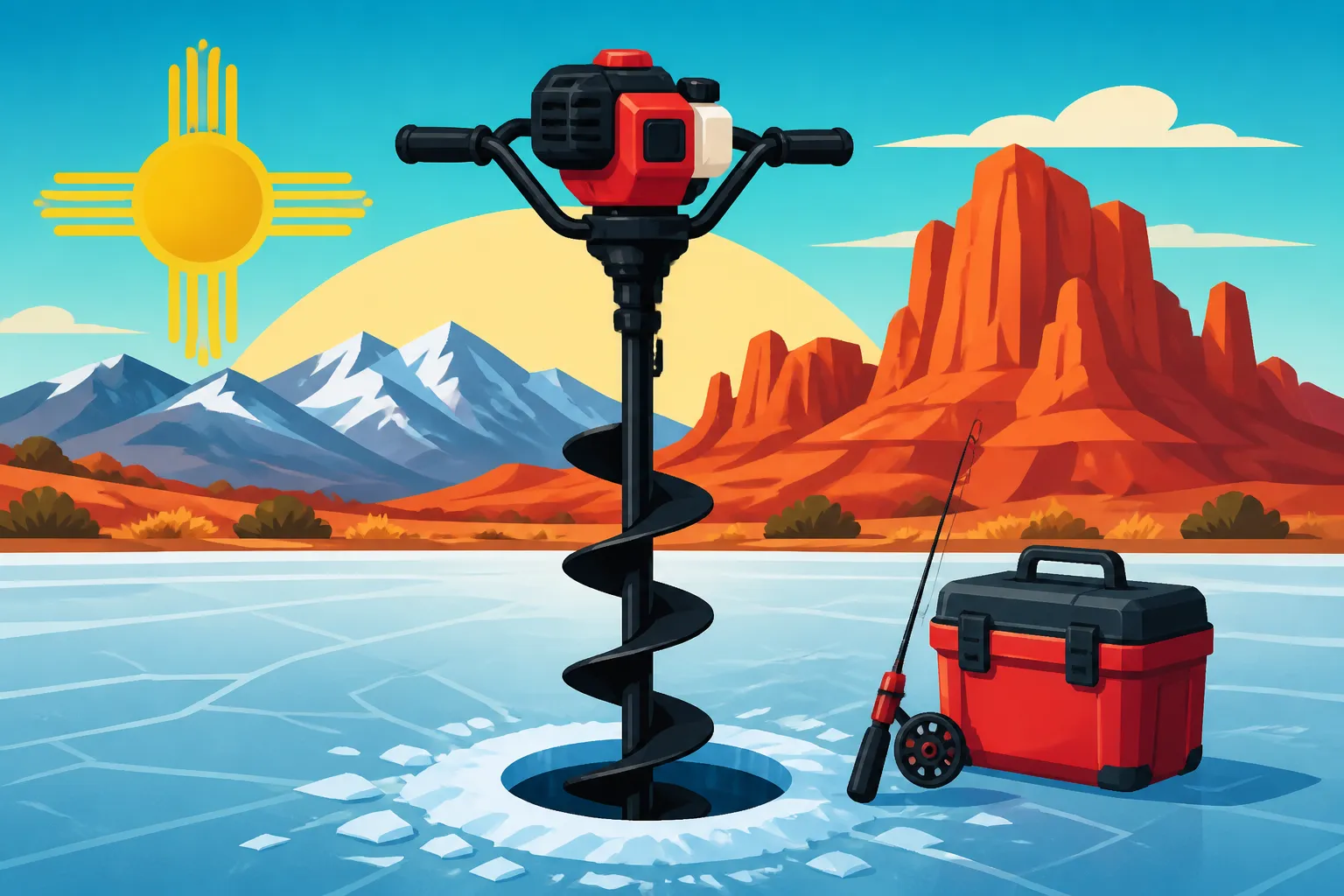
Best Ice Fishing Auger for New Mexico
There's nothing quite like the crisp air and serene quiet of ice fishing, but the joy can quickly turn to frustration if you're wrestling with an inadequate auger. In New Mexico, where ice conditions can vary wildly from one high-altitude lake to a lower-elevation reservoir, choosing the right tool to cut through that frozen surface is paramount. This comprehensive guide will walk you through everything you need to know to select the best ice fishing auger for your New Mexico adventures, ensuring you spend less time drilling and more time reeling in those beautiful trout.
Understanding New Mexico's Ice Fishing Landscape
New Mexico offers some truly unique ice fishing experiences, from the high mountain lakes nestled in the Carson National Forest to larger, more accessible reservoirs. However, these diverse environments also mean that "one size fits all" rarely applies when it comes to augers. The conditions you'll encounter will heavily influence which type of auger is going to be your best companion on the ice.
Ice Conditions Across the State
Unlike some northern states with consistently thick, hard ice, New Mexico's ice can be a bit more unpredictable. You might find several feet of solid, clear ice on a lake like Eagle Nest or Heron in the heart of winter, but closer to the fringes of the season, or on slightly warmer days, you could encounter layers of slush, refrozen snow, or even thinner, rapidly changing conditions. This variability means you need an auger that can handle different consistencies and thicknesses without bogging down or struggling. A dull blade, for instance, might barely make a dent in clear, hard ice, but a sharp, efficient blade on a powerful auger can slice through it like butter, even if it's mixed with slush. Always make sure to check ice thickness before heading out, and remember that ice can be uneven. For more information on safely getting out there, check out How Thick Does Ice Need to Be to Fish Safely?.
High-Altitude Considerations
Many of New Mexico's prime ice fishing spots, such as Heron Lake or Eagle Nest Lake, are located at significant elevations. High altitude can affect both anglers and their gear. For gas-powered augers, the thinner air can sometimes reduce engine performance, making a slightly overpowered model a smart choice if you frequent these higher elevations. For battery-powered units, while the direct impact on battery life is minimal, the colder temperatures often associated with high altitudes can shorten battery runtime. Carrying a spare, fully charged battery is always a good practice. Moreover, trekking through snow and carrying gear at elevation is more strenuous, so the overall weight of your auger becomes a critical factor for your comfort and safety.
Common Fish Species and Hole Sizes
The type of fish you're targeting will also dictate the ideal hole size, which in turn affects your auger choice. If you're primarily after panfish like bluegill or smaller trout, a 6-inch auger might be perfectly adequate and lighter to carry. However, if you're dreaming of landing a trophy lake trout, a big kokanee salmon, or perhaps a tiger muskie at Bluewater Lake, you'll definitely want an 8-inch or even 10-inch hole to get that fish through without a struggle. Remember, bigger holes mean more ice to cut, requiring more effort from you or more power from your auger. Consider what you typically fish for when making your decision; a good all-around size for trout and smaller game fish in New Mexico is often 7 or 8 inches. To find out what you might catch, refer to Fish You Can Catch Ice Fishing in New Mexico.
Types of Ice Fishing Augers
When you're outfitting yourself for a New Mexico ice fishing trip, you'll find there's a whole spectrum of auger types, each with its own advantages and disadvantages. Understanding these differences is key to making a choice that truly suits your style of fishing and the conditions you expect to face.
Manual Augers: The Traditional Choice
Manual augers are the classic, no-frills option. They consist of a handle, a shaft, and a set of sharp blades at the bottom. You operate them by hand, turning the handle in a circular motion to screw the blades through the ice.
- Pros: They are the lightest and most affordable auger type, making them fantastic for beginners, kids, or anglers who prefer to stay nimble and hike into less accessible spots. There's no fuel to spill, no batteries to charge, and virtually no maintenance beyond keeping the blades sharp. For a quick trip to a local pond or early-season ice that isn't too thick, a manual auger can be incredibly efficient. Many anglers keep a manual auger as a backup, or for those days when the ice is just a few inches thick.
- Cons: Their biggest drawback is the physical effort required. If you're planning on drilling many holes, or if the ice is consistently thick (say, over 18 inches), you'll quickly tire out. They can also struggle with slushy, layered ice that power augers might rip right through. In New Mexico, where deep ice at some high-country lakes is common, a manual auger might leave you sweating and exhausted rather than enjoying the fishing.
Electric Drill Augers: Lightweight & Convenient
This category typically refers to an auger bit that attaches to a heavy-duty cordless electric drill. You use the drill's motor to turn the auger, eliminating manual effort.
- Pros: These are often very lightweight and relatively quiet. If you already own a powerful cordless drill (at least 18V, preferably 20V or higher, with a high torque setting), you only need to purchase the auger attachment, which can be cost-effective. They're great for anglers who drill a moderate number of holes and appreciate the portability. For instance, you could find a good attachment at Bass Pro Shops or even on Amazon that pairs perfectly with a drill you already use for home projects. They are also emissions-free, which is a plus for enclosed shelters and those who want to avoid gas fumes.
- Cons: The main limitation is battery life. Drill batteries are not designed for the continuous, high-drain demands of ice drilling, especially in cold weather. You'll need multiple high-amp-hour batteries to drill more than a few holes, particularly if the ice is thick. The drill itself can also be prone to overheating if pushed too hard. These are generally better suited for thinner to medium ice conditions in New Mexico, not necessarily for punching dozens of holes through two feet of ice.
Propane Augers: Clean and Reliable Power
Propane augers use small, disposable propane canisters to fuel their engines, offering a convenient alternative to gasoline.
- Pros: They start easily in cold weather, often with just a pull or two, and run much cleaner than gas augers, producing far fewer fumes. This is a significant advantage if you're fishing in an ice shelter or just prefer a cleaner operation. They don't require mixing oil and gas, simplifying fuel management. Propane canisters are widely available, so you can easily pick up refills at many outdoor retailers or general stores. Many anglers appreciate the consistent performance without the mess of gasoline.
- Cons: While convenient, those small propane canisters can add up in cost over time, and you'll need to carry several if you plan a long day of drilling many holes. They might also have slightly less raw power than a comparable gas auger, though modern propane models are very efficient. Finding replacement parts or specialized repairs might be slightly less common than for gas models, depending on your location in New Mexico.
Electric Battery Augers: The Modern Workhorse
These are purpose-built electric augers that use large, rechargeable lithium-ion battery packs to power a robust electric motor. This category is distinct from the drill attachments, as they are integrated, self-contained units.
- Pros: Electric battery augers are rapidly becoming the preferred choice for many New Mexico ice anglers. They are incredibly quiet, starting instantly with the push of a button and producing zero emissions. This means no more gas fumes, no more struggling with pull cords in freezing temperatures, and minimal noise to scare fish. They offer impressive power, often rivaling gas models for cutting speed and efficiency, especially through thick ice. Battery technology has advanced significantly, providing excellent runtime, and many come with quick-charging capabilities. For example, brands like ION or Strikemaster's electric options are highly regarded and can be found at outdoor shops or online retailers like Amazon.
- Cons: The initial cost can be higher than manual or drill augers. While battery life is good, you'll still want to carry a spare battery for extended trips or very cold days, which adds to the overall weight and expense. Like all batteries, they perform best when kept warm, so storing them in a warm pocket or cooler when not in use can help maximize their efficiency in frigid New Mexico winters.
Gas Augers: Raw Power for Thick Ice
Gas-powered augers utilize a small internal combustion engine, typically two-stroke, that runs on a gasoline-oil mix.
- Pros: For years, gas augers were the undisputed kings of power, capable of drilling dozens of holes through thick, stubborn ice with ease. If you're an angler who fishes frequently, targets large species requiring big holes, or consistently faces very thick ice, a gas auger still offers a robust, reliable solution. They are generally less sensitive to extreme cold than batteries and can be refueled quickly from a gas can. Many experienced anglers still swear by their gas augers for sheer cutting power.
- Cons: The biggest downsides are noise, fumes, and weight. Gas augers are loud, can produce unpleasant exhaust fumes (especially if you're drilling near an ice shelter), and they require mixing oil and gas, which can be messy. They also tend to be the heaviest option, making them less ideal for long hikes or mobile fishing. Maintenance involves spark plugs, carburetors, and fuel filters, which can be more complex than electric models. Their environmental footprint is also higher due to emissions.
Here's a quick comparison of the auger types:
| Auger Type | Portability | Power / Ice Thickness | Noise Level | Maintenance | Cost (Initial) | New Mexico Suitability |
|---|---|---|---|---|---|---|
| Manual | Excellent | Low / Thin Ice | Silent | Very Low | Low | Good (thin ice, mobile) |
| Electric Drill | Excellent | Moderate / Medium Ice | Low | Low | Medium | Good (moderate holes) |
| Propane | Good | Good / Thick Ice | Moderate | Medium | Medium-High | Excellent (clean, reliable) |
| Electric Battery | Good | Excellent / Thick Ice | Very Low | Low | High | Excellent (power, quiet) |
| Gas | Fair | Excellent / Very Thick | High | High | Medium | Good (heavy use, power) |
Key Features to Consider for New Mexico
Now that you understand the different types of augers, let's dive into the specific features that will make a real difference when you're out on a frozen New Mexico lake or reservoir.
Auger Blade Design and Diameter
The blades are where the rubber meets the road—or rather, where the steel meets the ice! The design of the auger blades significantly impacts how efficiently and easily your auger cuts.
- Blade Types: Most augers come with either straight chipper blades or curved shaver blades. Chipper blades, often found on older or more budget-friendly models, "chip" away at the ice. They are durable and handle dirty ice (ice with embedded sand or gravel) better, but they require more force and cut slower. Shaver blades, common on newer power augers, "shave" through the ice, offering a much smoother, faster cut with less effort. However, they are more delicate and can dull or chip more easily if they hit rocks or frozen mud. Given New Mexico's varied ice conditions, sometimes including dirty ice near shore, durable shaver blades are often preferred, but always be mindful of where you're drilling.
- Diameter: As discussed, the diameter of your auger (typically 6, 7, 8, or 10 inches) is crucial. A 6-inch auger is perfect for small panfish and provides a much faster, easier cut, especially with a manual auger. An 8-inch auger is a great all-around choice for most New Mexico trout, perch, or walleye, offering a good balance of cutting speed and hole size. If you're after those bigger species like tiger muskie or larger striped bass, a 10-inch auger is ideal but will require substantially more power and effort. Consider what you plan to target most often; for general New Mexico trout fishing, an 8-inch hole is a safe bet. You can learn more about the trout you're after in Trout Species in New Mexico.
Power Source and Performance
Beyond just the type of auger, the specific power and performance metrics matter.
- Engine Size (Gas/Propane): For gas and propane augers, engine displacement (measured in cubic centimeters or cc) gives you an indication of power. A higher cc usually means more torque and faster cutting, which is beneficial for thicker ice or larger diameter holes. For New Mexico's varied conditions, a 40cc or higher engine is generally recommended to handle whatever the ice throws at you, especially at higher elevations where engines might lose a bit of power.
- Battery Voltage and Amp-Hours (Electric): For electric battery augers, voltage (V) indicates power, while amp-hours (Ah) indicate capacity or runtime. A 40V or 80V system will provide ample power for drilling, while a higher Ah (e.g., 5Ah, 8Ah) means more holes per charge. When considering electric options for places like Elephant Butte Lake or Navajo Lake where you might be drilling many holes, look for a system with good power and at least a 5Ah battery, or plan to carry a spare.
Weight and Portability
This is a huge factor, especially if you're often moving around on the ice or hiking to your spots.
- Overall Weight: A lighter auger means less fatigue, easier transportation, and more energy for fishing. Manual augers are the lightest, often under 10 pounds. Electric drill setups can be similarly light. Dedicated electric battery augers are typically heavier than manuals but significantly lighter than gas models, usually ranging from 15-25 pounds. Gas augers can easily top 30 pounds. If you plan to carry your auger any distance, even from your truck to a nearby ice fishing shelter like those used for Ice Fishing in New Mexico, every pound makes a difference.
- Foldable Handles/Compact Design: Many augers now feature foldable handles or two-piece shafts that make them more compact for transport and storage. This is a blessing for fitting them into smaller vehicles, sleds, or even an ATV. Look for models with quick-release pins or easy-to-use folding mechanisms.
Noise and Environmental Impact
While perhaps not the first thing every angler considers, these factors contribute to the overall experience.
- Noise Level: Gas augers are notoriously loud, which can be startling to wildlife, disturb other anglers, and even spook fish in clear, shallow water. Electric and propane augers are significantly quieter, with electric being virtually silent. If you value peace and quiet on the ice, or frequently fish near others, a quieter option is certainly preferable.
- Emissions: Gas augers produce exhaust fumes, which are unpleasant and can be dangerous in an enclosed ice shelter. Electric and manual augers produce no emissions, making them a much healthier and environmentally friendly choice. Propane augers produce very minimal, clean-burning emissions. This is particularly important for air quality and for those who are conscious about their impact on New Mexico's beautiful natural environments.
Matching Your Auger to Your Fishing Style
Every angler has a unique approach to ice fishing. Whether you're a run-and-gun type, prefer to set up a stationary base camp, or introduce the whole family to the joys of the hard water, your auger choice should complement your personal style.
The Mobile Angler: Light and Fast
If your idea of a perfect ice fishing day involves covering a lot of ground, drilling many exploratory holes, and chasing active fish across the lake, then portability and speed are your top priorities. You're constantly moving, sometimes even without an ice fishing shelter, just a bucket and a rod.
- Ideal Auger Types: A manual auger is an excellent choice for this style, especially if the ice isn't excessively thick. Its lightness allows you to move quickly and punch holes without being weighed down. For slightly more power without sacrificing too much portability, an electric drill auger attachment is a fantastic option. You get the quick drilling without the bulk of a dedicated power auger, and you can carry spare batteries to keep moving. Many nimble anglers on New Mexico's smaller, high-mountain lakes opt for these setups to scout out Best High Mountain Lakes for Trout in New Mexico.
- Key Considerations: Look for augers with a lighter weight, perhaps a 6- or 7-inch diameter to make drilling faster, and collapsible or two-piece shafts for easy transport on your back or sled. Focus on battery efficiency for electric models and always ensure blades are razor-sharp for quick cuts.
The Stationary Angler: Power and Comfort
Perhaps you prefer to set up a comfortable ice fishing shelter, deploy multiple tip-ups, and settle in for the day, waiting for the fish to come to you. You might only drill a handful of holes, but those holes need to be precise and potentially larger to accommodate big fish or multiple lines.
- Ideal Auger Types: This is where dedicated electric battery augers and propane augers truly shine. Their power allows you to drill numerous holes effortlessly, even through thick ice, and their relative quietness won't disturb your peaceful setup. Electric augers are especially appealing as they produce no fumes inside a heated shelter. If you're chasing larger species like walleye at Conchas Lake or Elephant Butte, a gas auger could also be a strong contender for its raw power and reliability in cutting wide holes, though you'll need to deal with the noise and fumes outside your shelter.
- Key Considerations: For this style, prioritize raw cutting power and reliability. Don't be afraid to go for an 8-inch or even 10-inch auger if you're targeting bigger fish. Battery life (with spares) or ample propane canisters are crucial. While weight is less of a concern than for mobile anglers, ease of starting in cold weather is still a major plus.
Family Fishing and Beginners
Introducing new anglers, especially kids, to ice fishing is a wonderful experience. The goal here is often ease of use, safety, and making the process fun, not frustrating. You don't want them to struggle with heavy equipment or complex operations.
- Ideal Auger Types: Manual augers are excellent for teaching beginners. They are safe, lightweight, and allow new anglers to feel the ice and understand the cutting process. For a bit more convenience without intimidation, a lightweight electric drill auger or a smaller, easy-to-handle electric battery auger would be ideal. The instant start and quiet operation of electric models make them very user-friendly. For example, a trip to one of the urban ponds stocked with trout in Albuquerque could be a great place to start with a simple, quiet auger. To ensure a smooth experience for the youngsters, think about Best Way to Introduce a Kid to Fishing in New Mexico.
- Key Considerations: Safety features are paramount. Look for blade covers, ergonomic handles that are easy for smaller hands to grip, and a manageable weight. Quiet operation is also a bonus, as loud noises can be startling. Opt for smaller diameter augers (6-8 inches) for faster, easier drilling. You want the kids to be excited about the fishing, not exhausted by the drilling.
Maintenance and Care for Longevity
No matter which type of ice fishing auger you choose for your New Mexico adventures, proper maintenance and care are absolutely vital. A well-maintained auger will last longer, perform better, and, most importantly, be safer to use season after season. Neglecting your gear is a sure fire way to have it fail you when you're out on a frozen lake in sub-zero temperatures.
Blade Care and Sharpening
The blades are the heart of your auger's performance. Dull blades are not only incredibly frustrating, making drilling much harder, but they can also be dangerous as they require more force and can bind up unexpectedly.
- Keep Them Sharp: After every few trips, or if you notice a significant drop in cutting efficiency, inspect your blades. If they're dull or have nicks, they need to be sharpened or replaced. Many specialty fishing stores and even some hardware stores offer blade sharpening services, or you can buy sharpening kits. Be cautious if you attempt to sharpen them yourself, as ice auger blades are extremely sharp and require precision to maintain the correct angle.
- Protect Them: Always use the blade cover when transporting or storing your auger. Not only does this protect you from the razor-sharp edges, but it also shields the blades from damage, which can happen easily if they bang against other gear. Never let your blades come into contact with dirt, gravel, or concrete, as this will dull them instantly.
- Prevent Rust: After each use, especially if the blades got wet, wipe them down thoroughly. A light coat of rust-preventative oil or even cooking spray can help prevent rust, particularly for carbon steel blades. New Mexico's dry air helps, but moisture from melted ice is still a concern.
Engine and Battery Maintenance
The power source of your auger needs its own special attention to ensure it's ready when you are.
- Gas/Propane Augers:
- Fuel Management: For gas augers, always use fresh, high-quality gasoline mixed with the correct two-stroke oil ratio. Stale fuel is the number one cause of starting problems. At the end of the season, either run the carburetor dry or use a fuel stabilizer if storing with fuel. For propane augers, simply remove the canister after each trip to prevent leakage and store it properly.
- Spark Plugs and Air Filters: Regularly check and clean the air filter. Replace the spark plug periodically, or if starting becomes difficult. A clean spark plug is essential for reliable ignition in cold weather.
- Oil Changes (Four-Stroke Only): If you happen to have a four-stroke gas auger (less common but they exist), remember to change the engine oil according to the manufacturer's recommendations.
- Electric Battery Augers:
- Battery Charging and Storage: Always store lithium-ion batteries in a cool, dry place, ideally at a partial charge (around 50-70%) for long-term storage, as full charge or full drain can degrade battery life over time. Charge them fully before each trip. Avoid leaving them in freezing temperatures when not in use, as cold can temporarily reduce their capacity.
- Keep Contacts Clean: Periodically inspect the battery terminals and charger contacts for corrosion or debris and clean them if necessary to ensure a good connection.
Storage Tips for the Off-Season
When New Mexico's ice fishing season finally melts away, proper storage will ensure your auger is ready for the next winter.
- Clean Thoroughly: Before putting your auger away, give it a good cleaning. Wipe down the shaft, handle, and especially the powerhead. Remove any mud, slush, or debris that might cause issues later.
- Blade Protection: Re-apply a protective coating to the blades and ensure the blade cover is securely in place. Consider storing the auger in a protective carrying case if you have one.
- Fuel System (Gas): For gas augers, if you didn't run the carburetor dry, ensure there's a fuel stabilizer in the tank. Some prefer to drain all fuel lines completely. Consult your owner's manual for the best practice for your specific model.
- Battery Storage (Electric): Store electric batteries separately from the auger, following the guidelines mentioned above (cool, dry, partial charge).
- Upright Storage: Whenever possible, store augers upright to prevent any fluids from leaking (for gas/propane models) and to keep the blades off the ground. A good, dry spot in your garage or shed is ideal. Proper storage keeps your gear in top shape, ready for when you head out to enjoy Winter Fishing in New Mexico.
Safety Considerations When Using an Auger
Ice fishing is an incredibly rewarding experience, but it's not without its risks. When you're dealing with sharp blades and powerful motors, safety should always be your top priority. Accidents can happen quickly on the ice, especially in New Mexico's varying conditions.
Operating Safely on the Ice
Using your auger correctly can prevent many common accidents and ensure a smooth day of fishing.
- Stable Footing: Always ensure you have stable footing before starting to drill a hole. Slushy ice, uneven snow, or wet boots can easily lead to a slip, sending you or your auger tumbling. Spread your feet for a wide, stable stance.
- Clear the Area: Before drilling, make sure the area around you is clear of other people, gear, and especially loose clothing or fishing lines that could get tangled in the spinning auger.
- Two-Handed Operation: Always use two hands on the auger's handles. This provides maximum control and prevents the auger from twisting out of your grip if it binds in the ice. This is particularly important with powerful gas or electric models.
- Blade Cover Off Only When Drilling: Never operate the auger with the blade cover off unless you are actively drilling a hole. The instant you finish drilling, or if you move to another spot, replace the blade cover immediately. Those exposed blades are incredibly dangerous.
- Mind Your Clothing: Avoid loose clothing, scarves, or long hair that could get caught in the rotating shaft or blades. Dress in layers, but ensure your outer layers are snug and don't dangle. To help with appropriate attire, you can refer to What to Wear Ice Fishing in New Mexico.
Transporting Your Auger
Getting your auger to and from your fishing spot safely is just as important as using it safely.
- Blade Cover On: This cannot be stressed enough: always, always have the blade cover securely in place when moving your auger, whether it's across the ice, in a vehicle, or just carrying it to and from storage.
- Secure in Vehicle: When transporting your auger in a car, truck, or ATV, make sure it's securely strapped down or placed in a carrying case. An unsecured auger can become a dangerous projectile in a sudden stop or accident. Avoid placing it where it can shift around and damage other gear or itself. If you're hauling it on a snowmobile or ATV, use strong bungee cords or straps.
- Carrying Technique: When carrying a manual auger or a smaller electric unit by hand, carry it with the blades pointing down and away from your body, holding it firmly by the handle. For heavier power augers, use the designated carrying handles and be mindful of its weight and balance. Don't try to carry more than you can comfortably manage.
Emergency Preparedness
Even with the best safety practices, unexpected situations can arise. Being prepared is a critical part of ice fishing in New Mexico.
- First Aid Kit: Always carry a basic first aid kit, especially one equipped for cuts and scrapes, which are unfortunately common around sharp objects.
- Ice Safety Gear: Beyond your auger, always have ice picks, a rope, and a whistle on your person. If you or someone else breaks through thin ice, these tools can be lifesavers. Knowing How Thick Does Ice Need to Be to Fish Safely? is essential, but conditions can change.
- Communicate Your Plans: Let someone know where you are going, what time you expect to be back, and what to do if they don't hear from you. Many New Mexico ice fishing spots are in remote areas with limited cell service.
- Know Your Limits: Don't attempt to drill holes in ice that looks unstable or dangerous, regardless of how good the fishing might be. No fish is worth risking your life over. Pay attention to changes in weather and ice conditions throughout the day. If you notice slush appearing or the ice groaning, it's time to pack up.
By keeping these safety tips in mind, you can enjoy the fantastic ice fishing opportunities New Mexico has to offer, knowing you've taken the necessary precautions to make it a safe and memorable experience.
Disclaimer
This article is for general informational purposes only and does not constitute professional advice. Laws, prices and regulations vary by location and change over time. Consult a qualified professional for guidance on your specific situation.