Best Sunglasses Lens Color for Sight-Fishing Trout
Trying to spot elusive trout darting in and out of shadows, or holding tight against the current in New Mexico's incredibly clear waters, can feel like you're playing a frustrating game of "Where's Waldo" without the right eyewear. The constant squinting, the blinding glare off the water's surface, and the sheer impossibility of differentiating a submerged rock from a trophy brown trout can really take the joy out of what should be a peaceful day on the river. This guide is here to cut through that glare and confusion, helping you choose the perfect polarized sunglasses lens color so you can actually see those fish and elevate your sight-fishing game in the Land of Enchantment.
The Science Behind Polarized Lenses and Why They Matter for Trout
Before we dive into the rainbow of lens colors available, let's talk about the magic that makes specialized fishing sunglasses so indispensable: polarization. It's not just a fancy word; it's a technology that fundamentally changes how you perceive the water, especially when you're trying to spot fish.
Cutting Through the Glare: How Polarization Works
You know that harsh, blinding light that bounces off the surface of a lake or river? That's glare, and it's a major enemy of sight-fishing. Glare is essentially horizontal light waves that scatter when they hit a flat surface like water. Regular sunglasses just darken everything, reducing light intensity overall, but they don't eliminate that specific type of annoying light.
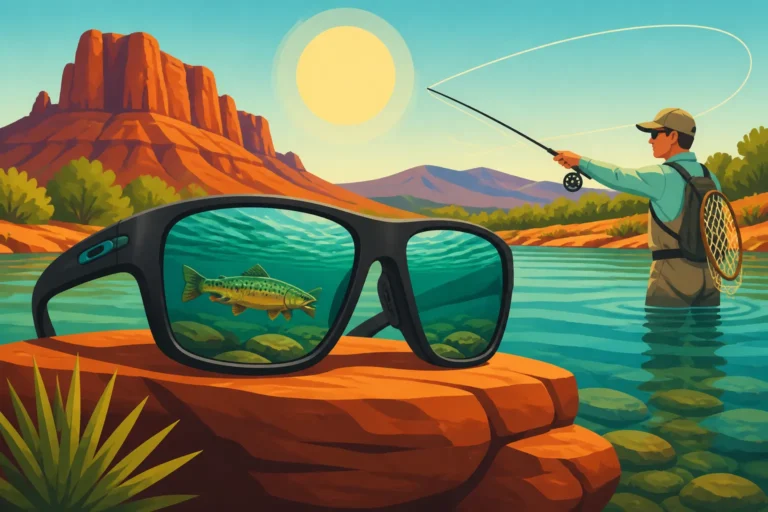
Polarized lenses, on the other hand, have a special filter embedded within them – often a thin, vertically aligned chemical film. Think of it like a tiny venetian blind for your eyes. This filter blocks those horizontal light waves that cause glare, while allowing vertical light waves to pass through. The result? You see into the water instead of just seeing the reflection off the water. It's truly a game-changer when you're trying to pick out a camouflaged trout against a pebbled bottom or scan a drop-off for holding fish. Without polarized lenses, you're essentially fishing blind in many situations, and nobody wants that. It's the essential first step in your Best Fishing Gear for New Mexico Anglers setup.
The New Mexico Challenge: Bright Sun, Clear Water, and Elusive Trout
New Mexico is blessed with incredibly diverse fishing environments, from high-desert lakes to alpine streams, and many of these waters are renowned for their clarity. This clarity, while beautiful, often comes with intense sunlight, especially at higher elevations. Imagine standing on the banks of the San Juan River, trying to discern the subtle movements of a feeding rainbow trout in its celebrated clear waters. Or picture yourself on a high mountain lake, where the sun beats down relentlessly, creating a shimmering mirror on the surface.
In these conditions, glare isn't just an annoyance; it's a significant impediment to success. Trout, especially the wilder ones, are masters of camouflage and can blend seamlessly with their surroundings. If you can't see past the surface reflections, you're missing countless opportunities to cast to visible fish. This is particularly true in special regulation waters like sections of the San Juan, where visual cues are often key to understanding fish behavior and presenting your fly or lure effectively. A good pair of polarized sunglasses will help you penetrate that surface, revealing submerged structure, subtle current seams, and, most importantly, the fish themselves.
Matching Your Lens Color to New Mexico's Diverse Fishing Environments
Choosing the right lens color isn't just about what looks good; it's about optimizing your vision for specific conditions. Different colors filter light in different ways, enhancing contrast and clarity under varying skies and water types. Think of it as having specialized tools for different jobs – you wouldn't use a hammer to drive a screw, and similarly, you wouldn't use a low-light lens on a dazzlingly bright day.
Brown/Amber/Copper Lenses: Your Go-To for General Purpose
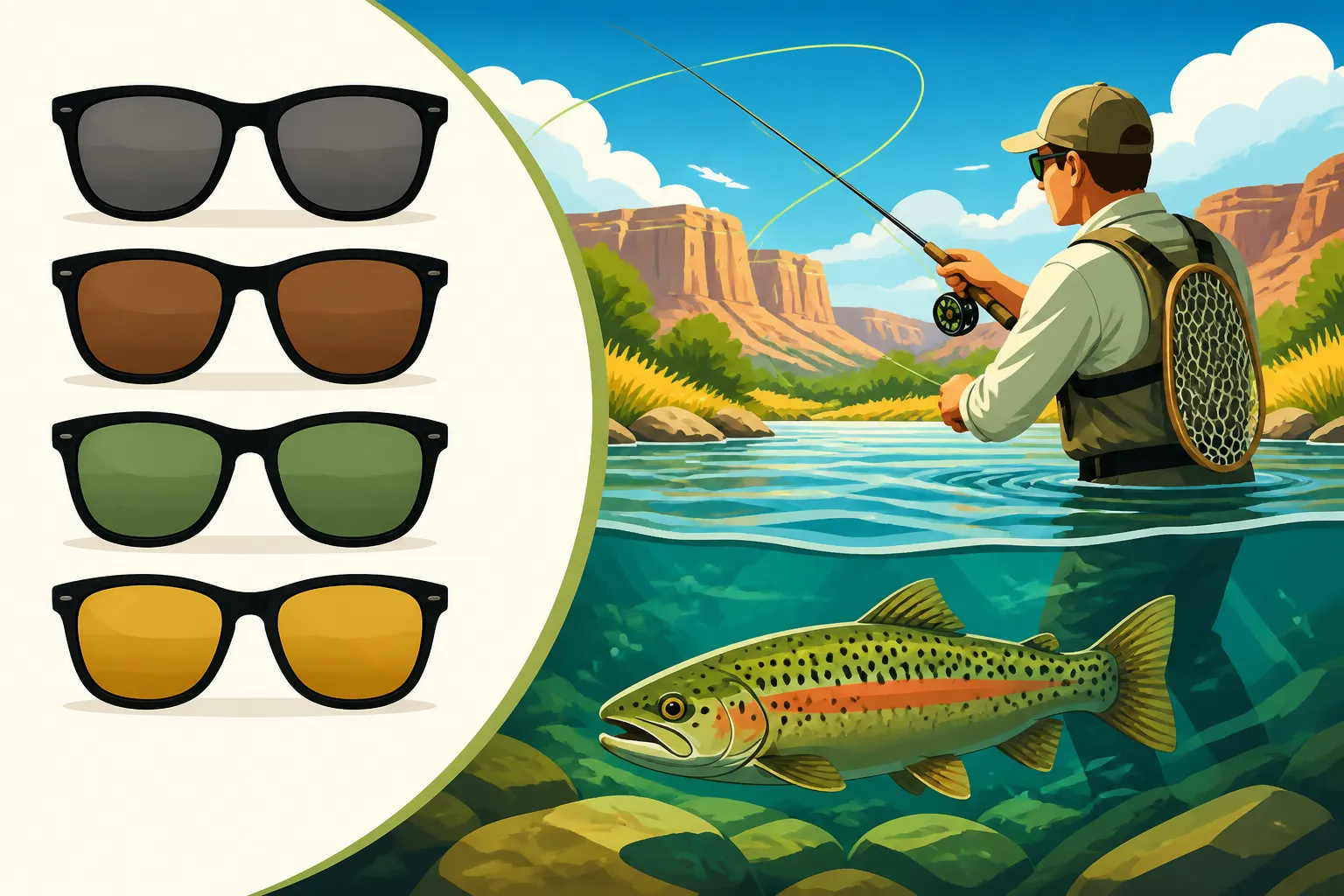
When most anglers think about fishing sunglasses, a warm brown, amber, or copper tint often comes to mind – and for good reason. These colors are incredibly versatile and are often considered the workhorses for freshwater fishing, especially when you're targeting trout in New Mexico.
These warm-toned lenses excel at enhancing contrast, particularly in varied light conditions, from bright sunshine to partly cloudy days. They block a significant amount of blue light, which can scatter and create haze, helping objects appear sharper and more defined. Imagine fishing a shaded section of the Rio Chama, where the sun is dappled through the cottonwoods, but then you move into an open stretch. A good brown or copper lens will perform admirably in both scenarios, helping you distinguish the subtle outlines of a submerged log or the flicker of a trout's tail against a rocky bottom. They're excellent for sight-fishing in many of New Mexico's rivers and lakes where the water might have a slight tannin stain or varying levels of turbidity. Brands like Costa Del Mar or Maui Jim often feature their signature copper or amber options, favored by many who spend serious time on the water. For many situations covered in a New Mexico Fishing Season Calendar, these lens colors are a solid bet.
Gray/Smoke Lenses: Best for Bright, Open Water
If you're heading out to fish wide-open reservoirs under the scorching New Mexico sun, or hitting a high-altitude lake on a cloudless day, gray or smoke-tinted lenses are your best friend. Unlike the contrast-boosting warm tones, gray lenses are designed to reduce overall light intensity evenly across the color spectrum.
What does this mean for you? It provides the most natural color perception, which is fantastic when you're dealing with extreme brightness and don't need exaggerated contrast. Think of Elephant Butte Lake on a clear summer day – the sun is relentless, and the water can be vast and reflective. Gray lenses will cut the intense glare without distorting colors, giving your eyes relief and allowing you to comfortably scan the horizons for boils or activity. They are superb for spotting the subtle movement of cruising striped bass or schools of baitfish in truly bright, glaring conditions. If you find yourself squinting even with your brown lenses, it's a sign you need the light-reducing power of gray. You'll often see these paired with Best Boats for New Mexico Reservoir Fishing to ensure optimal visibility on those expansive waters.
Yellow/Rose/Vermillion Lenses: Enhancing Contrast in Low Light
Now, these colors might seem a bit unconventional for fishing, but they have a very specific and valuable niche, especially for New Mexico anglers who brave the elements early or late in the day, or when conditions turn overcast. Yellow, rose, or vermillion lenses are designed to maximize contrast in low-light situations.
How do they do this? They selectively filter out blue light, similar to amber, but to a greater degree, making everything appear brighter and enhancing depth perception. Imagine a heavily overcast morning on a small mountain stream, or a twilight session on a pond. The ambient light is low, but you still need to see structure and fish. These lenses will make a dark rock stand out against a dark bottom, or highlight the subtle shadow of a trout holding in a shaded pocket, where brown lenses might still feel too dark. They can be incredibly helpful when fishing during periods of heavy cloud cover, during monsoon season, or in those crucial low-light periods at dawn and dusk. While not a primary, all-day lens for many, having a pair with these tints in your tackle box from a retailer like Bass Pro Shops or Amazon can make a huge difference in challenging light. They can be particularly useful for New Mexico Fishing by Season when targeting fish during those prime feeding times that often coincide with lower light.
Here's a quick comparison of popular polarized lens colors and their ideal applications:
| Lens Color | Primary Benefit | Ideal New Mexico Conditions | Best For |
|---|---|---|---|
| Brown/Copper | Excellent contrast, versatile | Varied light, partly cloudy, slightly stained water | Rivers (San Juan, Rio Grande), general lakes |
| Gray/Smoke | Natural color, maximum light reduction | Extremely bright, sunny days, wide-open water | Large reservoirs (Elephant Butte, Navajo Lake) |
| Yellow/Rose | High contrast, brightens perception | Low light, overcast, dawn/dusk, shady streams | Small streams, overcast days, early/late fishing |
| Green Mirror | Enhanced contrast, glare protection | Bright to medium light, often over amber/copper base | General purpose, especially good for inshore/freshwater |
| Blue Mirror | Maximum glare reduction | Offshore, extremely bright sun on open water (often over gray base) | Not typically primary for NM freshwater, but usable on large, bright lakes |
Note: Mirror coatings (like green or blue) are applied over a base lens color (often brown, amber, or gray). They add an extra layer of glare protection and reflectivity but the underlying base color still dictates the primary light filtration properties.
Beyond Color: Other Considerations for Trout Sight-Fishing Sunglasses
While lens color is a crucial factor, it's not the only thing to think about when choosing sunglasses for sight-fishing New Mexico's trout. A truly effective pair integrates several features that enhance comfort, durability, and overall performance.
Lens Material and Durability
The material of your sunglass lenses plays a significant role in both optical clarity and how well they stand up to the rigors of fishing. You're going to be dropping them, knocking them against your waders, and maybe even stepping on them (don't ask me how I know!).
- Polycarbonate: This is a popular choice for fishing sunglasses because it's lightweight and incredibly impact-resistant. If you're prone to accidental drops or fish in areas with a lot of brush and potential for snags, polycarbonate lenses offer excellent protection against shattering. The optical clarity is generally very good, making them a solid all-around option. Many brands available through Amazon will use polycarbonate for their more affordable yet still highly functional models.
- Glass: For the absolute best optical clarity and scratch resistance, glass lenses are often considered superior. They provide an incredibly crisp, distortion-free view. However, they are heavier than polycarbonate and, of course, more prone to shattering if dropped or impacted. Some dedicated anglers who prioritize vision above all else, especially on technical waters like the San Juan River Quality Waters Section, might opt for glass lenses, but you have to be extra careful with them.
- Trivex: This material sits nicely between polycarbonate and glass, offering excellent clarity that rivals glass while maintaining a good level of impact resistance and being lighter than glass. It's often found in higher-end polarized sunglasses, providing a great balance for serious anglers who demand performance without compromising too much on durability.
No matter the material, always look for lenses that are coated for scratch resistance. Fishing environments are tough on gear, and a scratched lens quickly becomes useless for sight-fishing.
Frame Fit and Coverage
You could have the perfect lens color, but if your frames are constantly slipping down your nose, pinching your temples, or letting light seep in around the edges, they won't do you much good. A comfortable and secure fit is essential for long days on the water.
- Comfort: Look for lightweight frames that fit snugly without creating pressure points. Many fishing-specific sunglasses feature rubberized nose pads and temple tips to help keep them in place, even when you're sweating or leaning over the water. Try on several pairs to see how they feel on your face. A brand like Bass Pro Shops often has a wide selection where you can try them on in person.
- Coverage: When sight-fishing, you want frames that wrap around your face to block peripheral light. Light leaking in from the sides, top, or bottom can create internal reflections off the back of the lens, defeating the purpose of polarization and creating distractions. A good wrap-around style not only provides excellent sun protection for your eyes and surrounding skin (crucial in New Mexico's intense sun) but also maximizes the effectiveness of your polarized lenses by preventing stray light from reaching your eyes. This is especially important for Best Sun Protection Gear for New Mexico Reservoir Fishing.
- Ventilation: Some frames incorporate vents to prevent fogging, which can be a nuisance when moving between different temperatures or during strenuous activity.
Practical Tips for Choosing and Using Your Sight-Fishing Sunglasses
Getting the right pair of sunglasses is a significant investment in your fishing experience. Knowing how to choose them, and how to care for them, ensures you get the most out of your purchase.
Testing Lenses on the Water
The best way to truly evaluate sunglasses for sight-fishing trout is to try them in real-world conditions. Many reputable outdoor retailers understand this and may have policies that allow returns if the lenses don't perform as expected on the water (always check their specific policy!).
When you're testing, look for:
- Glare Reduction: Can you see through the water effectively? Does the surface glare virtually disappear? Try looking at a section of water where you know fish might be holding or where there's submerged structure. This is critical for How to Spot Trout Holding Water in Clear Streams.
- Contrast: Are rocks, logs, and fish shapes well-defined? Does everything look crisp and clear? With the right contrast, those subtle details that betray a fish's presence become much more obvious.
- Comfort: After wearing them for an hour or two, do they still feel comfortable? Are there any pressure points?
- Color Distortion: Are the colors reasonably natural? While some lens colors enhance contrast by altering the color spectrum, they shouldn't make the world look wildly unnatural unless that's the specific design (like yellow for extreme low light).
If you have the opportunity, test different lens colors on different days or at different times of day. You might find that one color shines on bright, sunny afternoons, while another is perfect for those cloudy, early morning sessions. Many serious anglers even carry two pairs with different lens colors to adapt to changing conditions.
Maintenance and Care for Optimal Clarity
Once you've invested in a great pair of polarized sunglasses, taking good care of them will ensure they continue to perform optimally for years to come. Scratched or dirty lenses are just as bad as no lenses at all for sight-fishing.
- Cleaning: Always use a microfiber cloth specifically designed for optics and a lens cleaning solution, or just plain water. Avoid using paper towels, shirt sleeves, or harsh chemicals, as these can scratch the lens coating or damage the polarization film. If your lenses get muddy or dusty, rinse them thoroughly with water first to remove any abrasive particles before wiping.
- Storage: When not in use, always store your sunglasses in a hard case. This protects them from scratches, impacts, and excessive heat. Leaving them on your dashboard on a hot New Mexico summer day can actually delaminate the polarizing film or warp the frames.
- Handling: Try to handle your sunglasses by the frames, not the lenses, to avoid smudges and fingerprints. Regular cleaning will be less necessary if you practice good handling habits.
By properly maintaining your eyewear, you're ensuring that when you hit the water, your vision is as clear as possible, giving you the best chance to spot that elusive trout and make that perfect cast. After all, what's the point of having the Best Lures for New Mexico Trout or the perfect Fly Selection for New Mexico's San Juan River if you can't even see the fish?
Disclaimer
This article is for general informational purposes only and does not constitute professional advice. Laws, prices and regulations vary by location and change over time. Consult a qualified professional for guidance on your specific situation.