How Fast Stocked Rainbow Trout Grow
One of the most common questions I hear from fellow anglers in New Mexico, especially those new to the high desert waters, is about stocked trout. You cast your line, you catch a feisty rainbow, and immediately you start to wonder: how long has this fish been here? How much has it grown since it was introduced? Understanding how fast stocked rainbow trout grow in our diverse New Mexico waters isn't just a curiosity; it genuinely helps you appreciate the fishery, set realistic expectations, and even improve your fishing strategies. This guide dives deep into the factors influencing their growth and what you can expect to see out there on the water.
The Basics of Stocked Rainbow Trout Growth
When the New Mexico Department of Game and Fish (NMDGF) puts rainbow trout into our lakes and rivers, they're not just tossing in random fish. There's a science and a strategy behind it, aimed at providing good angling opportunities. The growth rate of these stocked fish, while often quite rapid initially, is influenced by a multitude of factors once they hit the water.
Initial Stocking Size and Age
The journey of a stocked rainbow trout's growth begins the moment it leaves the hatchery. New Mexico's stocking programs typically release trout at various stages, primarily to serve different purposes within the fishery. Knowing their starting point is crucial to understanding their potential growth trajectory.
Most frequently, you'll encounter two main categories of stocked trout: "fingerlings" and "catchable" size fish. Fingerlings are smaller, typically a few inches long, and are usually stocked in waters where they are expected to grow to a larger size over time, often for natural recruitment or to supplement a population. These smaller fish have a lot of growing up to do! The "catchable" trout, on the other hand, are the ones most anglers immediately recognize and target. These fish are usually 8-12 inches long, sometimes larger, and are released primarily to provide immediate angling opportunities, especially in popular urban ponds or easily accessible lakes. The age of these catchable trout can vary, but they're generally around 1-2 years old when stocked.
The NMDGF carefully selects stocking sizes to maximize the benefits. For example, stocking larger, catchable trout in heavily fished areas ensures a high success rate for anglers right after release. In contrast, smaller fingerlings might be placed in more remote or less pressured waters where they have a better chance to grow without immediate harvest pressure. This initial size sets the baseline for how much growth you can actually observe. A 10-inch fish obviously has less "growth potential" in a single season than a 4-inch fingerling, though the rate of growth can be similar percentage-wise. The sheer number of catchable fish that get harvested soon after stocking also means many don't get the chance to show their full growth potential in New Mexico's waters.
Key Factors Influencing Growth Rates
Once those hatchery-raised rainbow trout are introduced into a New Mexico lake or river, their growth isn't just a matter of time; it's a complex interplay of environmental factors, genetics, and competition. Understanding these elements can help you identify waters where trout are likely to thrive and pack on the pounds.
First and foremost is food availability. This is perhaps the single biggest determinant of how fast a stocked trout will grow. New Mexico's waters vary wildly in their productivity. A rich lake with an abundance of aquatic insects, zooplankton, and even smaller baitfish will provide a buffet for growing trout. Conversely, a less fertile, high-mountain stream might offer leaner pickings, resulting in slower growth. Stocked trout are often quite aggressive eaters, having been fed pellets their whole lives in the hatchery, so they're usually quick to capitalize on natural food sources. The presence of a thriving insect population, like caddisflies or midges, or an ample supply of minnows or scuds, can significantly accelerate their growth beyond the initial stocking size.
Water temperature plays a critical role. Rainbow trout are cold-water fish, and they have an optimal temperature range for feeding and growth, generally between 50-65°F (10-18°C). In New Mexico, this means that during the cooler spring and fall months, when water temperatures are ideal, trout will feed actively and grow quickly. However, our summers can be brutally hot, especially in lower elevation lakes and rivers. When water temperatures climb above their preferred range, trout become stressed, their metabolism slows down, and their feeding activity decreases drastically. This can lead to stunted growth or even fish die-offs in extreme conditions. Conversely, in the dead of winter, very cold water also slows their metabolism and growth.
Competition is another significant factor. If a water body is heavily stocked, or if there's a large population of other fish species, there will be more mouths to feed, leading to increased competition for food resources. This can limit individual growth rates. For instance, a small pond heavily stocked with rainbow trout and also containing a healthy population of sunfish or carp might not allow the trout to grow as large as they would in a less crowded environment. Conversely, some waters are managed specifically for trout, with fewer competing species, allowing them to monopolize available food. Finally, the genetics of the specific hatchery strain can influence growth potential, though this is less of a variable for anglers to consider, as most stocked fish come from strains optimized for growth and survival. New Mexico Trout Fishing Rules are in place to help manage these populations.
Understanding Growth Milestones in New Mexico Waters
The growth of stocked rainbow trout isn't a linear process; it involves distinct phases, especially as they adapt to their new wild (or semi-wild) environment. Observing these milestones helps anglers appreciate the resilience and potential of these fish.
Short-Term Growth Post-Stocking
When newly stocked rainbow trout are released into a New Mexico lake, pond, or river, their initial weeks and months are a period of significant adjustment and, if conditions are right, rapid growth. These fish, having spent their lives in the relatively controlled environment of a hatchery, are suddenly faced with a new challenge: finding their own food in a dynamic ecosystem.
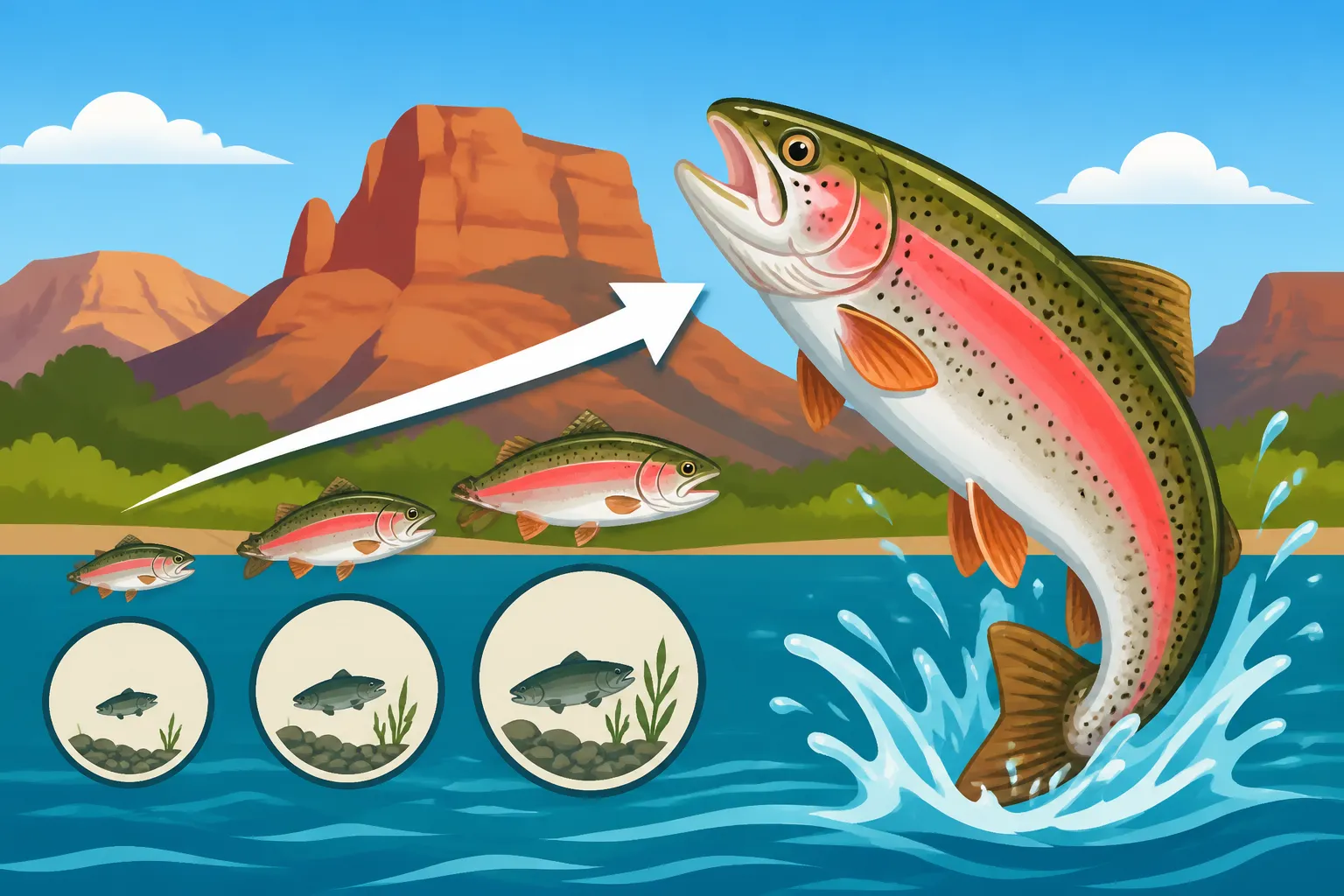
In the immediate aftermath of stocking, many trout exhibit what we often call "stocker syndrome." They might school tightly, stay near the release point, and readily take artificial baits and lures that resemble their hatchery pellets. During this phase, if the water body has a good supply of natural forage – think aquatic insects, small crustaceans, or even detritus – these fish can put on weight quite quickly. Their metabolism, especially in ideal cool water temperatures, is geared for growth, and with less energy expended on dodging predators than in a truly wild environment, they can pack on mass. It's not uncommon for a 10-inch stocked trout to gain an inch or two in length and noticeable girth within just a few weeks if food is abundant and competition isn't overwhelming. This quick gain often makes them more robust and improves their fighting spirit, much to the delight of anglers.
However, not all stocked trout thrive equally in the short term. Some might struggle to adapt to natural food sources, continuing to chase only pellet-like presentations or simply not competing well with established wild populations or other stocked fish. High angling pressure immediately after stocking can also mean a significant portion of these fish are harvested before they have a chance to show much growth. In areas where water quality is marginal or food scarce, short-term growth can be minimal, with fish simply maintaining their size or even losing condition if they can't find enough to eat. Understanding these initial growth patterns can help you anticipate how productive a freshly stocked water might be, as detailed in How to Catch Trout in New Mexico.
Long-Term Growth Potential and Size Range
While many stocked rainbow trout are caught within weeks or months of their release, a significant number, especially in well-managed or less pressured waters, can persist and grow considerably, transitioning into what we often call "holdover" trout. These holdovers represent the true long-term growth potential of stocked fish in New Mexico.
In nutrient-rich lakes with stable cold water environments and abundant food, stocked rainbows can easily add several inches in length and pounds in weight over multiple seasons. It's not unheard of for an 11-inch stocked fish, if it survives predation and angling pressure, to become a beautiful 16-18 inch trout in its second year in the wild, and potentially even larger. Some of New Mexico's larger reservoirs and tailwater fisheries, like certain sections of the San Juan River Quality Waters Section or deeper areas of Navajo Lake Fishing Guide, offer conditions where rainbow trout can grow into truly impressive sizes, often reaching 20 inches or more over several years. These environments provide a consistent food supply, optimal temperatures, and complex habitat for survival.
The average size of a stocked rainbow trout ultimately depends on how long it manages to evade capture and survive in its new habitat. A typical scenario might see an 8-10 inch stocker grow to 12-14 inches within its first year as a holdover, then potentially into the 16-18 inch range in its second year. Beyond that, growth tends to slow, but fish can continue to gain girth and length if conditions are exceptional. For instance, in lakes like Heron Lake Fishing Guide or Eagle Nest Lake Fishing, where water is colder and forage plentiful, even stocked fish can eventually develop the deep colors and stronger fight characteristic of wild-born trout. The table below illustrates some common growth benchmarks for stocked rainbow trout in favorable New Mexico conditions:
| Age (Post-Stocking) | Typical Length Range (inches) | Typical Weight Range (lbs) | Notes |
|---|---|---|---|
| 0-3 Months | 8-12 | 0.5-1 | Freshly stocked, adapting to natural food |
| 3-6 Months | 10-14 | 0.75-1.5 | Good initial growth, becoming more robust |
| 6-12 Months (Holdover) | 12-16 | 1-2.5 | Significant growth, deeper colors may appear |
| 1-2 Years (Holdover) | 14-18 | 1.5-3.5 | Prime growth, strong fighters, often targeted |
| 2+ Years (Trophy) | 18-24+ | 3-8+ | Exceptional survivors, conditions-dependent |
Note: These ranges are estimates and can vary widely based on specific water body conditions.
Practical Implications for Anglers
Understanding how fast stocked rainbow trout grow isn't just academic; it has real, tangible benefits for your fishing strategy and overall enjoyment on the water. It influences what you fish for, how you fish, and even how you think about the fish you catch.
Managing Expectations and Catching Strategies
One of the biggest takeaways from understanding trout growth is learning to manage your expectations. If you're heading to a pond that was just stocked last week, you're likely targeting fish in the 8-12 inch range. These fish are often eager to bite, and a simple setup with PowerBait or worms can be incredibly effective. However, if your goal is to land a true trophy rainbow, you'll need to seek out waters known for their holdover populations or where New Mexico Fishing Season Dates and Limits allow fish to grow for extended periods.
For freshly stocked trout, fast-action presentations like small spinners, spoons, or even corn and marshmallows often work well. These fish are used to competition for food and are generally less wary. For these, a lighter rod setup, perhaps a 5-6 foot ultralight spinning rod, is perfect, offering plenty of fight from a smaller fish. However, if you're targeting those larger, more experienced holdovers, your strategy needs to shift. These fish are warier, often seeking deeper water or more complex cover. They've learned to avoid obvious presentations. This might mean using more subtle fly patterns, specialized lures, or even dead-drifting natural baits. You might also want to upgrade your gear to something with a bit more backbone, as outlined in Best Rod Setup for New Mexico Trout Fishing, to handle a potentially larger, stronger fish.
Knowing the growth patterns also informs your choice of location. Lakes like Fenton Lake or small urban ponds are often "put-and-take" fisheries, stocked for immediate harvest. While you might find a few holdovers, the majority will be recently stocked fish. Conversely, places like parts of the Rio Chama or certain high-mountain lakes, while also stocked, have the conditions that allow trout to survive multiple years and reach impressive sizes. Targeting these specific environments can dramatically increase your chances of hooking into that larger, hard-fighting rainbow that has spent years growing in the wild.
Conservation and Ethical Considerations
Understanding the growth potential of rainbow trout also brings a heightened sense of responsibility when it comes to conservation and ethical angling. Every angler contributes to the health and sustainability of our fisheries, whether intentionally or not.
For those truly impressive holdover trout – the ones that have beaten the odds and grown to significant size – practicing catch and release becomes incredibly valuable. A 20-inch rainbow didn't get that big overnight; it took years of survival, careful feeding, and avoiding hooks. Releasing these larger fish allows them to continue growing, potentially spawn (though stocked fish often have reduced natural spawning success), and contribute to the overall experience for other anglers. Many serious trout anglers, especially those frequenting quality waters, embrace New Mexico Catch and Release Regulations as a cornerstone of their fishing philosophy. Using appropriate handling techniques, such as wet hands, keeping the fish in the water as much as possible, and using barbless hooks, dramatically increases their chances of survival after release.
Of course, New Mexico has specific New Mexico Daily Trout Bag Limit and possession limits, which are designed to manage harvest pressure and ensure a healthy population. It's crucial to know these regulations for the specific waters you're fishing. For instance, some special trout waters might have more restrictive limits or even be catch-and-release only for certain species or sizes. By respecting these limits, you're helping to ensure that a good number of trout have the opportunity to grow into those larger, more desirable sizes. Even with "put-and-take" fisheries, where harvest is encouraged, being mindful of your impact and perhaps leaving a few for the next angler contributes to a positive and sustainable fishing culture.
New Mexico's Stocking Programs and Their Impact
The New Mexico Department of Game and Fish (NMDGF) plays a pivotal role in shaping the growth opportunities for stocked rainbow trout across the state. Their strategic stocking programs are designed to enhance recreational fishing, and understanding how these programs operate can offer further insight into trout growth.
Stocking Frequency and Locations
New Mexico boasts a diverse range of trout fisheries, from small urban ponds to vast reservoirs and remote mountain streams. The NMDGF tailors its stocking programs to suit the unique characteristics and angling pressure of each water body. This means that stocking frequency and the size of fish released can vary significantly, directly impacting the observed growth rates.
In highly accessible areas, such as the numerous urban and community ponds around cities like Albuquerque and Santa Fe, or popular state park lakes like Storrie Lake, trout are often stocked frequently, sometimes weekly or bi-weekly during peak seasons. These are typically "put-and-take" fisheries where the expectation is for anglers to harvest their catch relatively quickly. In such environments, while the fish might put on some initial weight if left unfished for a short period, the high harvest rate means most trout don't get the chance to grow significantly large. The goal here is immediate recreation. You can often find detailed information on these stockings through the NMDGF website or local news, helping you decide When Do Trout Get Stocked in New Mexico Rivers? and other waters.
Conversely, in larger, more remote lakes, or specific "quality waters" sections of rivers, stocking might be less frequent but involve different strategies. For instance, some waters might receive smaller fingerlings, intended to grow into larger fish over several years, supplementing a wild population or establishing a new fishery. These locations, less impacted by immediate harvest pressure, offer a better chance for stocked trout to exhibit their full growth potential. Best Lakes for Trout in New Mexico often include waters where trout have a better chance to become holdovers due to environmental factors and management strategies. The NMDGF's efforts ensure a continuous supply of fish, allowing anglers to target both fresh stockers and long-term holdovers across the state.
Factors Affecting Survival and Subsequent Growth
While stocking programs provide the initial spark, the long-term survival and subsequent growth of rainbow trout in New Mexico are subject to various challenges once they leave the hatchery. These factors can limit how large a fish ultimately gets, even in ideal growing conditions.
One of the most significant challenges is predation. Stocked trout, especially those released into lakes with established populations of larger predatory fish like pike, bass, or even large brown trout, can become easy targets. They often lack the natural wariness of wild fish and can be more susceptible to being hunted. Even birds of prey, such as ospreys and eagles, can take a toll on newly stocked fish. High mortality rates from predation naturally reduce the number of fish that can survive long enough to reach larger sizes.
Angling pressure itself is a major factor. As mentioned, many stocked trout are harvested quickly. While this fulfills the "put-and-take" purpose, it means fewer fish remain in the water to continue growing. In popular spots, the turnover can be very high, with a significant percentage of stocked fish being caught within days or weeks. This is a testament to the success of the stocking program in providing recreational opportunities, but it also means that the chances of a particular fish becoming a multi-year holdover are reduced.
Environmental fluctuations, such as droughts or severe weather events, can also significantly impact survival and growth. Prolonged drought can lead to lower water levels, concentrating fish in smaller areas, making them more vulnerable to predation and increasing competition for food. It can also lead to higher water temperatures and reduced oxygen levels, stressing trout and sometimes causing die-offs. Conversely, sudden floods or heavy runoff can displace fish, scour riverbeds of food sources, and make survival difficult. Disease, while often managed in hatcheries, can also occur in the wild, impacting fish health and growth, particularly in crowded conditions. All these variables underscore the dynamic and sometimes harsh realities that even a robust stocked trout must face to grow to its full potential in New Mexico. Before heading out, it's always a good idea to check the New Mexico Fishing Regulations Overview for any specific advisories or changes related to local conditions.
Disclaimer
This article is for general informational purposes only and does not constitute professional advice. Laws, prices and regulations vary by location and change over time. Consult a qualified professional for guidance on your specific situation.