Best Landing Nets for New Mexico Catch and Release Fishing
There’s nothing quite like the thrill of a good fight on the line, the splash as a beautiful fish breaks the surface, and the sheer satisfaction of bringing it to hand. But for those of us dedicated to the art of catch and release, that moment of triumph comes with a crucial responsibility: ensuring the fish swims away healthy and strong. Too often, anglers, myself included, have inadvertently caused harm with improper handling or, dare I say, the wrong landing net. This guide is all about choosing and using the best landing nets to give our finned friends the best possible chance at survival in New Mexico’s incredible waters.
The Unsung Hero: Why a Landing Net is Essential for Catch and Release
Let’s be honest, for many years, a landing net was just… a net. A tool to scoop a fish out of the water quickly before it threw the hook. But the world of angling, especially here in New Mexico where we cherish our precious trout and bass populations, has evolved. Now, a quality landing net is not just a convenience; it’s a critical piece of conservation equipment that plays an enormous role in the health and survival of every fish you release.
Minimizing Stress and Injury to Fish
Imagine being chased, hooked in the mouth, and then unceremoniously yanked onto a rocky bank or into a boat. Not exactly a relaxing experience, right? For a fish, the fight itself is incredibly taxing, leading to lactic acid buildup and exhaustion. The moment you bring that fish to hand is when you have the biggest opportunity to minimize further stress and injury, or unfortunately, to exacerbate it. A good landing net acts as a gentle cradle, allowing you to subdue the fish in its natural environment – the water – without dragging it through abrasive surfaces or subjecting it to undue air exposure. This significantly reduces the risk of scale damage, fin breaks, and internal organ stress, which are all major contributors to post-release mortality.
Think about our beloved Trout Species Found in New Mexico, especially delicate fish like cutthroats found in high mountain streams. These fish are not built for prolonged periods out of water or rough handling. A soft, fish-friendly net ensures that when you scoop them, their protective slime coat remains intact, and their fins aren't frayed or broken against harsh netting material. This careful handling is part of the Catch and Release Best Practices in New Mexico that every responsible angler should adopt.
Protecting Your Gear and Yourself
While fish welfare is paramount, let's not forget the practical benefits for the angler. A well-designed landing net makes the entire landing process smoother, safer, and less frantic. When you're trying to land a feisty rainbow trout on the San Juan River or a big largemouth bass at Elephant Butte Lake, having a reliable net means you're less likely to lose that fish at the last second. There's nothing more frustrating than a trophy-sized fish throwing the hook right at your feet because you fumbled the landing!
Furthermore, a net provides a barrier between you and potentially sharp fins, gill plates, or even hooks. Picture trying to de-hook a spirited fish without a net, especially if it's thrashing wildly. That’s a recipe for a hook in your finger, or worse, a deep puncture from a dorsal fin. By securing the fish in the net, you can more easily control it while keeping your hands clear of danger. This not only protects you but also prevents further stress to the fish from excessive struggling during the unhooking process.
Decoding the Best Catch and Release Nets: Materials, Mesh, and More
Not all landing nets are created equal, especially when it comes to catch and release. The subtle differences in design and material can have a profound impact on the fish's well-being. Understanding these elements is key to making an informed choice that supports your conservation efforts and enhances your fishing experience.
Rubberized Mesh for the Win: Softness and Slime Coat Protection
When we talk about the best nets for catch and release, the material of the mesh is probably the single most important factor. Traditional nylon nets, particularly those with knots, can be incredibly abrasive to fish. Their rough texture can strip away the vital protective slime coat that fish have, making them vulnerable to disease and infection after release. Furthermore, hooks frequently get tangled in traditional nylon mesh, leading to prolonged handling times and increased stress for the fish as you try to free your lure.
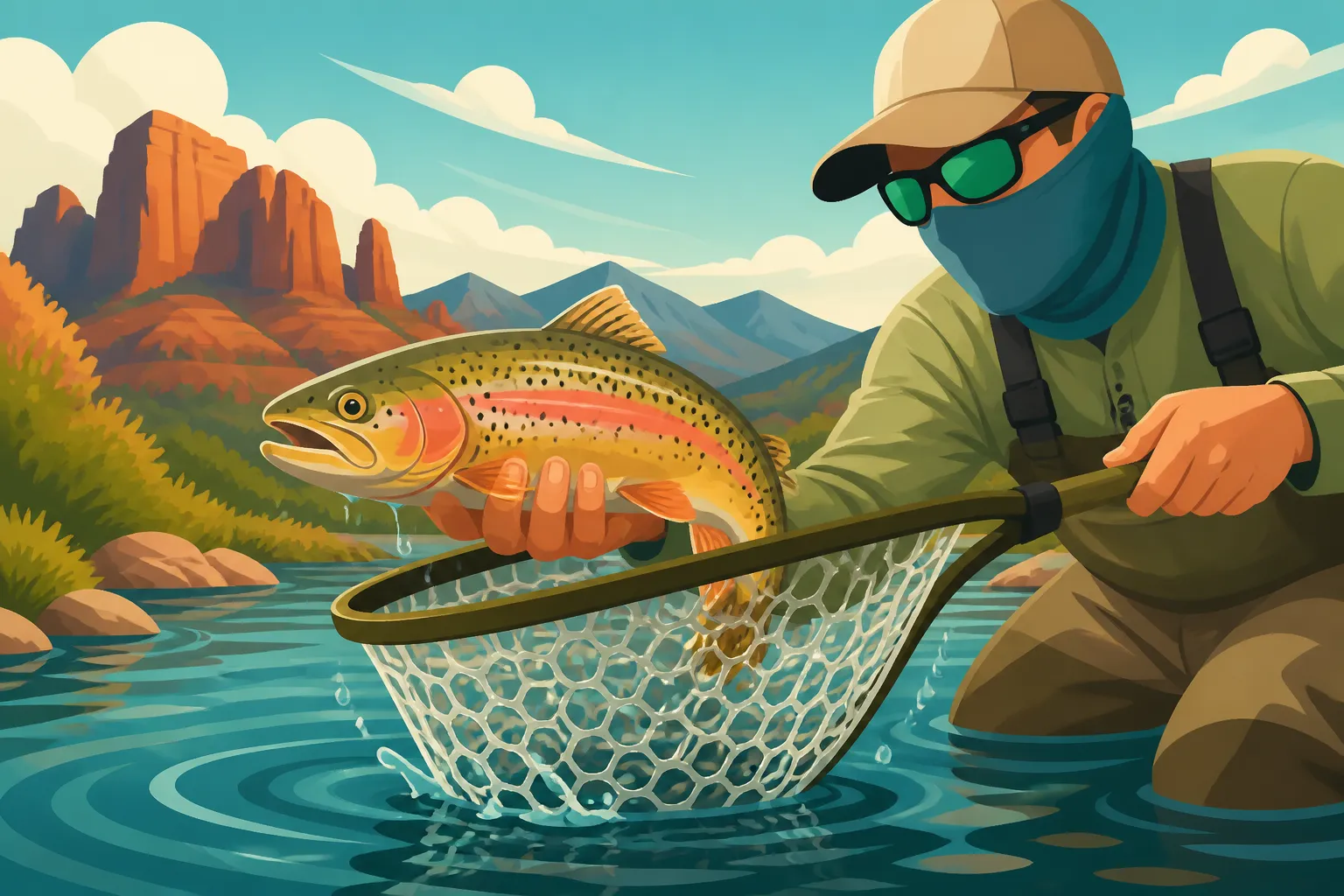
This is why rubber or rubberized mesh nets are the gold standard for catch and release. The smooth, soft texture of rubber netting is far gentler on a fish's delicate skin and scales. It minimizes slime coat removal, which is critical for their immune system and overall health. Hooks also tend to slide right out of rubber mesh, drastically reducing de-hooking time. This means less stress for the fish and a quicker return to the water. Many anglers who frequent San Juan River Quality Waters Section swear by rubber nets because they understand the importance of protecting those beautiful, healthy trout.
For those looking to upgrade their gear, major retailers like Bass Pro Shops offer a wide array of nets specifically designed with rubber or rubberized mesh, making it easier to find one that fits your needs. You can also find countless options and user reviews on Amazon, which helps compare different brands and features.
Mesh Depth and Hole Size: Security and Gilling Prevention
Beyond the material, consider the depth and hole size of the mesh. A net that is too shallow might allow a lively fish to flop right out before you've had a chance to secure it, defeating the purpose of the net. Look for a net with sufficient depth to fully engulf the fish, allowing it to rest comfortably in the water while you prepare for release. The deeper basket helps to keep the fish submerged and calm.
The size of the holes in the mesh also matters. While smaller holes might seem gentler, they can sometimes impede water flow, making it harder to maneuver the net quickly, especially in currents. Larger holes in rubberized mesh are typically fine, as long as they aren't so large that a fish's fins or gills could easily push through and become damaged. The key is to find a balance where the mesh is gentle, hooks don't snag, and the fish is securely contained without any risk of injury from getting parts of its body caught in the webbing.
For example, when targeting the larger trout you might find in some of New Mexico's larger rivers, a net with a slightly larger, yet still soft, rubberized mesh might be preferred, as it allows for quicker water drainage and less resistance. It all comes back to minimizing the time the fish is out of its element.
| Feature | Traditional Nylon Net | Rubber/Rubberized Net |
|---|---|---|
| Material Texture | Often rough, abrasive, can have knots | Smooth, soft, pliable |
| Slime Coat Protection | Poor, can strip away slime and damage scales | Excellent, preserves slime coat for fish health |
| Hook Fouling | High, hooks easily get tangled and snagged | Low, hooks generally slide out |
| Fish Stress | Higher due to rough handling and longer de-hooking | Lower due to gentle contact and quick release |
| Durability | Can be durable, but UV exposure degrades over time | Excellent, resistant to UV and rot |
| Maintenance | Can hold odors, may need more thorough cleaning | Easy to clean, less odor retention |
Matching Your Net to New Mexico's Diverse Waters: From Rivers to Reservoirs
New Mexico offers an incredible variety of fishing environments, from the fast-flowing, clear waters of the San Juan River to the vast, open expanses of Elephant Butte Lake. The type of net that works best often depends on where and how you’re fishing. A one-size-fits-all approach rarely maximizes effectiveness or fish safety across all these scenarios.
River and Stream Nets: Portability and Reach
For river and stream fishing, especially if you're wading, portability and handle length become crucial. You're often moving, hiking to different spots, and navigating uneven terrain. A long-handled boat net would be cumbersome, if not impossible, to carry effectively. Instead, look for nets with shorter handles, often made from lightweight materials like wood or composite. Many feature a lanyard or magnetic release system that allows them to be clipped to a vest or pack, keeping them out of the way until needed.
Extendable or telescoping handles are also popular for river anglers, providing extra reach when you're trying to land a fish in deeper water or across a slight current, without sacrificing portability when collapsed. For fly fishing, where delicacy and quick access are key, a smaller, lightweight wooden net with a rubber bag is often preferred. This allows you to scoop the fish quickly, keep it submerged while you unhook it (especially with Barbless Hook Fishing Technique for New Mexico Rivers), and release it with minimal fuss. When fishing high country streams, like those you'd find in the Carson National Forest, a net that's easy to carry on your back is a game changer, allowing you to focus on the hike and the fish, not wrestling with awkward gear.
Lake and Reservoir Nets: Size and Stability
When you're fishing from a boat on one of New Mexico's large reservoirs like Navajo Lake or Conchas Lake, your netting needs shift. Here, size and reach are often more important than extreme portability. You'll likely be dealing with larger fish species such as bass, walleye, or even striped bass, which require a larger hoop and a deeper net bag to safely contain them. The longer handle common on boat nets provides the necessary reach to net a fish that's boat-side, especially if you're fishing solo or trying to reach over obstacles.
Stability is also a factor. A robust net that can handle the weight and power of a large fish without bending or breaking is essential. While rubberized mesh is still preferred for catch and release, the overall construction of the net needs to be more heavy-duty. Many boat nets feature anodized aluminum frames for strength and corrosion resistance, which is perfect for extended exposure to lake water. For kayak anglers, a medium-length handle net that can be stowed easily but accessed quickly is ideal. It needs to be long enough to reach from the seated position but not so long that it becomes unmanageable in a small craft. Companies like Bass Pro Shops and those available through Amazon offer excellent options for both traditional boat and kayak fishing, specifically designed to handle the larger, stronger fish found in our lakes and reservoirs.
Beyond the Catch: Caring for Your Net and the Fish You Release
A landing net is an investment, both in your fishing success and in the well-being of the fish you encounter. Proper care of your net ensures its longevity and, more importantly, keeps it a safe tool for catch and release. After all, a poorly maintained net can become a vector for disease or a source of unexpected harm.
Cleaning and Disinfecting Your Net
Every time you use your net, it comes into contact with fish slime, mud, algae, and potentially even parasites or bacteria from various waters. Just as you wouldn't want to use a dirty dish, a dirty net can pose risks to the next fish it touches. It's a simple, yet often overlooked, aspect of responsible angling. After each outing, give your net a thorough rinse with clean, fresh water. This removes any debris, fish scales, or organic matter that might cling to the mesh.
For an extra layer of protection, particularly if you're fishing different bodies of water frequently or are concerned about invasive species, consider a mild disinfection. A weak bleach solution (e.g., a tablespoon of bleach per gallon of water) or a commercial fishing gear disinfectant can be used. Submerge the mesh part of the net, let it soak for a few minutes, then rinse it thoroughly with fresh water to remove all traces of the disinfectant. Ensure it's completely dry before storing to prevent mildew and odor. This practice helps prevent the spread of aquatic invasive species and diseases from one fishery to another, protecting our native populations.
Proper Storage and Maintenance for Longevity
How you store your net when not in use significantly impacts its lifespan. Avoid leaving your net exposed to direct sunlight for extended periods, especially if it has rubberized mesh or a wooden handle. UV rays can degrade rubber over time, making it brittle, and can dry out and crack wooden components. Store your net in a cool, dry place, ideally hung up to allow for air circulation.
Check your net periodically for any signs of wear and tear. Look for tears in the mesh, cracks in the handle, or loose connections in folding nets. Many manufacturers offer replacement net bags, so a small tear doesn't necessarily mean you need an entirely new net. Addressing minor issues quickly prevents them from becoming major problems later. For nets with wooden handles, a light coat of wood conditioner or marine varnish can help protect the wood from moisture and sun exposure, ensuring it remains a reliable tool for years to come. A well-maintained net is always ready for action, whether you're chasing New Mexico Trout Fishing Rules on a blue-ribbon stream or exploring a lesser-known pond.
Size Matters: Choosing the Right Net Dimensions for Your Target Species and Style
Picking the perfect landing net isn't just about the mesh; it's also about finding the right dimensions to match the size of the fish you're targeting and your specific fishing style. A net that’s too small for a big fish can be just as detrimental as a net that’s too cumbersome for your environment.
Matching Net Hoop Size to Target Fish
The size of the net's hoop – the frame that holds the mesh bag – should correspond to the typical size of the fish you expect to catch. If you’re primarily pursuing panfish or smaller trout, a compact net with a hoop around 10-14 inches wide might suffice. It’s lightweight and easy to handle. However, if you’re dreaming of landing those chunky rainbow trout on the Pecos River or hefty bass from Ute Lake, you’ll need a larger hoop, perhaps 18-24 inches or even more.
The goal is to be able to scoop the fish quickly and efficiently, minimizing the time it spends struggling. A fish that barely fits into the hoop can easily jump out or become damaged pressing against the frame. Conversely, an excessively large net for small fish can be unwieldy and unnecessary. Consider what you typically catch and aim for a net that gives you a comfortable margin of error. For serious catch and release anglers, especially those targeting prized species, having a net that can easily accommodate the largest potential catch is a sign of respect for the fish. For instance, when fishing for Walleye at Conchas Lake, you'll want a net robust enough to handle their size and spiny dorsal fin without causing harm.
Handle Length: Wading, Boating, or Bank Fishing
The length of the net’s handle is another critical consideration, directly tied to how and where you fish.
- Short-handled nets (6-18 inches): These are ideal for wade fishing in smaller streams or rivers, or for fishing from a float tube or kayak where you’re very close to the water. Their compact size makes them easy to carry and maneuver. If you’re often hiking into remote areas to fish for wild trout, a short, lightweight handle is a must. These are typically the nets you’d see attached to a fly fisherman’s vest, ready for a quick scoop.
- Medium-handled nets (18-36 inches): This versatile range works well for larger rivers where you might be wading in deeper currents, or for bank fishing where you need a bit more reach to get over brush or rocks. They offer a good balance of portability and extension. Some come with telescoping features, allowing for adjustability.
- Long-handled nets (36+ inches): These are primarily boat nets. When you’re fishing from a powerboat or a larger pontoon on a big lake, you need significant reach to net fish alongside the boat. The extra length prevents you from having to lean precariously over the edge, especially with a heavy, fighting fish. They often feature robust, non-slip grips for secure handling.
When selecting, think about your most common fishing scenarios in New Mexico. If you mostly wade the Rio Chama, a short to medium handle is probably perfect. If you spend your weekends trolling for Kokanee at Navajo Lake, a long boat net is essential. Many anglers own multiple nets to cover different fishing situations, ensuring they always have the right tool for the job.
Ethical Angling: Using Your Net for Maximum Fish Survival
Having the best catch and release net is only half the battle; knowing how to use it properly is just as crucial. Ethical angling practices, from the moment you hook a fish to the final release, maximize its chances of survival and contribute to the health of New Mexico's fisheries.
Best Practices for Netting a Fish
The key to effective and ethical netting is a calm, deliberate approach. Once you’ve brought the fish close, guide it into the net headfirst if possible. This allows for a smooth, natural entry and reduces stress. Avoid chasing the fish around with the net; this only prolongs the fight and increases exhaustion. Instead, let the fish come to you, leading it into the waiting net.
Once the fish is in the net, keep the net submerged in the water as much as possible. This minimizes air exposure, which is extremely stressful for fish and can cause damage to their gills. If you’re fishing from the bank or a boat, bring the net (with the fish inside) close to the water's surface, or even partially in the water, for handling. When you do lift the net, support the fish's weight as much as possible by keeping the net horizontal. This prevents the fish's internal organs from being damaged by its own weight when gravity takes over. Remember, the goal is a quick, efficient, and gentle capture. This aligns perfectly with How to Handle a Trout Before Releasing It.
Gentle Release Techniques: From Net to Water
With the fish secured in the net, the real work of releasing it begins. If you’re using barbless hooks, which are often required on special waters and are always recommended for catch and release, de-hooking can be incredibly fast. Why Are Barbless Hooks Required on the San Juan River? is a question often asked, and it's precisely for this reason. Use hemostats or needle-nose pliers to gently remove the hook while the fish is still in the submerged net. Avoid squeezing the fish, especially around its belly or gills.
Once the hook is out, allow the fish a moment to recover in the net, still submerged. Gently hold the net, letting the fish orient itself and regain its strength. When it starts to show signs of alertness – perhaps a wiggle or a slight fin movement – lower the net and allow the fish to swim out on its own terms. Never toss or drop a fish back into the water. If the current is strong, or the fish seems particularly sluggish, hold the net (still submerged) facing upstream, allowing water to flow over its gills until it swims away vigorously. This gentle approach maximizes its chances of a full recovery and a successful return to its habitat, ready to fight another day.
Disclaimer
This article is for general informational purposes only and does not constitute professional advice. Laws, prices and regulations vary by location and change over time. Consult a qualified professional for guidance on your specific situation.