Best Hook Remover for Catch and Release Trout
There's nothing quite like the thrill of a trout hitting your line in the pristine waters of New Mexico, but that joy can quickly turn to anxiety when you realize the hook is buried deep. Fumbling with pliers or trying to use your fingers not only stresses the fish but can also lead to injury for both you and your prized catch. This comprehensive guide is dedicated to helping you choose and effectively use the best hook remover for catch and release trout, ensuring both a successful release and a safer, more enjoyable fishing experience for everyone.
The Indispensable Role of a Specialized Hook Remover for Trout Anglers
Anyone who has spent time chasing trout in New Mexico's beautiful rivers and lakes knows the commitment to catch and release is often paramount. We want these fish to thrive, to grow, and to provide future generations of anglers with the same joy we experience. But sometimes, despite our best intentions, a trout takes the bait or lure just a little too aggressively, and that hook ends up in a tricky spot. This is precisely where a dedicated hook remover becomes not just a convenience, but an essential tool in your tackle box.
The Common Challenge of Deeply Hooked Trout
Picture this: you're fishing a gorgeous stretch of the Rio Chama, the water is cool and clear, and a beautiful rainbow trout strikes your spinner with enthusiasm. You reel it in carefully, bring it to your net, and then the sinking feeling hits. The hook isn't just in the lip; it's back in the gills or even swallowed. Without the right tool, removing that hook can feel like performing delicate surgery with oven mitts on. Your fingers are too big, standard pliers are too clumsy, and every second counts. The fish struggles, gills flare, and the likelihood of survival diminishes with each passing moment of struggle. This common frustration is why many experienced anglers invest in specialized tools.
It's not just about lip-hooked fish; it’s about those unexpected, deep hook sets that can happen with even the most careful angling. Whether you're using flies with barbless hooks on the San Juan River Quality Waters Section or traditional bait in a stocked pond, a fish can still swallow a hook. A specialized remover allows you to reach those difficult spots quickly and cleanly, minimizing the trauma to the fish.
Prioritizing Fish Health Through Quick and Clean Release
Our responsibility as anglers extends beyond just catching the fish; it includes giving it the best possible chance of survival after release. A deeply embedded hook, if not removed properly, can cause severe internal damage, lead to infection, or prevent the fish from feeding. Trying to yank a hook out with brute force is a recipe for disaster. This is why tools that facilitate a quick, precise, and gentle removal are so crucial.
Think about the vitality of the fish. When a trout is out of water, its ability to breathe is compromised. The longer it's exposed to air, the more stress it endures. A good hook remover allows you to get that hook out in seconds, often while the fish is still partially submerged in a net, dramatically reducing air exposure. This commitment to fish health is a cornerstone of ethical angling, especially when adhering to Catch and Release Best Practices in New Mexico. The goal is for that fish to swim away strong and healthy, ready to fight another day, rather than becoming a statistic.
Safeguarding Angler Hands and Enhancing the Fishing Experience
Beyond protecting the fish, a quality hook remover also protects you, the angler. Those treble hooks on lures, or even a single barbed hook, can easily become embedded in your finger, especially when dealing with a feisty, slippery trout. A trip to the emergency room for a deeply impaled hook is not how anyone wants to end a peaceful day on the water.
A dedicated tool keeps your fingers away from sharp points and wriggling fish, making the entire process safer and far less stressful. When you know you have the right tool for any hooking scenario, you can approach each catch with confidence, focusing on the joy of the fight and the beauty of the fish, rather than dreading the release. It transforms what could be a tense, fumbling moment into a smooth, efficient operation, ultimately enhancing your overall enjoyment of New Mexico Trout Fishing Rules.
Exploring Hook Remover Varieties: Which Tool Suits Your Fishing Style?
Just like there isn't one perfect fishing rod for every situation, there isn't just one type of hook remover. Different tools excel in different scenarios, and understanding their strengths and weaknesses will help you equip yourself properly for your New Mexico fishing adventures.
Forceps and Hemostats: Precision for Smaller Hooks
Forceps, often referred to as hemostats, are probably the most common hook removal tool you'll see tucked into an angler's vest or clipped to a lanyard. They resemble small scissors with clamping jaws that can lock into place. Their primary advantage lies in their precision and ability to reach into tight spaces, making them ideal for smaller trout and flies, especially if you're practicing Barbless Hook Fishing Technique for New Mexico Rivers.
- Pros: Excellent for delicate work, reaching into a fish's mouth without causing further damage. The locking mechanism means you can clamp onto the hook shank and maintain a secure grip, even if the fish wiggles. They're lightweight, compact, and easy to carry.
- Cons: Can struggle with larger, thicker hooks or very deeply swallowed hooks due to shorter length and smaller jaw strength. If the fish has large teeth, the forceps might not provide enough protection for your fingers when reaching in. They can also be slippery if your hands are wet or slimy.
Many fly anglers swear by their trusty pair of forceps, often using them for everything from pinching barbs to tying knots. When targeting smaller Trout Species in New Mexico like brook trout in high mountain streams, their fine tips are invaluable.
Long-Nose Pliers: A Versatile Workhorse
Long-nose pliers are the generalists of the hook removal world. Chances are, you already have a pair in your garage or toolbox. While not specifically designed for fishing, a good pair with a long, thin nose can be incredibly useful, especially for larger fish or when dealing with lures that have multiple hooks.
- Pros: More robust than forceps, offering better leverage for stubborn hooks. Their longer reach can be beneficial for deeper hooks, and the thicker handles provide a more secure grip, particularly when wet. Many also have a built-in wire cutter, which can be useful for cutting leaders if a hook is truly unretrievable. They are readily available at any hardware store or even in fishing sections of stores like Bass Pro Shops.
- Cons: Can be less precise than forceps, especially for tiny flies or small trout where you need to maneuver carefully. The jaws are often thicker, making it harder to get into very tight spots. Non-specialized versions might rust quickly if not properly maintained, especially after a day on the water at Navajo Lake or Elephant Butte. They also typically lack a locking mechanism, meaning you have to maintain pressure.
For those who fish a variety of species or often use lures with multiple, larger hooks, a good pair of fishing-specific long-nose pliers (often with crimping tools and cutters) can be an excellent all-around choice.
Dedicated De-Hooking Tools: Designed for Efficiency
This category includes a range of tools specifically engineered for quick and safe hook removal, often featuring extended lengths and specialized jaw designs. These can range from simple T-handle de-hookers to more elaborate pistol-grip designs. They are often favored by saltwater anglers but are increasingly popular with freshwater anglers targeting larger species or those dedicated to absolute minimal handling of trout.
- Pros: Unmatched reach and often designed with angled jaws that can grab a hook from almost any angle. They keep your hands far away from the fish's mouth, reducing stress for both angler and fish. Many are built with durable, corrosion-resistant materials and ergonomic handles for maximum control. Brands often focus on quick, single-handed operation.
- Cons: Can be bulkier and heavier than forceps or standard pliers, making them less ideal for ultralight backpack fishing to a high mountain lake. They can also be more expensive. Learning the technique for some specialized de-hookers takes a little practice.
These tools are a fantastic option if you consistently encounter deeply hooked fish or are particularly focused on the fastest, least invasive release possible. They represent the pinnacle of hook removal efficiency and are a worthy investment for serious catch-and-release anglers.
Here’s a quick comparison of these popular types:
| Hook Remover Type | Primary Use | Key Advantages | Key Disadvantages |
|---|---|---|---|
| Forceps/Hemostats | Small hooks, flies, delicate work | Precision, lightweight, locking grip, compact | Limited reach, less leverage, smaller jaws |
| Long-Nose Pliers | Larger hooks, lures, general use | Versatile, good leverage, longer reach, robust | Less precise for small hooks, heavier, no lock |
| Dedicated De-Hooker | Deeply swallowed hooks, quick release | Maximum reach, protects hands, efficient, ergonomic | Can be bulky, specialized, higher cost |
Key Features to Consider When Choosing Your Trout Hook Remover
When you're out there on the water, whether it's the Pecos River or a small pond, the last thing you want is for your gear to fail you. Choosing the right hook remover means considering more than just its type. It's about how it performs in real-world fishing situations.
Optimal Length and Reach for Accessibility
This is arguably the most crucial feature. A short hook remover is practically useless for a deeply swallowed hook. Imagine a beautiful brown trout that's taken your Best Lures for New Mexico Trout deep into its gullet. If your tool can't reach, you're left with a terrible dilemma.
Look for a tool with enough length to comfortably reach the back of a trout's mouth without your fingers being anywhere near the hook point or the fish's teeth. For most trout fishing, a length of 6 to 10 inches is a good starting point for forceps or pliers. Dedicated de-hookers often come in even longer sizes, sometimes up to 12-18 inches, which are fantastic for large fish and deep throat situations. The extra length isn't just about reaching; it also provides leverage, making it easier to dislodge a stubborn hook without excessive force that could harm the fish.
Consider the species you’re targeting. If you're mainly after smaller stocked rainbows in urban ponds, a shorter pair of forceps might suffice. But if you're hitting the Gila River Fishing for wild trout, where a larger, more aggressive fish might swallow a fly, that extra reach becomes invaluable.
Material Durability and Corrosion Resistance for Longevity
New Mexico's waters, while often pristine, can still be tough on gear. Constant exposure to water, mud, fish slime, and even high-altitude sun can degrade tools quickly if they're not made from the right materials. Rust is the enemy of any fishing tool, especially one with moving parts.
Look for hook removers made from stainless steel, aluminum, or other corrosion-resistant alloys. Saltwater-grade tools, even for freshwater fishing, are often a wise choice because they are built to withstand even harsher conditions. Check the pivot points and springs on forceps or the jaw mechanism on pliers; these are often the first places to show wear and rust. A tool that seizes up due to corrosion when you need it most is just dead weight. Spending a little more on a well-constructed, rust-proof tool from a reputable brand found at a place like Bass Pro Shops or even online at Amazon will save you money and frustration in the long run.
Ergonomic Grip for Secure Handling
When you're dealing with a slippery fish, wet hands, and potentially cold weather (which is common during New Mexico's winter trout season), a secure grip on your hook remover is non-negotiable. A tool that slips in your hand can lead to lost fish, injured fish, or injured fingers.
Look for handles that are comfortable to hold and provide good traction. Rubberized or textured grips are excellent. Some tools feature finger loops or pistol grips that offer superior control, especially when trying to apply force or manipulate the hook. Consider how the tool feels in your hand, both gloved and bare. If you're going to be out on the water all day, repeated use shouldn't cause hand fatigue. A good grip ensures that when you finally get a hold of that hook, you can apply controlled pressure and remove it cleanly without fumbling.
Mastering the Art of Catch and Release with Your Hook Remover
Having the right tool is only half the battle; knowing how to use it effectively is the other. The goal is always to minimize stress and maximize the fish's chances of survival. This takes practice, patience, and a thoughtful approach to handling your catch.
A Step-by-Step Guide to Efficient Hook Removal
Every second counts when a fish is out of the water. Here’s a general sequence to follow for a smooth, safe release:
- Preparation is Key: Before you even cast, have your hook remover easily accessible. Clip it to your vest, attach it to a lanyard, or keep it in an open pocket. A good Best Landing Net Size for Catch and Release Trout with a rubberized mesh is also vital to protect the fish's slime coat.
- Land the Fish Quickly and Gently: Don't play the fish to exhaustion. Once hooked, bring it in efficiently. Use your net to scoop it up, allowing it to remain mostly submerged if possible.
- Secure the Fish (Minimize Handling): With the fish in your net, try to cradle it gently without squeezing. If you must handle it, wet your hands thoroughly first. Never touch the gills or squeeze the body. For active fish, a brief, gentle grasp near the tail can help stabilize it.
- Assess the Hook Position: Look closely at where the hook is embedded. Is it in the lip? The corner of the mouth? Or further back?
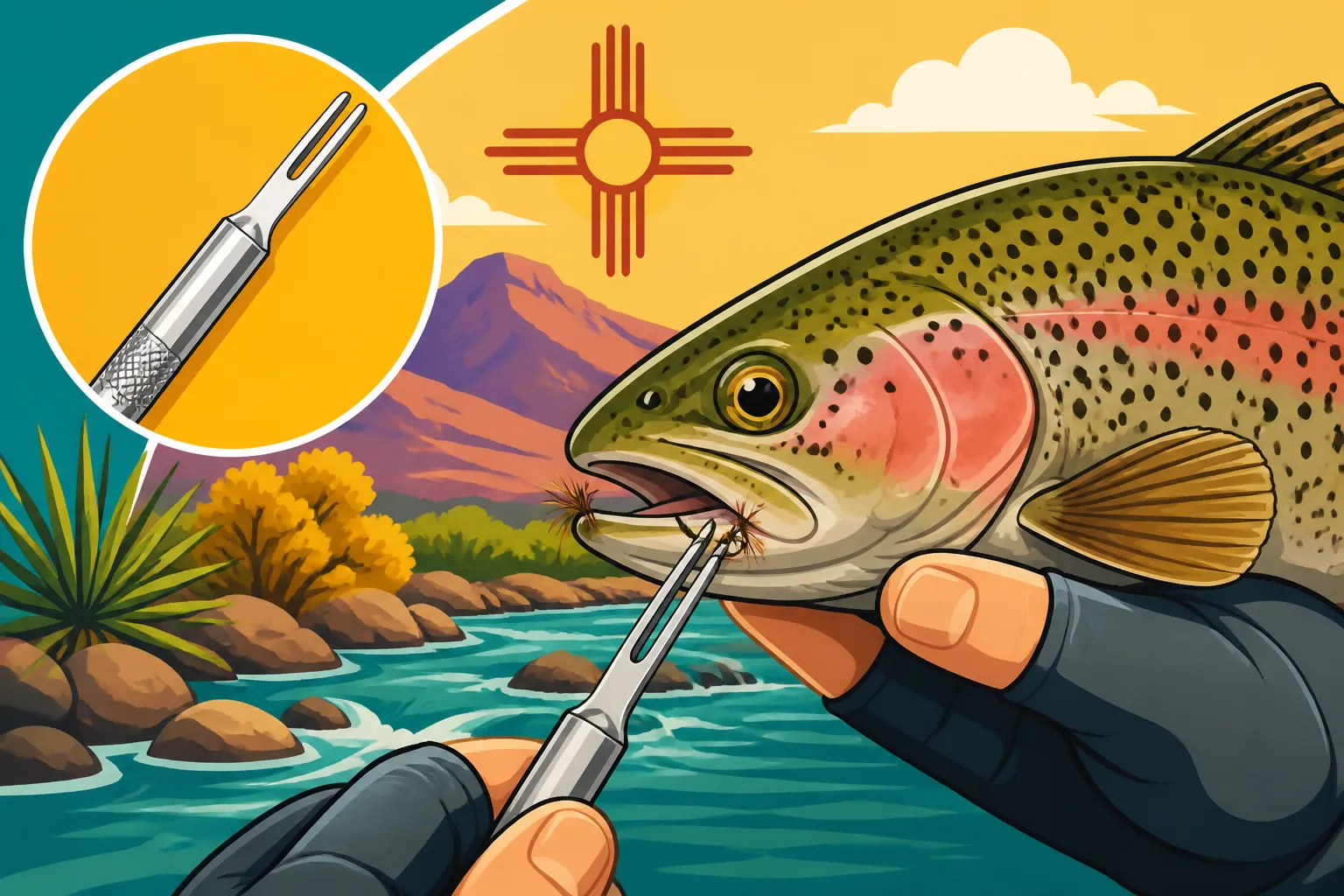
- Insert the Hook Remover: With precision, guide the jaws of your hook remover along the line, down to the hook. For forceps or pliers, try to grab the bend of the hook. For a specialized de-hooker, guide the tip over the barb. Keep your fingers clear.
- Dislodge the Hook: Once you have a firm grip on the hook, gently but firmly twist or push the hook out in the opposite direction it went in. Avoid yanking or tearing. With barbless hooks, this is often a simple push. For barbed hooks, you might need to apply a little more pressure to back the barb out.
- Release the Fish: As soon as the hook is free, gently lower the fish back into the water. If it appears sluggish, hold it upright in a current (facing upstream) or gently move it back and forth to force water over its gills until it regains its strength and swims away on its own. Never throw a fish back. This is all part of How to Handle a Trout Before Releasing It.
Remember, practice makes perfect. The more you use your hook remover, the more fluid and efficient you’ll become.
Handling Tough, Deep Hook Sets
Sometimes, despite your best efforts, a hook is truly swallowed. This is where the long reach of a dedicated de-hooker or very long-nose pliers really shines.
- Don't Panic: Stay calm. Panicking will only stress the fish more.
- Deep Reach, Gentle Touch: If the hook is way down, carefully slide your tool down the fish's throat, feeling for the hook. Once you locate it, try to rotate the hook so the point is facing away from you, then gently push the barb out of the tissue.
- Consider Cutting the Line: In extreme cases, if the hook is swallowed so deeply that removing it would cause fatal damage, it's often best to simply cut the line as close to the hook as possible. Studies show that hooks left in the gut will often corrode and fall out over time, giving the fish a better chance of survival than a traumatic removal. This is a tough call, but sometimes it's the most humane option.
- Barbless Hooks are Your Friend: This is why many special regulation waters, like parts of the San Juan River, require barbless hooks. They are infinitely easier to remove, even when deep, greatly increasing the survival rate of fish. If you crimp the barbs on your hooks, even those on Best Lures for New Mexico Bass, you'll find removals are much smoother.
Ensuring Post-Release Survival and Fish Recovery
The moment after the hook is out is just as important as the removal itself.
- Revival: If the fish seems stunned or disoriented, hold it gently in the water, facing upstream. Allow water to flow over its gills. You can gently move it forward and backward slightly to help resuscitate it. Watch for its fins to start moving purposefully, and for it to show signs of wanting to swim away.
- Observation: Wait until the fish actively swims out of your hands. If it rolls over or struggles, continue the revival process. The goal is to send it off strong.
- Water Temperature: Be especially mindful of water temperature. In warmer months, like during Summer Fishing in New Mexico, fish are already stressed by heat. The quicker the release, the better. Consider moving your fishing sessions to cooler parts of the day or targeting colder waters if catch and release is your primary goal.
Caring for Your Hook Remover: Maintenance for Lasting Performance
Just like you maintain your Best Rod Setup for New Mexico Trout Fishing, your hook remover needs a little love to ensure it performs when you need it most.
After each fishing trip, especially if your tool has been in contact with water or fish slime:
- Rinse Thoroughly: Rinse the hook remover with fresh, clean water. This removes any corrosive elements like salt (if you've been in brackish water) or general grime.
- Dry Completely: Use a cloth to dry the tool thoroughly. Pay special attention to pivot points, springs, and any serrated edges where moisture can hide.
- Lubricate: For tools with moving parts (forceps, pliers), a tiny drop of light machine oil or silicone spray on the hinge can keep them operating smoothly and prevent rust.
- Store Properly: Store your hook remover in a dry place, ideally in a separate compartment of your tackle box or a tool sheath to prevent it from getting banged up or damaging other gear.
A little preventative maintenance goes a long way in ensuring your hook remover is always ready to go, helping you quickly and safely release those beautiful New Mexico trout for years to come.
Disclaimer
This article is for general informational purposes only and does not constitute professional advice. Laws, prices and regulations vary by location and change over time. Consult a qualified professional for guidance on your specific situation.