Best Retrieve Speed for New Mexico Trout Lures
You've just tied on that perfect spinner or spoon, cast it out into a pristine New Mexico trout stream, and now… what? How fast do you reel it in? This is a question that plagues so many anglers, from seasoned veterans to those just starting out, and the frustration of feeling like you're doing everything right but still not getting bites is incredibly real. Trying to figure out the "best" retrieve speed can feel like chasing a phantom, but don't worry, this guide is here to break down the nuances and help you dial in your presentation for hungry New Mexico trout.
Understanding the Basics of Trout Behavior and Lure Action
Before we even talk about how fast to crank that reel handle, it's crucial to understand a bit about what makes a trout tick and how your lure is supposed to look in the water. Without this foundational knowledge, you're essentially just guessing, and we're aiming for a more intentional, successful approach to catching trout in the Land of Enchantment.
Why Retrieve Speed Matters for Trout
Think about it from a trout's perspective. They spend their lives looking for food, but they're also constantly on guard for predators. A lure that's retrieved too fast might look unnatural, like something fleeing in a panic, or it might just zip by too quickly for a trout to register it as a meal worth the effort. Conversely, a lure that's too slow can appear sluggish, unappealing, or even suspicious – like a dead or dying baitfish that might be spoiled.
The sweet spot often lies in presenting your lure as either an easy meal or a tantalizing, injured prey item that triggers their predatory instinct. This is where retrieve speed becomes a critical variable. It's not just about getting the lure back to you; it's about giving it life, making it irresistible, and convincing that trout that it absolutely needs to strike right now. The subtle differences in speed can mean the difference between an empty stringer and a fantastic day on the water.
Matching Lure Type to Retrieve Speed
Every lure has a design purpose, an inherent action it's meant to achieve. Your retrieve speed either enhances or hinders that action. It's like trying to make a race car perform off-roading; it's just not built for it. Understanding your lure's intended movement is the first step in knowing how to retrieve it.
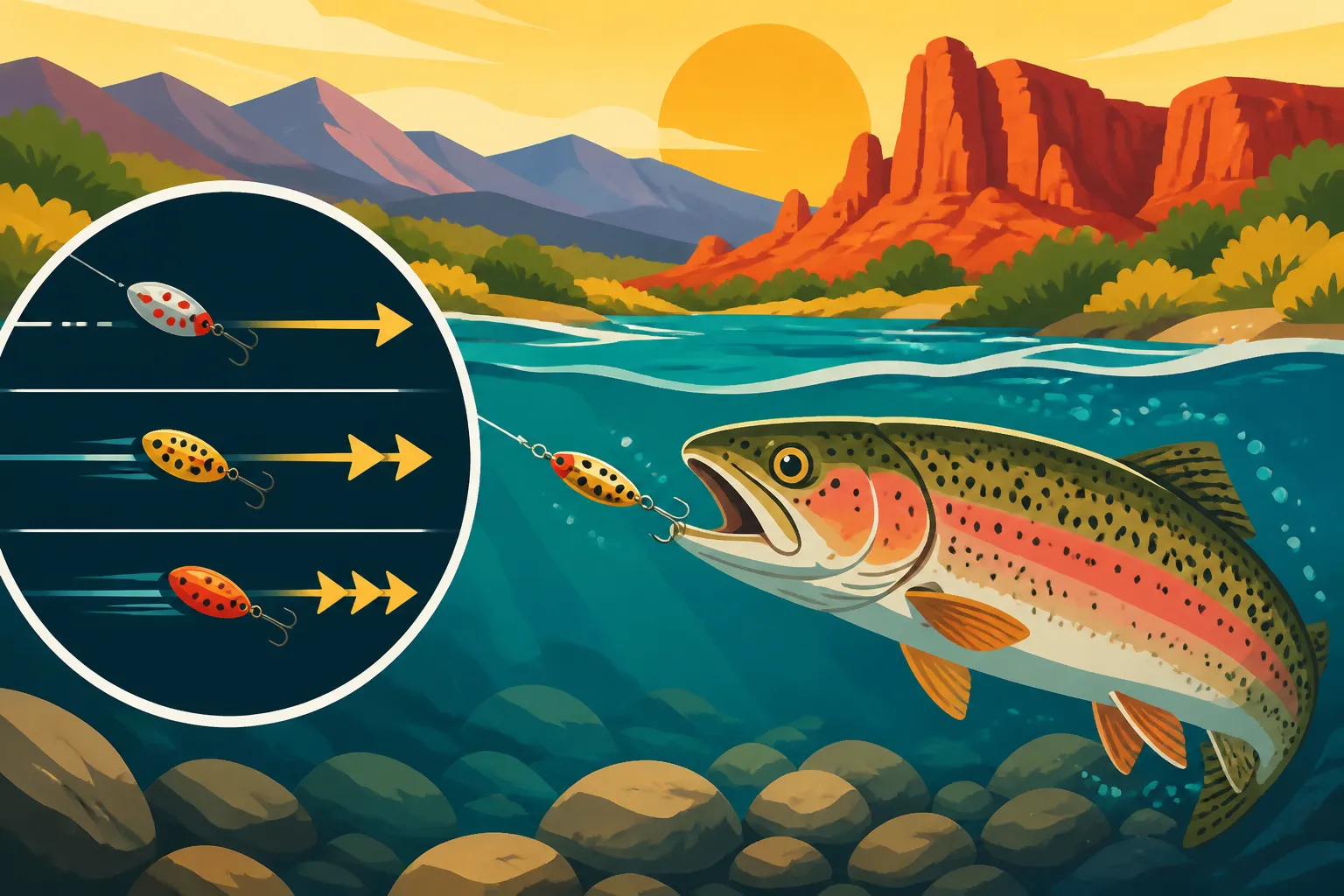
Spinners, for instance, are designed to, well, spin. They have a blade that rotates around a central shaft, creating flash and vibration. For a spinner to work effectively, it needs enough water resistance to get that blade turning. Too slow a retrieve, and the blade just flops, losing its appeal. Too fast, and it might "blow out," spinning so wildly that it becomes a blur rather than an enticing flash. Spoons, on the other hand, are meant to wobble, flutter, and dart. They mimic an injured baitfish. Their action is often best achieved with a slightly slower, more erratic retrieve, allowing them to really "swim" and flash from side to side. Many anglers, myself included, often pick up a variety of popular brands and styles through a quick browse on Amazon before hitting the streams.
Hard plastic stickbaits or jerkbaits often require a specific twitch-and-pause retrieve to mimic a struggling minnow. Jigs, especially when targeting trout on the bottom, are typically worked with short hops and pauses, using gravity to their advantage. The retrieve speed for these isn't about constant reeling, but about controlling the descent and accent. Knowing your lure's core action is your roadmap to finding the right retrieve speed. To dive deeper into specific options, check out our guide on Best Lures for New Mexico Trout.
Mastering Retrieve Speeds for Different New Mexico Trout Species and Conditions
New Mexico is home to a wonderful variety of trout, and they don't all behave the same way or hang out in the same kinds of water. A retrieve that works perfectly for a freshly stocked rainbow might completely spook a wary wild brown. It’s all about tailoring your approach to the specific fish and environment you're facing.
Retrieve Speeds for Stocked Rainbow Trout
Ah, stocked rainbow trout! These are often the most forgiving and enthusiastic biters, especially shortly after they've been introduced to a new body of water. They're typically eager to eat and haven't yet developed the extreme wariness of their wild cousins. When targeting these fish, you can often get away with a more aggressive, faster retrieve.
Many anglers find success with a medium-to-fast retrieve using small spinners or spoons. Think about what these fish are used to – often pellet feed in a hatchery. They're programmed to compete for food. A lure zipping by, creating a lot of flash and vibration, can trigger an impulse strike. Erratic retrieves, where you speed up for a few cranks, then slow down, then maybe add a twitch, can also be incredibly effective. The idea is to make the lure look like an easy meal that's trying to get away, prompting a chase. When fishing New Mexico's urban ponds or heavily stocked lakes, don't be afraid to experiment with speed; often, a bit more zip is what gets their attention. For a more general overview, take a look at Rainbow Trout Fishing in New Mexico.
Slower, More Deliberate Approaches for Wild Brown and Cutthroat Trout
Now, if you're chasing wild brown trout or the elusive Rio Grande cutthroat trout in a pristine mountain stream, you'll need to pump the brakes significantly. These fish are veterans of survival. They've learned to be incredibly wary of anything that looks unnatural, and they're often more selective feeders. A fast, erratic retrieve can send them darting for cover faster than you can say "cutthroat."
For wild trout, slower, more deliberate retrieves are usually the ticket. Imagine a tiny minnow or insect larva drifting naturally with the current. Your lure should mimic that. This often means casting upstream and retrieving just fast enough to keep slack out of your line, allowing the lure to tumble and drift naturally with the current. If you're using a spinner, you want just enough speed to get the blade to turn, but not so fast that it looks frantic. For spoons or small jerkbaits, a "pause-and-go" retrieve is gold. Let the lure sink for a moment, give it a subtle twitch, then reel a few turns and pause again. This mimics an injured or struggling baitfish, and often, the strike will come on the pause. Remember, these fish live in clear water and have excellent eyesight. Subtlety is your friend. Understanding the distinct characteristics of these fish is key, as detailed in Brown Trout Fishing in New Mexico and Trout Species in New Mexico.
Adjusting for Water Temperature and Clarity
Beyond the species, the prevailing water conditions play a huge role in how trout respond to your retrieve speed. This is where observation and adaptability come into play.
In cold water, generally anything below 45-50°F, trout are often lethargic. Their metabolism slows down, and they're not going to expend a lot of energy chasing a fast-moving meal. This is when an ultra-slow, deliberate retrieve truly shines. You want your lure to barely move, just enough to show some action. Think slow jigging a spoon or jig right near the bottom, or a very slow roll of a spinner that just barely keeps its blade turning. The goal is to put the meal right in front of their face, making it too easy to refuse. During the colder months, when you're checking the New Mexico Fishing Season Calendar, remember to slow things down.
Conversely, in warmer water, typically above 60°F (but still within safe limits for trout), fish are more active and aggressive. Their metabolism is higher, and they're more willing to chase. Here, you can often get away with, and even benefit from, faster retrieves. These conditions can often be found during Summer Fishing in New Mexico. Quick bursts of speed, erratic movements, and a general increase in pace can trigger explosive strikes. However, always be mindful of water temperature; if it's too warm, trout can become stressed, and it's best to fish for other species or focus on early morning/late evening when temperatures are cooler.
Water clarity also dictates your approach. In crystal clear water, which you'll find in many of New Mexico's high mountain streams and tailwaters, trout have an excellent view of your lure. This means they can scrutinize it, and anything unnatural will stand out. Opt for more subtle, natural retrieves. Avoid anything that creates excessive commotion unless you're trying to elicit a reaction strike from a very aggressive fish. However, in murky or stained water, visibility is low. Trout rely more on vibration and scent. Here, a slightly faster retrieve with a more aggressive lure (like a spinner or a rattling crankbait) can be beneficial, as the increased speed and action create more vibration for them to home in on. Sometimes, just finding the right lure is the first step, and you can find a solid selection of lures for different conditions on Amazon, often with user reviews to help guide your choice.
Practical Tips and Techniques for Optimizing Your Retrieve
Knowing why retrieve speed matters is one thing; putting it into practice is another. It takes experimentation, observation, and a willingness to adapt. Don't be afraid to try new things and break from what you think you know. Trout are finicky creatures, and what works one day might be a bust the next.
The "Search and Experiment" Method
When you first approach a new fishing spot, or even a familiar one on a different day, start with a "search and experiment" mentality. Don't commit to one retrieve speed right away. Begin with a moderate, steady retrieve – something that allows your chosen lure to exhibit its natural action. Then, systematically vary your speed.
Cast in a fan pattern, covering different areas of the water. For each cast, try something slightly different. One cast, reel a little faster. The next, a little slower. Try a steady retrieve for part of the cast, then add a series of twitches or pauses. Pay close attention to when you get a bite. Was it during a fast retrieve? A slow one? During a pause? Identifying these patterns is key. I often count the number of turns of my reel handle per second to help me replicate a successful retrieve speed. For general guidance on tactics, our article How to Catch Trout in New Mexico offers a great starting point.
Incorporating Pauses, Twitches, and Rod Action
A steady, monotonous retrieve often isn't the most effective way to tempt a trout. Just like us, they get bored! The magic often happens when you introduce variety and simulate a struggling or disoriented baitfish. This is where pauses, twitches, and your rod action come into play.
- Pauses: A sudden stop in your retrieve can be deadly. As your lure halts, it often flutters or sinks, mimicking a stunned baitfish. Many strikes occur right as the lure pauses or just as you begin to move it again. This is particularly effective with spoons, jerkbaits, and even jigs.
- Twitches: Short, sharp flicks of your rod tip add sudden, erratic movements to your lure. This can make a plastic minnow dart convincingly or a spoon flash aggressively. Experiment with single twitches, double twitches, or even a series of rapid twitches.
- Rod Action: Don't just rely on your reel. Sweeping your rod to the side, lifting it, or dropping it can impart unique actions. For instance, a long, slow rod sweep can make a jig "swim" upward before it falls again, or give a soft plastic an enticing glide. You can really maximize the action of your lure this way. This is a crucial element of your overall Best Rod Setup for New Mexico Trout Fishing.
Remember, the goal is to break the rhythm and make your lure appear less predictable and more vulnerable. Even simple spinners can be made more enticing with a slight rod tip twitch every few seconds.
Gear Considerations for Better Speed Control
While retrieve speed is primarily about technique, your gear can certainly help you execute it more effectively. Thinking about your rod and reel setup can fine-tune your ability to control that lure presentation.
- Reel Gear Ratio: This is probably the most direct gear influence on retrieve speed. A reel with a lower gear ratio (e.g., 5.2:1) will retrieve less line per crank, making it easier to achieve slow, deliberate retrieves. A higher gear ratio (e.g., 7.1:1 or higher) pulls in more line per crank, making faster retrieves effortless but sometimes making it harder to slow down enough. For general trout fishing, a medium gear ratio (around 6.0:1) offers a good balance, but if you know you'll be primarily doing slow, finesse fishing, a lower ratio might be beneficial. Many great reels across various gear ratios are readily available on Amazon for every budget.
- Line Type: The type of fishing line you use can also subtly affect how you perceive and control your retrieve. Braided line, with its no-stretch properties, offers incredible sensitivity. You'll feel every twitch, bump, and even subtle changes in lure action, which helps you fine-tune your speed. Fluorocarbon line is also very sensitive and virtually invisible underwater, which can be an advantage in clear New Mexico waters, allowing you to use lighter line without spooking fish. Monofilament offers more stretch, which can cushion hard strikes but might make it harder to detect subtle bites or feel the exact action of your lure.
- Rod Action: The "action" of your rod refers to where it bends when pressure is applied. A fast-action rod bends mostly in the tip, offering excellent sensitivity and the ability to impart sharp twitches. A moderate-action rod bends further down the blank, providing a more parabolic curve that can be better for casting lighter lures and absorbing the shock of a fighting fish, but might be less precise for twitching. Matching your rod action to your preferred lure type and retrieve style can make a noticeable difference in your presentation. If you're building out your tackle box, considering What Gear Beginners Need to Start Fishing in New Mexico will help.
By understanding how your gear influences your retrieve, you can make informed choices that empower you to present your lures exactly how you want them, increasing your chances of success on the water.
Here's a quick reference table to help visualize retrieve speed concepts:
| Lure Type | Target Species | Water Conditions | Suggested Retrieve Speed | Key Action Points |
|---|---|---|---|---|
| Spinners | Stocked Rainbows | Warmer, Moderate | Medium-Fast | Steady, blade turning actively; occasional stop |
| Wild Trout | Colder, Clear | Slow-Medium | Just enough to turn blade; subtle drift | |
| Spoons | Stocked Rainbows | Warmer, Moderate | Medium, Erratic | Wobbly, flashing; speed bursts |
| Wild Trout | Colder, Clear | Slow, Pause-and-Go | Fluttering fall; sudden jerks on retrieve | |
| Jerkbaits | Stocked & Wild | Moderate-Clear | Twitch-Pause-Retrieve | Darting, struggling; long pauses |
| Jigs (Soft) | Stocked & Wild | Any Depth | Hop-Drag-Pause | Bottom contact; light lifts; subtle movements |
| Jigs (Hard) | Stocked & Wild | Deeper, Colder | Lift-Fall | Mimic dying baitfish; sharp vertical movements |
Remember, this table provides a starting point. The true key to success lies in experimentation and reading the fish, especially when dealing with the varied conditions described in New Mexico Fishing Regulations Overview and New Mexico Fishing by Season. The best time to fish in New Mexico varies greatly depending on these factors, so understanding retrieve speeds is a big part of that equation.
Ultimately, there's no single "best" retrieve speed for all New Mexico trout lures. The truly effective angler is the one who observes, adapts, and isn't afraid to experiment. Pay attention to the water, the weather, and how the fish are reacting (or not reacting!). Start with a moderate pace, then slow it down, speed it up, add some twitches, and introduce some pauses. Let the trout tell you what they want. You might be surprised at how a small change in your retrieve can lead to a big change in your luck. Happy fishing, and may your retrieves be perfectly paced!
Disclaimer
This article is for general informational purposes only and does not constitute professional advice. Laws, prices and regulations vary by location and change over time. Consult a qualified professional for guidance on your specific situation.