Kokanee Salmon Fishing in New Mexico
Finding and successfully catching Kokanee salmon in New Mexico can feel like a real mystery, especially when you're dreaming of those vibrant red fish and delicious fillets but aren't sure where to start with their unique habits and the specific techniques required. This comprehensive guide is designed to demystify Kokanee salmon fishing in the Land of Enchantment, offering you all the insights, locations, gear, and strategies you need to have a successful and rewarding experience.
Understanding Kokanee Salmon in New Mexico
Kokanee salmon are a truly special fish in New Mexico's waters, offering a unique challenge and a delicious reward for anglers who understand their lifecycle and behavior. Unlike their anadromous sockeye cousins that migrate to the ocean, Kokanee are landlocked sockeye salmon, meaning they complete their entire life cycle in freshwater. This makes them particularly fascinating and a bit different from the trout many New Mexico anglers are accustomed to pursuing.
Biology and Behavior of Kokanee
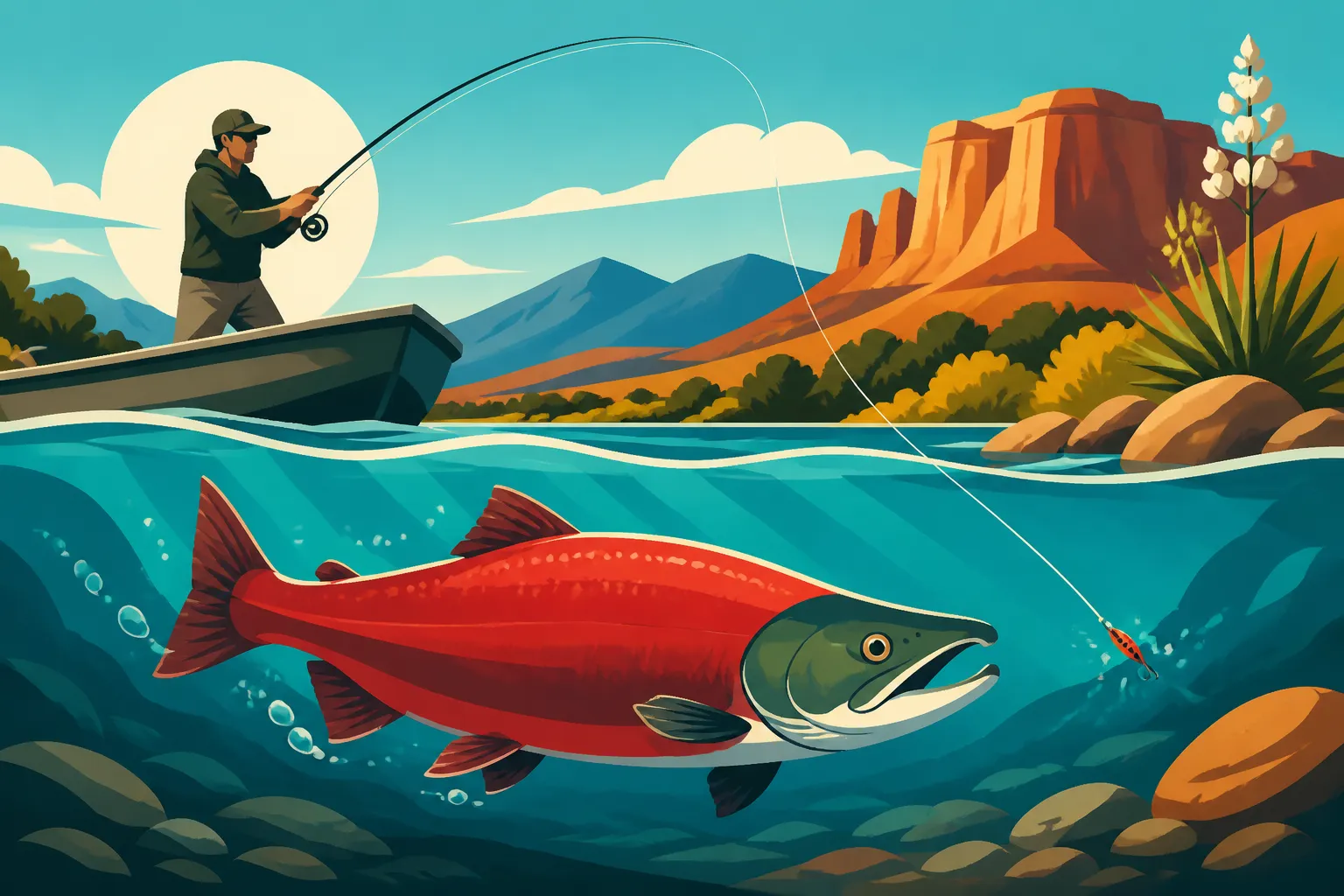
Kokanee salmon are a beautiful species, silver-sided in their younger years, with iridescent blue-green backs that shimmer in the clear mountain waters. As they mature and approach their spawning phase, their appearance transforms dramatically. Males develop a pronounced humped back and elongated snout (known as a kype), and both sexes turn a brilliant crimson red, often with green heads. This striking color change is a tell-tale sign of their readiness to reproduce and signals a specific window of opportunity for anglers. They typically live for about 3-4 years, spending most of their lives in the cooler, deeper parts of large reservoirs, feeding primarily on zooplankton. This diet is key to understanding their feeding habits and why certain lures and colors are so effective. Because they are plankton feeders, Kokanee don't typically strike out of aggression like many predatory fish; instead, they are often enticed by flashy, small offerings that mimic their food source or simply pique their curiosity. Their mouths are quite soft, which means a gentle touch is needed during the fight to avoid tearing the hook out.
Why Kokanee Are Special in New Mexico
New Mexico might not be the first place that comes to mind when you think of salmon, but our state boasts some excellent Kokanee fisheries that provide a thrilling experience. The New Mexico Department of Game and Fish actively manages these populations, primarily through stocking efforts, to ensure a sustainable and exciting fishery. What makes them so special here is their unique presence in our high-desert and mountain lakes, offering a cold-water angling opportunity that complements our robust trout and warm-water fisheries. They are challenging to catch because of their soft mouths and reliance on specific techniques, but the reward is a beautiful, hard-fighting fish that is also incredibly tasty. Many anglers specifically target Kokanee for their culinary value, often smoked or grilled, making them a dual-purpose species for sport and table fare. Plus, the areas where Kokanee thrive, like Navajo Lake and Heron Lake, are stunningly beautiful, offering an incredible backdrop for a day on the water.
Where to Find Kokanee Salmon in New Mexico
When it comes to Kokanee salmon fishing in New Mexico, not just any lake will do. These landlocked salmon have specific habitat requirements, favoring large, deep, cold-water reservoirs with plenty of zooplankton. Thankfully, New Mexico offers a few prime destinations where these vibrant fish thrive and provide excellent angling opportunities.
Top Kokanee Salmon Lakes
New Mexico is home to a few stellar Kokanee salmon fisheries that draw anglers from all over the region. Each lake has its own unique characteristics, but all offer the deep, cool water that Kokanee need.
Navajo Lake: Without a doubt, Navajo Lake Kokanee Salmon Fishing is often considered the premier Kokanee destination in New Mexico. This massive reservoir, straddling the New Mexico-Colorado border, offers vast expanses of deep, clear water perfect for these plankton eaters. Anglers consistently report good catches here, especially during the peak seasons. The lake is well-known for its deep channels and submerged structures that provide excellent holding areas for Kokanee. You'll find active fish throughout the lake, but certain coves and areas, particularly those with good current flows or deep points, tend to concentrate them. Early mornings and late evenings are often the most productive, especially when targeting them at specific depths.
Heron Lake: Heron Lake Kokanee Salmon Fishing is another fantastic option, often lauded for its calm, no-wake zones that make it a favorite for kayak and smaller boat anglers, as well as those who prefer a more tranquil fishing experience. Heron Lake's deep, cold waters provide an ideal environment, and it's particularly renowned for its kokanee snagging season, which can be an incredibly exciting (and legal, during specific periods) way to harvest these fish. The lake's clear water means you often need to be mindful of your line and presentation, as Kokanee can be quite line-shy. Fishing near the dam or in deeper parts of the main channel can be highly productive.
Eagle Nest Lake: While perhaps not as famous for Kokanee as Navajo or Heron, Eagle Nest Lake Fishing also holds a respectable population, particularly for those looking for a different high-mountain experience. Eagle Nest is a higher-elevation lake, and its Kokanee populations can vary, but when they're on, they can provide excellent action. This lake is also known for its trout and pike, so anglers here might find a mixed bag. The techniques used here are similar to those at the other lakes, focusing on trolling at depth or jigging.
Identifying Prime Kokanee Habitat
Understanding where Kokanee salmon prefer to hang out is crucial for success. These fish are highly sensitive to water temperature and light, and their movements are dictated by these factors, as well as the availability of their primary food source: zooplankton.
Deep, Cold Water: During most of the year, Kokanee will be found in the cooler, deeper parts of the lake. They prefer water temperatures in the low to mid-50s Fahrenheit. This means that as the surface waters warm up, they will move deeper, often suspending over significant depths rather than staying close to the bottom. A good fish finder is an invaluable tool for locating these schools. Look for bait balls or arches suspended at specific depths, often anywhere from 20 to 60 feet down, sometimes even deeper. These fish tend to school tightly, so when you find one, you're likely to find many.
Open Water and Submerged Structure: While they prefer open water, Kokanee will often orient themselves near submerged structures, old creek channels, or drop-offs, especially if those areas provide current or concentrate plankton. Pay attention to contour maps and use your electronics to identify these features. The edges of old riverbeds or deep points where currents might sweep through are often productive. In the early morning or late evening, they might move shallower to feed, but generally, expect to find them suspended. During the spawning season, of course, their habitat preference shifts entirely, as they move towards shallower tributary inflows or even rocky shorelines in the main lake to lay their eggs. This dramatic shift is a key time to target them, often requiring different techniques.
Best Times and Seasons for Kokanee Fishing
Timing is everything when it comes to Kokanee salmon fishing in New Mexico. Their behavior is highly cyclical, tied closely to water temperatures and their annual spawning ritual. Knowing when and why they move can dramatically increase your chances of a successful outing.
The Annual Spawning Run
The most famous and often most productive time for Kokanee salmon fishing in New Mexico is during their spawning run. This typically occurs in late summer and early fall, usually from August into September and even October, depending on the specific lake and water temperatures. As they approach spawning, Kokanee undergo a remarkable transformation, changing from their silvery open-water coloration to a vibrant, unmistakable crimson red, with males developing a distinct humped back and hooked jaw (kype).
During this period, they migrate from the deep open waters to specific spawning grounds. In lakes like Navajo, this often means moving into the mouths of tributaries or up into the river arms, though some fish may spawn along rocky shorelines in the main lake. At Heron Lake, they also seek out similar areas. While they are no longer feeding in the traditional sense once they begin their spawning journey, they can still be enticed to strike by aggressive presentations or by snagging, which is a legal method during specific, highly regulated seasons in New Mexico. The snagging season is incredibly popular, especially at Heron Lake, where anglers use heavy tackle and specialized snagging hooks to target the dense schools of salmon. It's crucial to check the New Mexico Salmon Snagging Season regulations each year, as dates and specific rules can vary significantly to ensure sustainable harvesting and respect for the fish's reproductive cycle. Anglers not participating in snagging can still find success by trolling bright, flashy lures through the congregating schools, as the fish may strike out of aggression or territoriality.
Seasonal Patterns and Weather Considerations
Beyond the spawning run, Kokanee salmon fishing can be productive throughout much of the year, provided you adjust your tactics to the seasonal changes.
Spring (March-May): As ice melts and water temperatures begin to rise, Kokanee will often be found in the upper water column, perhaps 15-30 feet deep, as the zooplankton they feed on becomes more active. They might be more spread out initially but will start to concentrate in areas where plankton blooms occur. This is an excellent time for trolling smaller, flashy lures or dodgers with a trailing fly. The fish are often actively feeding and can be quite aggressive.
Summer (June-August): This is when Kokanee move to deeper, cooler waters to escape the warming surface temperatures. They'll typically be found suspended anywhere from 30 to 70 feet deep, sometimes even deeper, depending on the lake's thermal stratification. Mornings and evenings will be your best bet, as they might rise slightly in the water column during low light. Midday fishing will almost certainly require deep-water tactics like downriggers or heavy weights to reach them. Pay close attention to your fish finder to locate schools suspended over vast depths. Fishing New Mexico Reservoirs in Summer Heat requires patience and precise depth control.
Fall (September-November): Post-spawning, many Kokanee will die, having completed their life cycle. However, earlier in the fall, before the full spawning run or as the last fish are finishing up, you can still find actively feeding Kokanee in the cooler parts of the lake. Water temperatures start to stabilize, and fish might be found at more moderate depths, gradually moving shallower as the water cools further towards winter. This can be a great time for trolling before the lakes potentially freeze over.
Winter (December-February): For lakes that freeze solid, New Mexico Ice Fishing Season can present an opportunity for Kokanee. These fish will remain active under the ice, often suspended at various depths. Ice fishing for Kokanee typically involves jigging small, flashy spoons or specialized Kokanee jigs, often tipped with corn or scent, at depths similar to summer fishing. Patience is key, as is a good portable fish finder to locate those suspended schools beneath the ice. The bite can be subtle, so sensitive rods are a must.
Weather patterns, such as sudden cold fronts or strong winds, can also impact Kokanee behavior. Generally, stable weather with light winds is preferred. Overcast days can sometimes encourage fish to rise higher in the water column, while bright sunny days often push them deeper. Always check the forecast and local conditions before heading out.
Essential Gear for Kokanee Salmon Fishing
Successfully targeting Kokanee salmon in New Mexico requires a specialized approach, especially when it comes to your gear. These fish have soft mouths and a unique feeding preference, which means your setup needs to be tailored to their habits. Don't just grab your bass rod and hope for the best; a little preparation goes a long way.
Rods, Reels, and Line
The right rod and reel combo are paramount for Kokanee. Because of their soft mouths, you need a rod with a soft, forgiving tip to absorb their head shakes and prevent hooks from tearing out.
- Rods: Look for a lightweight spinning or casting rod in the 6-foot 6-inch to 7-foot 6-inch range, with a fast action but a very light, sensitive tip. Fiberglass rods or composite rods often provide that desired parabolic bend. A medium-light to light power rod is usually ideal. Many Kokanee specialists opt for dedicated Kokanee rods, which are designed specifically for this purpose, offering that perfect blend of sensitivity and flex. You can often find great options for these on Amazon.
- Reels: A small, smooth spinning reel (size 1000-2500) or a lightweight baitcasting reel will do the trick. The key is a smooth drag system. Kokanee can make surprisingly strong runs, especially larger specimens, and a sticky drag will almost certainly result in a lost fish.
- Line: This is critical. For your mainline, a good quality monofilament or fluorocarbon in 6-10 lb test is generally preferred. Monofilament offers some stretch, which acts as an additional shock absorber for those soft mouths. Fluorocarbon is less visible in clear water and has less stretch, offering more sensitivity, but you'll need to rely more on your rod's flex. Some anglers use braided line for sensitivity and strength, but if you do, be sure to use a long (8-10 foot) fluorocarbon leader to provide invisibility and shock absorption. The leader material should typically be 4-6 lb test, lighter than your mainline, to fool those often line-shy Kokanee.
Terminal Tackle and Lures
Kokanee salmon are primarily zooplankton feeders, so your lures and terminal tackle need to mimic tiny food sources or be flashy enough to provoke an inquisitive or aggressive strike.
- Dodgers and Flashers: These are perhaps the most essential pieces of terminal tackle for trolling Kokanee. Dodgers and flashers are designed to create erratic movements and flash, attracting salmon from a distance. They don't actually rotate or spin like a spoon; instead, they wobble and kick, imparting action to the trailing lure. Sizes range, but smaller 4-6 inch dodgers are often most effective for Kokanee. Brands like Arrow Flash, Sling Blade, and Mack's Lure (often found on Amazon) are popular choices. Experiment with different colors – silver, chrome, pink, orange, and chartreuse are all excellent starting points, sometimes with UV or glow finishes.
- Lures/Flies: Trailing behind your dodger, you'll want small, highly attractive lures or flies.
- Small Hoochies/Squid Skirts: These are soft plastic tubes or skirts, usually 1-2 inches long, in bright colors like pink, orange, chartreuse, or even purple. They are often tipped with a kernel or two of shoepeg corn, which is believed to add scent and visual appeal.
- Small Spoons: Mini-spoons with a fluttering action, in similar bright colors or metallic finishes, can also be very effective.
- Wedding Rings/Spin-N-Glos: These are small spinner rigs with beads, a blade, and often a small piece of tubing or a plastic fly. They're designed to spin and flash.
- Hooks: Use small, sharp hooks. Size 4 to 8 single hooks are common, sometimes in tandem rigs. Barbless hooks are often preferred or required in some waters for easier release and less damage to the fish.
- Scent: This is a game-changer for Kokanee. Their sense of smell is highly developed. Always tip your lures with a kernel or two of shoepeg corn (dyed with flavors like Anise, Krill, or Garlic is popular) or apply a commercial fish attractant gel or spray. This adds a crucial element of appeal.
Electronics and Accessories
Modern electronics can give you a significant advantage when targeting Kokanee, especially when they are suspended in deep water.
- Fish Finder/Sonar: An absolute must-have. A good fish finder will allow you to locate schools of Kokanee suspended at specific depths, identify thermoclines, and map bottom structure. Look for units with clear, high-resolution screens and down-imaging or side-imaging capabilities if your budget allows. Being able to pinpoint the exact depth where fish are holding is invaluable.
- Downriggers or Dipsy Divers: To consistently get your lures down to the depths where Kokanee are holding (often 30-70+ feet), you'll need a way to present them effectively.
- Downriggers: These are mechanical devices that use a heavy weight (cannonball) to pull your line down to a precise depth, releasing it when a fish strikes. They offer the most precise depth control.
- Dipsy Divers/Deep Sixes: These are diving planers that use hydrodynamic force to dive to specific depths, carrying your line and lure with them. They are a more affordable and portable alternative to downriggers.
- Weight Systems: Inline weights, snap weights, or bottom bouncers can also be used, though they offer less precise depth control than downriggers or divers.
- Net: A long-handled, soft, rubberized landing net is essential. The soft mesh protects the fish's delicate scales and fins, making catch and release easier. The long handle helps reach fish in the water without excessive leaning.
- Cooler: For keeping your catch fresh, especially if you're out on the water for several hours. Pack plenty of ice.
- Sun Protection: New Mexico sun is intense. Don't forget polarized sunglasses (they help spot subtle bites and surface activity), a wide-brimmed hat, and plenty of sunscreen.
Having the right gear makes all the difference when pursuing these elusive and rewarding salmon. A well-stocked tackle box from your local shop or Amazon will serve you well.
Techniques for Catching Kokanee Salmon
Catching Kokanee salmon is an art form that requires precision, patience, and a deep understanding of their unique behaviors. Unlike aggressive predators, Kokanee are often enticed by subtle movements and scents. Master these techniques, and you'll greatly improve your success rate on New Mexico's Kokanee lakes.
Trolling Strategies
Trolling is by far the most popular and often most effective method for Kokanee salmon, allowing you to cover vast areas of water and present your lures at precise depths.
- Speed Control is Key: Kokanee are typically slow-moving fish, and their primary food source, zooplankton, doesn't swim fast. Therefore, a slow trolling speed is crucial. Aim for speeds between 0.8 and 1.5 miles per hour. Too fast, and your lures will likely be ignored. Use a GPS-enabled fish finder or your boat's speedometer to maintain consistent speed. Varying your speed slightly, with small accelerations and decelerations, can sometimes trigger a strike.
- Depth Precision with Downriggers or Divers: As discussed in the gear section, getting your lure to the exact depth where fish are holding is paramount. Use a downrigger for the most precise control, setting your cannonball at the depth where you're seeing fish on your sonar. If using Dipsy Divers or similar diving planers, experiment with leader lengths and settings to dial in the depth. Remember that the length of line out and your trolling speed will affect how deep these divers run. Running multiple lines at different depths until you find the "zone" is a common and effective tactic.
- Lure Presentation and Scent: Always run a dodger or flasher in front of your lure. The dodger's wobble and flash are what attract the Kokanee, while the trailing hoochie, spoon, or fly gets the bite. The distance between the dodger and your lure (the "leader length") is important; start with about 8-18 inches and experiment. Shorter leaders give more action; longer leaders give more natural movement. And seriously, don't forget the corn or scent! A couple of kernels of shoepeg corn on your hook, or a generous application of your favorite scent, is often the difference between a slow day and a banner day. The scent trail can draw fish in and encourage them to bite.
- Trolling Patterns: Don't just troll in a straight line. Making gentle S-turns or figure-eights can cause your dodger and lure to speed up and slow down, or drop and rise slightly, which often triggers inactive fish. Pay attention to how the boat's turns affect your lure's action and when strikes occur. Often, fish will hit on the outside turn when the lure speeds up slightly, or on the inside turn when it slows.
Jigging and Still Fishing
While trolling dominates Kokanee fishing, jigging and still fishing can be incredibly effective, especially when schools are tightly packed or when you're ice fishing.
- Vertical Jigging: This technique is fantastic when you've located a dense school of Kokanee suspended beneath your boat with your fish finder. Use small, flashy spoons or specialized Kokanee jigs. Drop your lure down to the depth of the fish, then impart a subtle jigging action. This usually involves a small lift of the rod tip (6-12 inches) followed by a controlled fall, allowing the lure to flutter. Most bites occur on the fall, so pay close attention to your line for any twitch or slack. Tipping your jig with corn or scent is still highly recommended. This method is particularly popular for Ice Fishing in New Mexico for Kokanee, where you're confined to a hole in the ice directly over the fish.
- Still Fishing/Slip Bobber Rigs: While less common for active Kokanee, still fishing can work, particularly if fish are actively feeding in a specific area or if you're targeting them during their early, less active stages post-stocking. A slip bobber rig allows you to present bait at a precise depth. Rig a small hook with corn or PowerBait, set your bobber stopper to the desired depth, and wait. This method is more passive and often used in conjunction with other techniques or when multiple lines are permitted.
- Key to Jigging Success: Always watch your electronics. If you see fish move away, adjust your depth or try a different jigging cadence. A slight pause after a lift can be incredibly effective, allowing the lure to shimmer and tempt a cautious bite.
Snagging (During Permitted Seasons)
Snagging Kokanee salmon is a highly debated topic among anglers, but it is a legal and popular method during specific, tightly regulated seasons in New Mexico, primarily at Heron Lake.
- Understanding the Regulations: Before even considering snagging, you must check the current year's New Mexico Fishing Regulations Overview for the exact dates, times, and specific locations where snagging is permitted. These regulations are in place to manage the fishery and are strictly enforced. Snagging is usually only allowed during the peak of the spawning run when fish are heavily concentrated and are no longer feeding.
- Heavy Gear: Snagging requires much heavier gear than traditional Kokanee fishing. You'll need a stout rod (often a heavy-action baitcasting or spinning rod), strong braided line (20-50 lb test), and large, weighted treble hooks. The idea is not to hook the fish in the mouth but to "snag" them anywhere on the body by sweeping the large hooks through dense schools.
- Technique: Typically, anglers will cast out their heavy snagging rig, let it sink to the depth where the salmon are schooled, and then use a strong, sweeping motion of the rod to pull the hooks through the water column, hoping to hook a fish. This is repeated until a fish is caught. It's an active and physically demanding method that can be incredibly effective for harvesting fish during the spawning period.
- Ethical Considerations: Many anglers prefer not to snag, opting for more traditional hook-and-line methods even during the spawning run. If you do choose to snag, ensure you are fully compliant with all regulations and are mindful of other anglers. The intent of snagging is usually for harvesting meat, as snagged fish are often heavily bruised and not suitable for catch-and-release.
Regardless of the technique you employ, patience and observation are your best friends. Kokanee can be finicky, but when you crack the code, the reward is well worth the effort.
Regulations and Limits for Kokanee Salmon
Navigating fishing regulations can sometimes feel like trying to untangle a bird's nest of fishing line. When it comes to Kokanee salmon in New Mexico, it's particularly important to be well-informed, as specific rules govern these unique fish, especially during their spawning season. Always, always, start by checking the current New Mexico Fishing Regulations Overview published by the New Mexico Department of Game and Fish (NMDGF).
License and Stamp Requirements
Before you even think about casting a line for Kokanee, you need to ensure you're legally equipped.
- New Mexico Fishing License: The most fundamental requirement for any angler in New Mexico is a valid fishing license. This applies whether you're a resident or a nonresident, and there are various options available, from annual licenses to one-day or five-day permits, depending on your needs. You can typically purchase these online, at NMDGF offices, or from authorized vendors like sporting goods stores. Make sure your license is current for the fishing year. For visitors, understanding New Mexico Fishing License for Visitors on Vacation is crucial.
- Habitat Management and Access Validation (HMAV): This is a stamp or validation that is required for most fishing in New Mexico, including for Kokanee salmon. The HMAV helps fund crucial habitat improvement projects and ensures angler access to public lands. It's usually purchased alongside your fishing license. There are certain New Mexico Habitat Stamp Exemptions, but for the average angler targeting Kokanee, it's generally a required purchase.
- Second Rod Validation: If you plan on fishing with two rods (which can be beneficial when trolling for Kokanee to cover more water or depths), you'll need to purchase a New Mexico Second Rod Validation. This allows you to legally operate an additional line. Without it, you are limited to one fishing rod.
Failing to have the correct licenses and stamps can lead to hefty fines, so it's always best to be prepared and verify your requirements before you head out. You can typically find detailed information on New Mexico Fishing License Costs Explained through the NMDGF website.
Daily Bag and Possession Limits
These limits are set by the NMDGF to ensure sustainable fish populations and fair distribution of the catch among anglers.
- Statewide Kokanee Limits: For Kokanee salmon, New Mexico typically has specific daily bag and possession limits. A "daily bag limit" is the maximum number of fish you can keep in a 24-hour period, while a "possession limit" is the maximum number of fish you can have in your possession at any given time, including those at your campsite, vehicle, or home, usually correlating to a two-day or three-day bag limit. It's important to understand the difference and not exceed either. These numbers can change, but commonly, anglers might be allowed to keep a certain number of Kokanee per day.
- Lake-Specific Regulations: It's also vital to check if there are any lake-specific regulations for Kokanee. For instance, while Navajo Lake might have a general limit, Heron Lake might have slightly different rules, especially during the snagging season. These specific details will always be outlined in the NMDGF fishing proclamation.
- Why Limits Matter: These limits are not arbitrary. They are carefully determined by fisheries biologists to manage the health of the Kokanee population, considering factors like stocking numbers, natural reproduction, and angler pressure. Adhering to them ensures that future generations of anglers will also have the opportunity to enjoy catching these beautiful fish.
Special Rules for Spawning and Snagging
This is where Kokanee regulations become particularly unique and critical to follow.
- Snagging Seasons: As mentioned earlier, New Mexico allows snagging for Kokanee salmon during designated periods, typically in the fall during the peak of their spawning run. However, these seasons are very specific:
- Dates: The snagging season usually has a strict start and end date, often lasting only a few weeks.
- Locations: Snagging may only be permitted in certain areas of a lake (e.g., specific coves or river arms) and prohibited in others.
- Methods: There might be rules regarding the type of hooks allowed (e.g., single or treble hooks, maximum size), and you'll typically be restricted to a single rod.
- Daily Bag/Possession: Even during snagging season, the daily bag and possession limits for Kokanee still apply.
- Catch and Release Considerations: If you are not participating in the snagging season but are still targeting Kokanee during their spawning run, be aware that these fish are nearing the end of their life cycle. While legal to catch and release, fish that are bright red and humped are often in poor condition and may not survive release. Catch and Release Best Practices in New Mexico should always be observed, but for actively spawning Kokanee, many anglers choose to harvest rather than release.
- Why the Special Rules? The NMDGF manages the Kokanee spawning run with these specific rules to allow anglers to harvest fish that would soon die naturally after spawning, while also preventing overharvest or disturbance of fish crucial for natural reproduction in areas where it occurs. These regulations are designed to provide a unique angling experience while maintaining the ecological balance. Always consult the most current NMDGF regulations booklet or website for the precise rules before planning your trip. Ignorance of the law is not an excuse.
Beyond the Catch: Preparing and Enjoying Kokanee Salmon
So, you've done the hard work: you've battled the elements, mastered the techniques, and successfully landed some beautiful New Mexico Kokanee salmon. Congratulations! But the experience doesn't end there. Proper handling, preparation, and mindful consumption are all part of fully appreciating your catch and ensuring the sustainability of our fisheries.
Handling Your Catch
How you treat your Kokanee after it leaves the water directly impacts its flavor and freshness. Especially with these delicate fish, proper handling is crucial.
- Keep Them Cold, Immediately: This is perhaps the most important rule. Kokanee salmon, like most fish, start to degrade rapidly if not kept cool. As soon as you land a fish you intend to keep, place it immediately on ice in a cooler. A slushy ice bath (ice and a little water) is even better, as it chills the fish quickly and uniformly. This rapid cooling slows down bacterial growth and preserves the texture and flavor of the meat. Don't just throw them in a dry cooler where they might warm up.
- Bleed Your Fish (Optional but Recommended): For the best flavor and appearance, many experienced anglers choose to bleed their Kokanee. This involves making a small cut behind the gills to allow the blood to drain out while the fish is still alive (or very recently deceased). Bleeding prevents the blood from clotting in the flesh, which can impart a "gamey" taste and affect the meat's color. Do this before putting them on ice.
- Clean Promptly: While keeping them on ice is primary, cleaning your fish as soon as reasonably possible after your trip (or even at a designated cleaning station at the lake, if available and allowed) is ideal. Remove the guts and rinse the cavity thoroughly with cold water. This further prevents bacterial growth and extends the shelf life of the meat. Pat them dry before storage if you're not cooking them immediately. For extended storage, freezing is the next step.
- Respect the Fish: Even if you're harvesting, handle the fish with respect. Minimize unnecessary stress, and if you're releasing fish (outside of snagging season), use a rubberized net and try to keep them in the water as much as possible. How to Keep Trout Cool and Alive for Catch and Release applies to Kokanee too.
Cooking Tips for Kokanee Salmon
Kokanee salmon are renowned for their delicious, firm, orange-red flesh. Their taste is delicate and often described as less "fishy" than some other salmon species, making them a favorite for the dinner table.
- Versatility is Key: Kokanee are incredibly versatile in the kitchen. They can be baked, grilled, pan-fried, broiled, or smoked. Given their smaller size compared to ocean salmon, they cook relatively quickly.
- Simple is Often Best: With such a naturally flavorful fish, often simple preparations are the most rewarding. A drizzle of olive oil, a squeeze of lemon juice, a sprinkle of salt, pepper, and fresh dill or parsley is often all you need. Wrap fillets in foil with some butter and herbs for baking or grilling to keep them moist.
- Smoking is a Favorite: Many New Mexico anglers rave about smoked Kokanee. The firm texture and delicate flavor take beautifully to a slow smoke, transforming into a savory, flaky treat that's perfect on crackers or as a standalone snack. Use milder wood chips like alder, apple, or cherry for smoking to complement, not overpower, the fish's flavor.
- Watch Cooking Times: Overcooking is the enemy of any good fish, and Kokanee are no exception. Cook until the flesh is opaque and flakes easily with a fork. A general rule of thumb is about 10 minutes per inch of thickness at 400°F (200°C), but adjust based on your cooking method. Using a meat thermometer to reach an internal temperature of around 145°F (63°C) is the most reliable method.
Conservation and Future Fishing
Being a responsible angler means thinking beyond your current trip and contributing to the health of the fishery for the future.
- Follow All Regulations: This cannot be stressed enough. Adhere to all bag limits, possession limits, size restrictions, and season dates for Kokanee salmon. These rules are in place for a reason – to manage the population sustainably. Ignoring them jeopardizes the future of the fishery.
- Practice Ethical Catch and Release (When Applicable): If you're not harvesting, practice proper catch-and-release techniques. Minimize handling, use barbless hooks, and release fish quickly and gently. This is especially important for fish caught outside of the spawning season when they have a higher chance of survival.
- Report Violations: If you witness any fishing violations, such as over-harvesting or illegal snagging outside of designated seasons, report them to the New Mexico Department of Game and Fish. Protecting our natural resources is everyone's responsibility.
- Support Fisheries Management: A portion of your fishing license fees goes directly to supporting fisheries management, stocking programs, and habitat restoration efforts. By purchasing your license and relevant stamps, you're directly contributing to the health and future of New Mexico's Kokanee salmon populations and other fish species. Understanding Where New Mexico Fishing License Fees Go can highlight this impact.
- Leave No Trace: Always pack out everything you pack in. Dispose of all trash, including old fishing line, hooks, and bait containers, properly. Let's keep New Mexico's beautiful lakes and rivers pristine for everyone.
By embracing these principles, you not only ensure your personal enjoyment of Kokanee salmon but also play a vital role in preserving this unique and cherished fishery for generations to come.
New Mexico Kokanee Fishing at a Glance
Here's a quick overview of key factors for Kokanee salmon fishing in New Mexico:
| Factor | Description |
|---|---|
| Primary Lakes | Navajo Lake, Heron Lake, Eagle Nest Lake |
| Preferred Habitat | Deep, cold (50-55°F) open water; suspend over structure; move to tributary mouths/rocky shores for spawning. |
| Best Seasons | Spring: Active feeding in upper water column (15-30 ft). Summer: Deep water (30-70+ ft). Fall (Spawning): Late Aug-Oct, concentrated near spawning areas. |
| Trolling Speed | Slow, typically 0.8 – 1.5 mph. |
| Key Lures | Small dodgers/flashers (4-6 inch) followed by hoochies, small spoons, or wedding rings. |
| Essential Scent | Shoepeg corn (anise, garlic, krill) or commercial fish attractant. |
| Recommended Rod | 6.5-7.5 ft, medium-light to light power, fast action with sensitive tip (often fiberglass or composite). |
| Recommended Line | 6-10 lb mono or fluoro mainline, 4-6 lb fluoro leader. |
| Depth Control | Downriggers for precision, Dipsy Divers for portability, or heavy inline weights. Fish finder is critical. |
| Spawning Rules | Check NMDGF regulations annually for specific dates, locations, and methods for snagging season (usually Heron Lake). |
| Licenses | Valid New Mexico Fishing License, Habitat Management & Access Validation (HMAV), and Second Rod Validation if using two rods. |
| Daily Limit | Varies; always check current NMDGF regulations. |
| Cooking Notes | Delicate, firm, orange-red flesh. Excellent baked, grilled, pan-fried, or smoked. Keep chilled immediately after catch. |
| Conservation | Follow all regulations, practice ethical catch & release, report violations, support fisheries management, leave no trace. |
Disclaimer
This article is for general informational purposes only and does not constitute professional advice. Laws, prices and regulations vary by location and change over time. Consult a qualified professional for guidance on your specific situation.